Thursday, June 11, 2026
Google search engine
Home Blog Page 11

AFL bombshell as Collingwood potentially robbed of win over Hawthorn due to interchange blunder

0

The AFL is refusing to further investigate an “unexplained” interchange blunder that potentially robbed Collingwood of victory over Hawthorn late last month.

The two sides played out an enthralling draw after Dylan Moore kicked a goal on the final siren — but new vision and data shows the Hawks should have been called for a free kick before the set shot.

WATCH THE VIDEO ABOVE: AFL bombshell as vision shows Collingwood robbed of crucial win

Know the news with the 7NEWS app: Download today Arrow

The AFL’s official count has Hawthorn maxed out at 75 interchanges but manual logs by Champion Data and Channel 7 showed the Hawks reached 76.

The discrepancy occurred in the back half of the first quarter and, having gone unnoticed, it results in a 76th interchange at the end of the game.

Hawthorn captain James Sicily leaves the field and is replaced by Jack Gunston just as Moore is at the top of his mark.

The crucial factor, as revealed by 7NEWS reporter Xander McGuire on The Agenda Setters, is that the umpire has not called full-time.

“The AFL has conceded this is counted as an interchange,” he said.

“By the book, at this very moment, a 50m penalty and opposition free kick should have been paid against Hawthorn, paid towards Collingwood and that would’ve ended the game in that very moment — which means Collingwood would have won by six points.”

The AFL said there are “mitigating circumstances” that can exclude an interchange from the cap of 75 — such as when there is a head injury assessment, a blood rule, a stretcher, extreme injury or extended medical assessment, or when a player is ordered off.

“Now I have spoken to Hawthorn — they have said none of these incidents happened, from their records, during this Round 8 game, meaning there is no reason that there should be a discrepancy between the AFL’s count and what happened with Champion Data and Channel 7.

Vision of every single Hawthorn interchange showed no medical intervention that would necessitate any of the mitigating circumstances.

“It’s only a few seconds but it would have changed the result, clearly, because Hawthorn had broken the rules by having an extra interchange,” Caroline Wilson said.

“Are the AFL conceding now that they made an error?”

McGuire bluntly replied: “No.”

“I spoke to the AFL across the weekend. At first, they said that they would look into it,” he went on.

“They’ve come back to me and said that they would stand by their count of 75.

“I asked them how they would describe the discrepancy between Champion Data and Channel 7’s numbers and their numbers — they had no example of why a Hawthorn player coming off should have counted.

“I asked if they had, like Channel 7 and Champion Data, gone through the logs manually and counted all of the interchanges. They said no, and it’s my understanding that they did not also reach out to the Hawthorn Football Club like we did to ascertain the information that they don’t have the record.”

McGuire added Collingwood have declined to comment publicly “at this stage for fear of coming across as having sour grapes”.

“But I think if this heats up then they may get involved,” he said.

Kane Cornes declared the Magpies “should protest, really, because it’s so obvious”.

“The evidence is there that the result should be their win,” he said.

“And in the context of the season and how the ladder looks for Hawthorn and Collingwood, this is a major, major story.”

The Hawks (7-3-1) sit fourth while the Magpies (5-5-1) are 10th, in the last wildcard spot.

If the AFL reversed the result Hawthorn would drop one spot while Collingwood would move up one — but with more than half the season still to play, the two points could prove crucial either way.

The infamous ‘sirengate’ incident in 2006 led to the AFL Commission reversing the result from a draw to a one-point win for Fremantle.

The latest scandal comes amid a slew of timekeeping errors this season, including another on Sunday.

Source

Xinhua Silk Road: Historic black tea brand drives rural prosperity in SE China’s Fujian

0

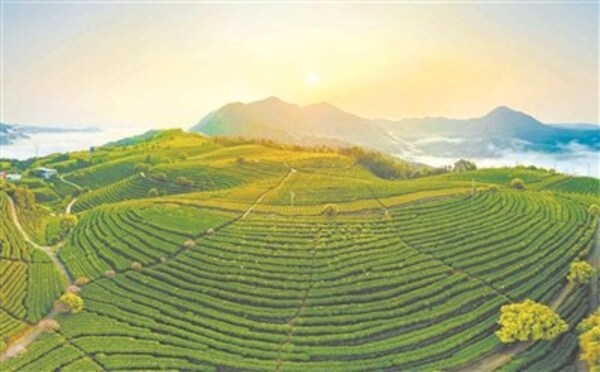
BEIJING, May 25, 2026 /PRNewswire/ — The brand value of Tanyang Gongfu black tea from Tanyang Village of Fu’an City in southeast China’s Fujian Province, reached 9.545 billion yuan in 2025, ranking among China’s top 50 regional public brands.

Photo shows the tea gardens in Tanyang Village of Fu'an City in southeast China's Fujian Province. (By Li Yu)
Photo shows the tea gardens in Tanyang Village of Fu’an City in southeast China’s Fujian Province. (By Li Yu)

The figure reflects strong growth in Tanyang, where the village’s collective income hit 2.9 million yuan in 2025, up 35 percent year-on-year, and per-capita net income reached 39,800 yuan.

Fu’an has expanded the model beyond one village. Seven villages now form the “Greater Tanyang” rural revitalization partnership, with combined collective income exceeding 6.3 million yuan. The alliance has created jobs for over 200 villagers, with per-capita disposable income reaching 29,000 yuan. Tanyang Village was named a Fujian provincial international exchange base in 2025.

Tanyang Gongfu tea dates to the Qing Dynasty. It has been recognized as one of China’s geographical indication products.

Quality control underpins the brand’s value. A tea industry technology hub jointly operated by China Agricultural University and provincial research institutes promotes eco-friendly farming. The village has developed a 58-mu low-carbon tea garden demonstration site and over 6,100 mu of smart tea gardens, improving quality across 14,200 mu of production area.

Cultural tourism now drives secondary growth. Old factory buildings have been converted into a tea museum, craft workshops and a 5G-enabled smart tea garden. Three themed education routes attract over 1,000 trainees annually.

Product innovation targets younger consumers. New offerings include tea-based cocktails, tea-infused coffee, and fruit-flavored tea beer. One tea-liquor blend generates over 5,000 yuan in daily sales at peak times.

The seven villages have pooled resources and capital to establish an eco-agriculture company operating under a four-party business model. It has directly created employment for more than 40 people. Projects within the zone include a digital nomad hub, a black tea craft workshop, and a 15-mu flower base.

Original link: https://en.imsilkroad.com/p/350697.html

Source

Most Singaporeans know about LPAs, but only 1 in 3 have made one

0

New research by SMU highlights a gap in preparedness, socioeconomic disparities and need for stronger public support as Singapore ages

SINGAPORE, May 25, 2026 /PRNewswire/ — A new study by the Singapore Management University (SMU) Centre for Research on Successful Ageing (ROSA) has found that despite relatively high awareness of the Lasting Power of Attorney (LPA), many Singaporeans may be legally unprepared for cognitive decline and medical crises. There is a significant gap between awareness and actual adoption of the LPA, where although close to seven in 10 respondents (69.2%) were aware of the LPA, only around one in three (31.3%) had made one.

The study found that more than half (50.8%) of respondents without an LPA and without intentions to make one mistakenly believed their children would automatically have the legal authority to make decisions on their behalf if they lost mental capacity.

“Many Singaporeans assume their loved ones can automatically step in during a crisis to make decisions about medical treatment and financial matters, but without an LPA, the legal process may not be straightforward,” said Professor Paulin Straughan, Director, SMU ROSA. “When such conversations and decisions are postponed despite our current mental clarity, families can experience added stress and uncertainty if a loved one later faces illness or cognitive decline. It is also important to ensure that appointed donees are properly informed, as they not fully understand the scope and significance of their responsibilities.”

The study examined awareness, attitudes, barriers and adoption of the LPA among older Singaporeans, using responses from 7,910 participants in November 2025 from the Singapore Life Panel.

The study noted that in the absence of an LPA, individuals who lose mental capacity may face delays in accessing medical treatment and care arrangements, while family members may encounter significant administrative and legal hurdles, including the need to apply for deputyship. These processes might result in higher costs, delays in decision-making, disruptions to financial and asset management, and increased emotional and caregiving burdens on families.

The findings underscored the need for public education efforts that move beyond awareness to clearly communicating the real-world consequences of not having an LPA in place, while encouraging earlier conversations and planning. Misconceptions, emotional resistance and practical barriers could leave many families unprepared as Singapore faces rapid population ageing and rising dementia prevalence.

Key Findings

  1. More than four in 10 respondents (41.06%) neither had an LPA nor intended to make one.
  2. Significant socioeconomic gaps were observed in both awareness and uptake:
    1. While 87.73% of respondents with university education were aware of the LPA, awareness fell to 44.56% among those with primary education or below.
    2. LPA uptake among residents living in 1- to 3-room HDB flats was 23.73%, compared to 46.70% among those living in private housing.
  3. Although attitudes towards the LPA were generally positive, respondents cited barriers such as:
    1. perceptions that the process is too complex or time-consuming,
    2. uncertainty about how to apply,
    3. discomfort discussing incapacity planning with family members.
  4. Even among respondents who applied online, nearly half required assistance with the process.
  5. Peace of mind (81.58%) and reducing burdens on family members (81.15%) were the strongest motivations for making an LPA.

The study also found that family members remain the overwhelmingly preferred choice of donees. However, researchers noted that demographic shifts, including rising singlehood, childlessness and smaller family sizes, may increase future demand for non-family or professional donees.

Policy Recommendations
To close Singapore’s LPA preparedness gap, SMU ROSA recommends:

  1. Strengthening nationwide public education efforts to correct misconceptions and normalise LPA planning earlier in adulthood.
  2. Expanding targeted outreach through trusted community touchpoints such as ComLink+, family service centres and polyclinics.
  3. Simplifying the application process through plain-language guides, visual explainers and assisted application clinics.
  4. Providing greater financial support for lower-income individuals, including subsidies for certificate issuer fees.
  5. Increasing support, transparency and regulation for professional donees and licensed trust companies as non-family arrangements become more common.

Researchers added that stronger support systems for donees, including clearer guidance, scenario-based training and safeguards against abuse, will also become increasingly important as Singapore’s population ages.

One in four Singaporeans are projected to be aged 65 and above by 2030. In this context, improving awareness, accessibility and preparedness around LPAs would be critical to safeguarding autonomy and reducing stress on families navigating incapacity and long-term care decisions.

Source

Former Game of Thrones star Hannah Murray recalls being drawn into a wellness cult

0

Hannah Murray found the wellness business to be “seductive and addictive” during her younger years.

The actress — best known for playing Gilly in the fantasy series Game of Thrones — became drawn into a wellness cult in her 20s, and after surviving life in the “the underbelly of the wellness and spiritual world”, Murray now stays away from the industry altogether.

“Even the tame stuff can feel quite distressing,” the actress told the Guardian newspaper.

Know the news with the 7NEWS app: Download today Arrow

“I don’t meditate any more. I wouldn’t go into a crystal shop. I don’t do yoga, because I don’t quite know what might come up that might feel a bit too “woo-woo” for my personal threshold. But I realise now how pervasive it is.

“How often people you don’t know will offer it as a remedy. You’ll say, ‘I’m not really sleeping,’ and they’ll say, ‘Have you tried meditation?’ It’s everywhere, seen as an inherently positive solution. And there are harmless or positive versions.

“But as someone looking for something to fix me entirely, a magic wand or silver bullet, the promise felt seductive and addictive.”

Murray never imagined being exploited the way she was in her younger years. But the actress feels that it can quite easily happen to anyone.

“It’s easy to go, ‘Well, that would never happen to me’, but we do ourselves a disservice when we start saying that, because you don’t know,” the 36-year-old — who has been diagnosed with bipolar disorder — said.

“I had no idea I was going to go through any of the things in the book. I would’ve assumed I couldn’t, that I was safe. I was well educated, from a middle-class family; everything should have been fine. I thought, ‘I’m smart. I make good choices.’”

Murray now acknowledges making some “terrible choices” during her younger years, but she didn’t appreciate the potential pitfalls at the time.

“Well, I made terrible choices,” she said. “But it’s important to understand why people do these things, rather than going, ‘Oh, they must be idiots.’ Or, ‘How stupid could you be?’”.

Source

Informa Markets Puts Bangkok at the Center of Southeast Asia’s Pharma Industry, Uniting 400 Exhibitors, Experts from 70 Countries at CPHI South East Asia

0

The Region’s Premier Pharma Exhibition Returns to Bangkok, Elevating Thailand’s Role in the ASEAN Pharmaceutical Supply Chain

BANGKOK, May 24, 2026 /PRNewswire/ — Informa Markets sets to organise CPHI South East Asia from 8–10 July 2026 at Queen Sirikit National Convention Center under the theme “The Gateway to the ASEAN Pharma Industry.” The event is a comprehensive pharmaceutical manufacturing exhibition, technology showcase, and conference for Southeast Asia, featuring innovations from more than 400 companies worldwide.

Highlights include international pavilion zones from eight markets, showcasing innovation trends from Mainland China, India, Indonesia, Malaysia, South Korea, Taiwan, Thailand, Vietnam, and Egypt. The event will also provide business matching opportunities and over 60 academic conference sessions. Organisers expect more than 10,000 visitors from over 70 countries during the three-day event, creating new business opportunities throughout the exhibition.

CPHI South East Asia 2026 hosts an official press conference in Bangkok, announcing the return of Southeast Asia's premier pharmaceutical exhibition to Queen Sirikit National Convention Center, 8–10 July 2026. The event will bring together over 400 exhibitors and 10,000 visitors from 70+ countries under the theme "The Gateway to the ASEAN Pharma Industry."
CPHI South East Asia 2026 hosts an official press conference in Bangkok, announcing the return of Southeast Asia’s premier pharmaceutical exhibition to Queen Sirikit National Convention Center, 8–10 July 2026. The event will bring together over 400 exhibitors and 10,000 visitors from 70+ countries under the theme “The Gateway to the ASEAN Pharma Industry.”

Ms. Rungphech Chitanuwat, Regional Portfolio Director – ASEAN at Informa Markets said, “The pharmaceutical industry in Thailand continues to show strong growth potential, supported by several factors including the country’s transition into a fully aged society, the increasing prevalence of non-communicable diseases (NCDs), healthcare system expansion, growth in medical tourism, and the use of essential medicines in hospitals under Thailand’s universal healthcare system.

In 2024, Thailand’s pharmaceutical industry was valued at approximately THB 240 billion (around 6.9 billion dollars), and is projected to grow by 6–7% due to these supporting factors. Market research agencies also forecast that by 2030, the industry could reach a value of 480 billion baht or 13.9 billion dollars.

Industry and government leaders take part in a panel discussion at the CPHI South East Asia 2026 press conference, highlighting Thailand's role as the region's pharmaceutical manufacturing hub.
Industry and government leaders take part in a panel discussion at the CPHI South East Asia 2026 press conference, highlighting Thailand’s role as the region’s pharmaceutical manufacturing hub.

Another key trend to watch is the increasing push from both the public and private sectors toward pharmaceutical development and innovation, including both generic drugs and newly developed medicines. This aligns with government efforts to strengthen pharmaceutical security.

Pharmaceutical and healthcare security has therefore become a national policy priority aimed at raising public healthcare standards and strengthening the country’s economy as Thailand seeks to join the OECD within five years. Policies also focus on reducing reliance on imported medicines, supporting domestic active pharmaceutical ingredient (API) production, and increasing manufacturing capacity for essential medicines in line with actual production costs.

This is the driving force behind the organization of CPHI South East Asia, a technology and innovation exhibition with the important goal of contributing to Thailand’s pharmaceutical security. The event aims to help drive both healthcare and the economy forward, positioning Thailand as a Medical Hub for Southeast Asia through internationally standardized pharmaceutical manufacturing and enhanced competitiveness in global export markets.

Food and Drug Administration Office (Thai FDA), Thai Pharmaceutical Manufacturers Association (TPMA), Government Pharmaceutical Organization (GPO),industry leaders gather at the CPHI South East Asia 2026 press conference in Bangkok, united in advancing Thailand's position as Southeast Asia's leading Medical Hub.
Food and Drug Administration Office (Thai FDA), Thai Pharmaceutical Manufacturers Association (TPMA), Government Pharmaceutical Organization (GPO),industry leaders gather at the CPHI South East Asia 2026 press conference in Bangkok, united in advancing Thailand’s position as Southeast Asia’s leading Medical Hub.

Ms. Rungphech added, “Pharmaceutical security is a shared responsibility and a foundation of human security. Government and private sector must work in tandem to ensure Thailand not only has access to medicines, but becomes a country that the world trusts to produce them.”

“CPHI South East Asia is part of International Healthcare Week and will be held at Queen Sirikit National Convention Center from 8–10 July 2026 under the theme “The Gateway to the ASEAN Pharma Industry.” The event will contribute to advancing Thailand’s pharmaceutical industry in line with the country’s strategic development goals.”

Ms. Supatra Boonserm, Secretary-General of the Food and Drug Administration (FDA), under the Food and Drug Administration Office (Thai FDA), Ministry of Public Health, stated that in a world where medical technology continues to advance rapidly, we are now entering the era of Advanced Therapy Medicinal Products (ATMPs). These are no longer just “medicines” in the traditional sense, but represent “new hope” for treating diseases once considered incurable — whether through cell therapy, gene therapy, or tissue engineering.

Today, the role of the Thai FDA is no longer limited to being merely a “regulator” responsible for screening product safety. It has evolved into an “Innovation Facilitator,” aiming to position Thailand as a true regional healthcare hub. The FDA’s key mission in supporting ATMPs is built upon three major pillars:

1.Creating a Regulatory “Fast Track” (Regulatory Excellence)

Complex innovations require regulations that are both flexible and rigorous. The FDA has therefore developed legal frameworks aligned with international standards, covering product classification and dedicated GMP standards specifically for ATMPs. This ensures that products developed by Thai innovators meet global standards and can confidently compete in international markets.

2. Serving as a Strategic Partner for Researchers and Entrepreneurs (Proactive Partnership)

The FDA has implemented a Pre-submission Consultation mechanism to provide technical guidance before formal approval applications are submitted. It has also introduced Fast Track pathways for products addressing urgent medical needs, helping reduce unnecessary delays and barriers while maintaining patient safety as the highest priority.

3. Building an “Ecosystem of Trust” (Ecosystem of Trust)

The FDA oversees clinical trials to ensure ethical compliance and maintains long-term post-market safety monitoring systems. This is intended to build confidence among both patients and healthcare professionals that these innovations will remain effective and safe in a sustainable manner.

Mr. Surachai Ruengsuksilp, Honorary Chairman of the Pharmaceutical Industry Group under the Federation of Thai Industries and Vice President of the Thai Pharmaceutical Manufacturers Association (TPMA), stated that the pharmaceutical industry is not merely an economic driver, but also a “critical infrastructure for national security.”

Currently, Thailand’s pharmaceutical market is valued at more than THB 240 billion. Amid these opportunities, the Federation of Thai Industries has established a strategic direction to position Thailand as a full-fledged Regional Pharma Hub through three key strategies:

1.Transforming from an “Importer” to a “Producer for Security”

Reducing dependence on imported medicines by promoting domestic production of Active Pharmaceutical Ingredients (APIs), thereby reducing vulnerability to global crises.

2. Upgrading from “Basic Medicines” to “Advanced Innovation”

Supporting Thai pharmaceutical manufacturers in upgrading to internationally recognized PIC/S GMP standards, enabling Thai medicines not only to serve the CLMV market but also to expand exports globally.

3. Building a Strong Pharmaceutical Ecosystem

Driving collaboration with the government and the Board of Investment (BOI) to create an investment environment conducive to research and development, while also reforming procurement regulations to better reflect actual quality-based costs. This is intended to help Thai pharmaceutical companies remain competitive and achieve sustainable growth.

The Federation of Thai Industries aims to make Thailand “a regional production base for high-quality and affordable medicines,” focusing not only on economic growth figures, but also on ensuring that Thai people have sufficient access to safe medicines under all circumstances.

Dr.Ponthip Wirachwong Ph.D. Deputy Managing Director, Government Pharmaceutical Organization (GPO), stated that beyond its primary role in pharmaceutical manufacturing, the organization’s core mission is to ensure confidence in Thailand’s healthcare system by guaranteeing that Thai people will never face medicine shortages during crises or at any time.

In the past, Thailand has experienced epidemics and natural disasters, and the GPO has maintained reserve systems for essential medicines and medical supplies to ensure that hospital operations can continue without disruption caused by delays.

“Even the most advanced medicine fails if it remains out of reach. GPO’s mission is simple: ensure every Thai patient has access to safe, quality medicines — at a price that doesn’t force them to choose between health and survival,” she said.

Pre-registration is now open for visitors and exhibitors. Be part of the future of ASEAN’s pharma industry at www.cphi.com/sea

For media enquiries, please contact:
Gautam Jatwani
Senior Marketing Manager
Gautam.jatwani@informa.com  

Source

EXCLUSIVE: Air Force debuts historic 8-ship bomber-fighter formation over Miami Beach

0

NEWYou can now listen to Fox News articles!

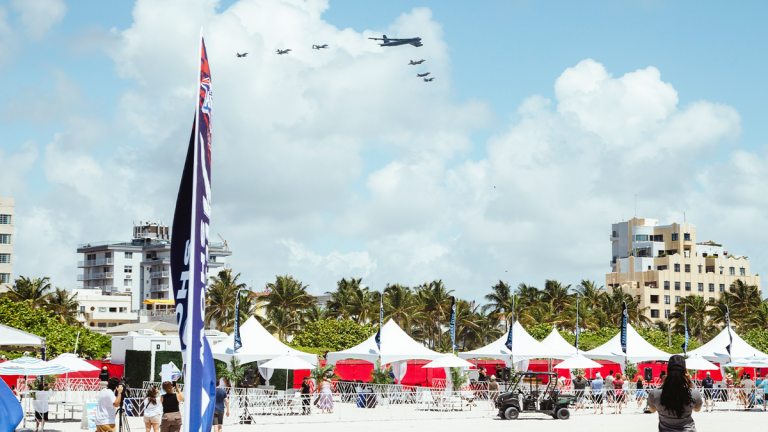
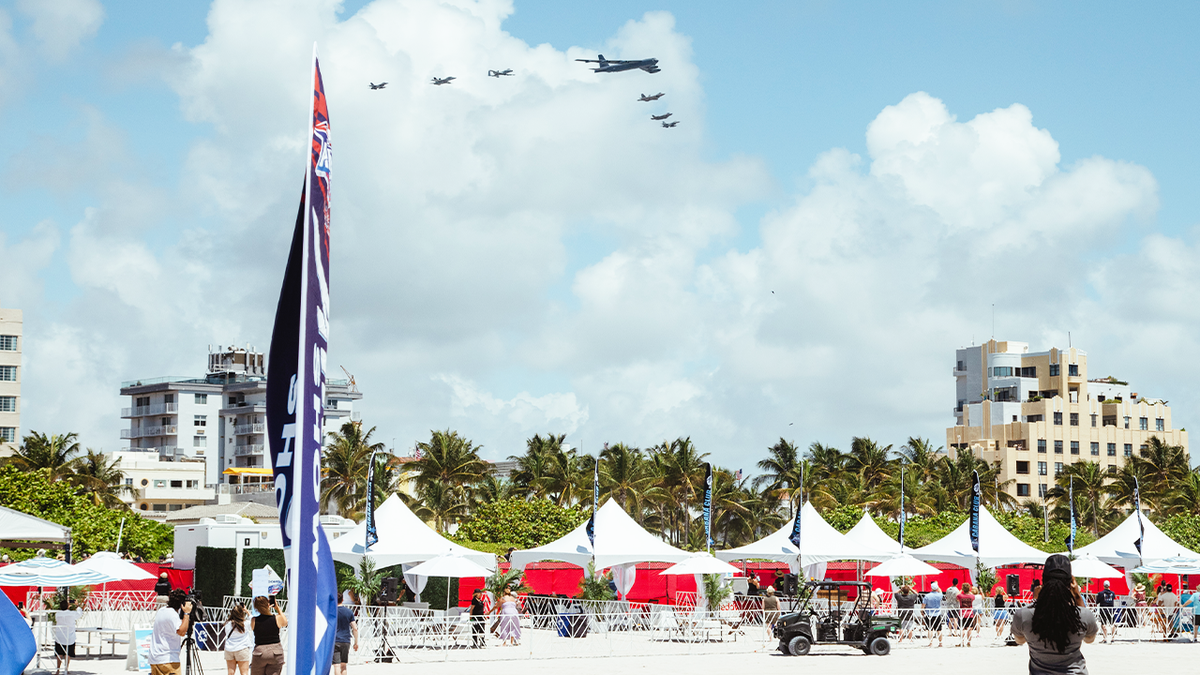
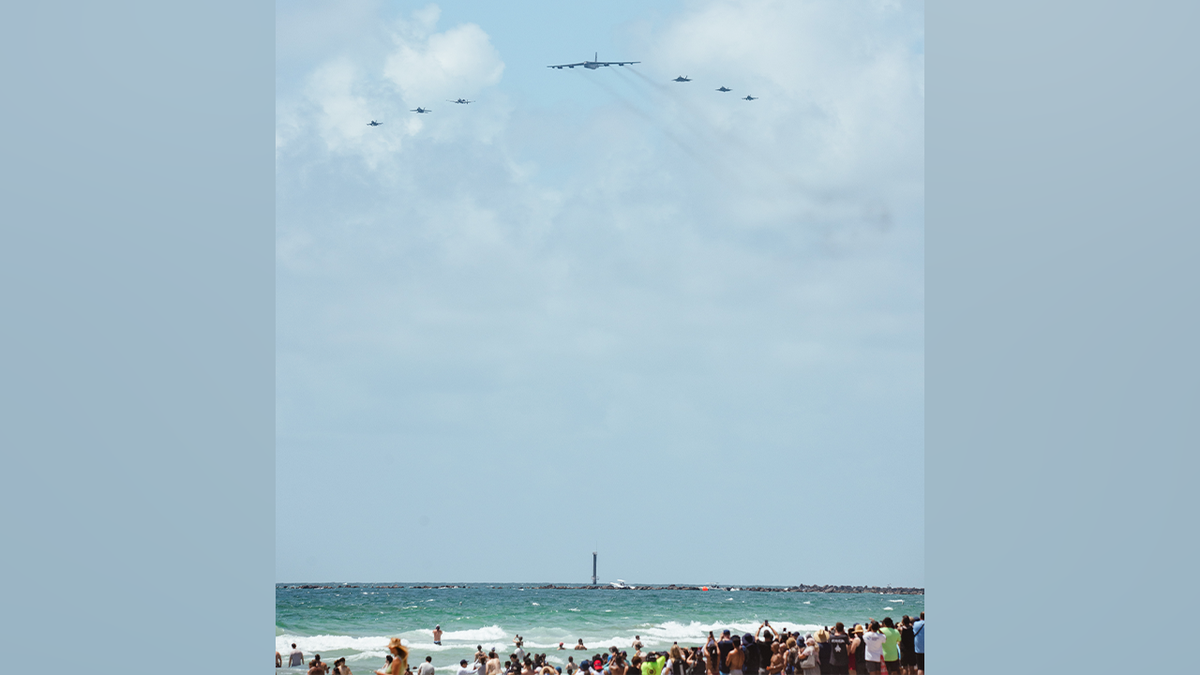
EXCLUSIVE: The skies over South Florida roared with American military might on Memorial Day weekend as the Air Force Global Strike Command executed a historic flyover Saturday at the Hyundai Air & Sea Show in Miami Beach.

Dubbed the “Arsenal of Freedom,” the unprecedented spectacle featured an eight-ship formation of dissimilar bombers and fighters soaring over a civilian air show.

The display showcased a united front, bringing together aircraft from the Air Force active duty, reserve and the Air National Guard to fly as one.

FREEDOM ISN’T FREE: HONOR THOSE WHO NEVER CAME HOME ON THIS MEMORIAL DAY

The

Led by a massive B-52H Stratofortress, part of the B-52 Stratofortress series, which has been used in the war with Iran, the awe-inspiring formation included some of the military’s most advanced and iconic aircraft: a B-1B Lancer, A-10 Thunderbolt II, F-22 Raptor, F-35 Lightning II, F/A-18 Hornet and two F-16 Fighting Falcons.

The

However, the flyover was more than just a stunning visual for the thousands of patriotic Americans gathered to honor the nation’s fallen.

It carried strategic weight, putting America’s unique long-range strike capabilities on full public display.

EXCLUSIVE: TRUMP-BACKED MILITARY VET MOCKED FOR DISABILITY AHEAD OF MEMORIAL DAY: ‘MOST SHAMEFUL THING’

Spectators were seen watching as the

The Air Force Global Strike Command is the only long-range strike force of its kind available to the U.S. and its partners, as no other allied nation fields bombers capable of executing the mission.

Organized by the National Salute to America’s Heroes, the annual Memorial Day tribute also featured thrilling parachute demonstrations and a military static display village.

The

CLICK HERE TO DOWNLOAD THE FOX NEWS APP

Highlighting the ongoing commitment of the next generation of American patriots, the event culminated in an enlistment ceremony swearing in more than 150 new members of the U.S. armed forces, marking one of the most significant military events of the Memorial Day season.

Source

Light Ultimate, High Experience, Original Ecology, Personalization — Mafengwo and Anshun Municipal Bureau of Culture, Sports, Radio, TV and Tourism Co-create New Forms of Mountain Tourism

0

ANSHUN, China, May 23, 2026 /PRNewswire/ — On May 21, at the Guizhou Anshun Tourism Development Conference, Mafengwo Travel Group officially launched three flagship “New Mountain Play” benchmark projects — Huangheying Water Cave, Lotus Ancient Cave, and Luoyang Glasswater Gorge — while jointly releasing the 2026 Anshun Mountain Outdoor New Play Playbook with the Anshun Municipal Bureau of Culture, Sports, Radio, TV and Tourism. By redefining mountain outdoor travel experiences through “new play,” the initiative injects fresh momentum into Anshun’s positioning as an international mountain tourism destination. 


“Personalized travel is rising rapidly. Tourism is transitioning from a ‘sightseeing economy’ to an ‘experience economy.’ More than just ‘having been there,’ travelers today seek emotional value from scenic spots and related projects,” said Chen Gang, Founder and CEO of Mafengwo, in a speech titled *Co-creating the Super Play Era of Mountain Tourism*. He noted that leveraging benchmark new-play projects such as Huangheying Water Cave, Lotus Ancient Cave, and Luoyang Glasswater Gorge, Mafengwo will work with Anshun to integrate “new play, new formats, new marketing, and new consumption” into a holistic innovation ecosystem for destination-wide play. Together, they aim to revitalize natural resources, energize industrial momentum, link rural revitalization, and jointly build Anshun into a national hub for new mountain play.

At a time when travelers are increasingly weary of “man-made check-in spots” and homogenized internet-famous projects, the newly launched projects abandon the old path of large-scale construction. Instead, they return to the wild itself, adopting a “light development, heavy experience” approach to create mountain plays that are “wild on the outside, refined on the inside.” Huangheying Water Cave focuses on “natural wonders + interactive adventure,” using its original “water-cave” karst features to create a genuine sense of “underground exploration.” Lotus Ancient Cave, based on a massive natural cave, integrates “light ultimate” activities such as via ferrata, rappelling, and cave drop towers, allowing ordinary visitors to feel adrenaline-pumping “heart-racing moments” in a natural setting. Luoyang Glasswater Gorge follows the original river course, using natural elevation differences to design trails for hiking, canyoning, and waterfall rappelling, with minimal artificial construction, emphasizing the pristine “glass water” and an eco-harmonious, back-to-nature mountain experience.

At the “2026 Anshun Mountain Tourism New Play” sharing session, Mafengwo Travel Group and the Anshun Municipal Bureau of Culture, Sports, Radio, TV and Tourism jointly released the *2026 Anshun Mountain Outdoor New Play Playbook*. Ten selected plays in non-traditional mountain settings were featured, including “Night Tour of Dupo Tang — Immersive Journey into the World of Journey to the West,” “Watch Intangible Cultural Heritage ‘Spider-Man’ Climb Cliffs for Bird’s Nests,” and “370-Meter Free Fall at Balinghe Bridge.” These showcase how Anshun creatively uses its karst landscapes as a natural “amusement park” for mountain experiences.

He Weihong, Vice Mayor of Anshun, stated in his address: “In Anshun, the ‘City of 21°C,’ mountains are no longer just scenery to be viewed. They are living fields to be climbed, immersed in, jumped over, and breathed in. Anshun will take this conference as an opportunity to accelerate the internationalization of its mountain tourism and build a first-class mountain outdoor sports destination.” During the event, Anshun Tourism Group also promoted its mountain outdoor travel routes.

By early 2026, the number of outdoor sports participants in China had exceeded 400 million, with participation in mountain hiking, trail running, rock climbing, and canyoning rising year by year. Driven by the dual trends of “nationwide fitness” and “pan-outdoor” activities, mountain play is moving from niche circles to the general public. Unlike the high barriers of traditional outdoor activities, Anshun’s new plays target the blue ocean market of “light ultimate + strong experience + high shareability.” Whether it’s a “bridge bungee jump,” checking out the natural wonder “Eye of the Great Sage,” or experiencing a “Journey to the West fantasy” at night by Dupo Tang Waterfall — these activities are novel, beginner-friendly, and serve as natural content and social currency.

Anshun’s mountain play innovation has also attracted international attention. Anouar, Chief Representative of the Tunisian National Tourism Office in China, noted in his speech that Anshun’s innovation in integrating mountain tourism and sports is worth learning from for many international peers. He noted that Tunisia has diverse mountain resources across the country, with history embedded in the mountains and culture in the scenery — this is the unique charm of Tunisia’s mountains. He looks forward to China-Tunisia cooperation to explore more mountain tourism opportunities and co-create new partnership models.

An international dialogue session brought together representatives from the Norwegian National Tourist Board, Visit Flanders (Belgium), and the Saudi Tourism Authority to discuss mountain outdoor tourism upgrade from a global perspective. The guests agreed that they were delighted to see that Anshun is not simply replicating a “Switzerland of the East” but is creating an entirely new “universal language of mountain tourism.” The internationalization of mountain tourism is not about imitation but about excavating the unique narratives of local landscapes — with its green mountains and clear waters as the canvas and play innovation as the brush, Anshun is painting a vibrant new picture for the world.


A domestic dialogue session brought together frontier explorers, practitioners, and experts in mountain sports tourism to discuss the future development of mountain sports tourism from the perspectives of communities, products, and operations. Qin Chuan, Founder of Wanan Youth Travel, noted that with technological advancements and equipment iteration, more and more “outdoor novices” without professional training can enjoy the pleasures of the wild. Currently, Wanan Youth Travel is selecting and developing “super single products” and continuously improving service quality to deliver ultimate outdoor experiences to visitors.

After the conference, industry guests conducted on-site inspections of new play projects, including Lotus Ancient Cave, Dupo Tang Night Tour, Anshun Ancient Town, and Getu River. Wang Yu, Chief Representative of the Norwegian National Tourist Board in Greater China, remarked: “Anshun and Norway share many similarities. Anshun’s new mountain plays emphasize ‘light development, heavy experience.’ Take Lotus Ancient Cave — it doesn’t feel like a ‘designed’ scenic spot, but rather an extension of Anshun’s natural mountain charm itself, an experiential field you can fully immerse yourself in. The scale of this ‘light ultimate’ experience is just right — thrilling enough, yet truly authentic.”

Source

Spirit’s collapse, high fuel prices test limits of summer vacation spending

0

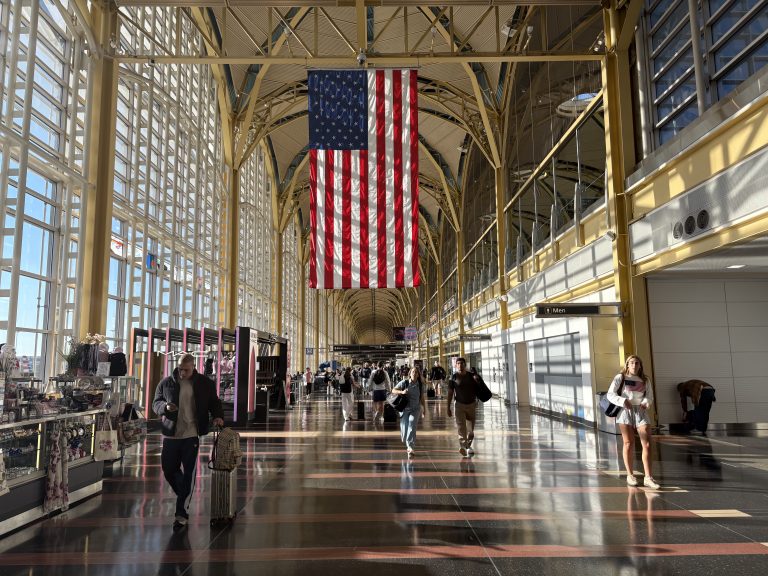
Travelers walk through the terminal at Ronald Reagan Washington National Airport on May 1, 2026.

Leslie Josephs | CNBC

Higher fuel prices are testing how badly consumers want to travel this summer, whether flying or driving.

Airfare hasn’t been this high since May 2022, when airlines stumbled out of the pandemic with aircraft and employee shortages to face hordes of consumers ready for “revenge travel.” Gasoline is above $4 a gallon and could get closer to $5 a gallon this summer, AAA warned this week.

Jet fuel prices doubled in the span of less than three months this year after the U.S. and Israel attacked Iran, kicking off a conflict that has left a key shipping channel effectively closed.

Domestic round-trip airfares in April averaged $623, the highest in nearly four years, according to data from the Airlines Reporting Corporation, which tracks travel agency ticket sales. Jet fuel is the second-biggest expense for airlines after labor, and carriers say they are increasingly passing those costs along to customers.

Separately, airlines are also trimming their growth plans because of higher fuel costs. Even if a route isn’t cut, fewer flights on certain routes means that customers will have fewer seats to choose from and, with demand robust, that could drive up prices even more.

Spirit Airlines shut down. Here’s what happens to its planes next

Spirit Airlines, the most famous budget carrier in the U.S., shut down earlier this month, and partially blamed jet fuel prices for its failure to emerge from near back-to-back bankruptcies. It was the biggest U.S. airline collapse in decades. Other airlines swooped in to snatch up those customers in the aftermath, but the carrier’s demise removes a main purveyor of low fares.

The fuel spikes have set the stage for higher fares and more expensive gas station visits this summer. The start of the peak travel season Memorial Day weekend will be a taste of how much travelers will shell out to fly while everything from groceries to clothing has become more expensive this year.

The Transportation Security Administration said it expects to screen 18.3 million people between Thursday and next Wednesday, compared with the 18.5 million it saw over a similar period last year.

Read more about jet fuel’s impact on travel

Lackluster road trip growth

Road trips won’t be a bargain either. AAA this week forecast 39.1 million people will drive at least 50 miles between Thursday and Monday, up just 0.1% compared with last Memorial Day weekend. That was the least growth in a decade, AAA told CNBC.

Gasoline price site GasBuddy forecast this week that prices across the U.S. will average $4.48 on Memorial Day, up from $3.14 last year, and that prices could average $4.80 through Labor Day “if the Strait of Hormuz remains closed for a significant portion of the summer.”

A customer fills his vehicle with fuel at a gas station in Miami, April 13, 2026.

Joe Raedle | Getty Images

Still flying

Leisure travel intentions in the U.S. were slightly lower in March — at 82.8% compared with 83.1% the same month a year earlier — though they are still relatively high, UBS said in a note Monday.

“We believe the year-over-year moderation in travel intentions this year was likely due to higher jet fuel and other geopolitical concerns,” UBS airline analyst Atul Maheswari wrote. He added that the intent to travel is near the highest points in the past nine years.

So far, airline executives said, customers are still booking, and executives are optimistic about the summer travel season. They’ve also said they’re expecting a boost from the FIFA World Cup, which will be held in June and July in the U.S., Canada and Mexico, and from major concerts such as Harry Styles’ residencies in Amsterdam and London this summer.

United Airlines said it expects to carry 53 million travelers between June and August, up 3 million people from last year. American Airlines has forecast 75 million customers between May 21 and Sept. 8, after Labor Day, topping its previous record, in 2019.

Refueling trucks at LaGuardia Airport in New York, April 23, 2026.

Zhang Fengguo | Xinhua News Agency | Getty Images

‘What are you waiting for?’

Airlines have been pruning their schedules and axing unprofitable or less profitable routes but have been eager to fill in the gaps after Spirit’s collapse.

Travelers can still find deals if they’re flexible, said Kyle Potter, who runs the Thrifty Traveler website. He recommended using tools such as the “Explorer” tool in Google Flights that allows users to look up destinations by the length of trip and by month in a map view.

He also suggested flyers consider traveling on a Tuesday or Wednesday, when fares and traffic are often lower.

“That, in many cases, can save you hundreds of dollars per ticket, and multiply that by a family of four,” he said.

He had a simple message for travelers sitting on piles of frequent flyer miles.

“Now is the time to use your miles or your credit card points or both,” he said, warning that miles can end up devalued. “What are you waiting for? I think a lot of people hoard their miles because they want to go to to Europe in 2027.”

— CNBC’s Contessa Brewer contributed to this report.

Choose CNBC as your preferred source on Google and never miss a moment from the most trusted name in business news.

Source

‘No choice’: Australians delaying vehicle repairs and routine servicing as cost-of-living crisis bites

0

As households tighten budgets across the country, more Australians are having to weigh up everyday bills against the safety of the car sitting in the driveway, delaying critical repairs and routine servicing.

New national research suggests about 4.3 million adults have pushed back or skipped some form of routine vehicle maintenance in the past 12 months, while 1.1 million admit they skipped most or all servicing altogether.

The study, commissioned by Supercheap Auto and conducted by YouGov, found nearly two in three Australians (64 per cent) say they have delayed or would delay maintenance on the vehicle they drive most often, with 43 per cent blaming financial pressure.

Know the news with the 7NEWS app: Download today Arrow

For 75-year-old retiree Barry Devine, a former truck driver who spent more than two decades in transport before running his own transport company, those difficult financial choices have become increasingly common.

“I’ve had to delay a number of repairs and servicing jobs because of the rising cost of living,” Devine told 7NEWS.com.au.

“A standard brake job was going to cost roughly $600, and a regular service was around $180.

“On top of that, there were other repairs needed including control arm bushes, engine mounts, centre bearing and tie rod ends totalling over $1000 worth of work minimum.”

Former transport company owner Barry Devine says financial pressure is forcing difficult decisions about what car repairs can wait.
Former transport company owner Barry Devine says financial pressure is forcing difficult decisions about what car repairs can wait. Credit: Supplied
Retiree Barry Devine has continued maintaining his ageing vehicle himself as repair costs place growing pressure on household budgets.
Retiree Barry Devine has continued maintaining his ageing vehicle himself as repair costs place growing pressure on household budgets. Credit: Supplied

His situation reflects a growing national concern, with many people knowing their vehicles need repairs but the money simply is not there.

Nationally, scheduled logbook services are now the most commonly delayed maintenance task, put off by 47 per cent of drivers who have skipped servicing, followed by oil and filter changes at 29 per cent and tyre rotations at 26 per cent.

Devine said many Australians were now being forced into dangerous compromises.

“It’s very concerning,” he said.

“When people are forced to delay repairs, vehicles can quickly become a safety issue not just for the driver, but for all road users.”

About 3.2 million people admit they have some doubt about whether their vehicle is fully roadworthy, while an estimated 659,000 drivers know their car has safety issues but continue driving anyway.

The study also revealed what researchers described as a “confidence gap” among motorists delaying maintenance.

Almost half (49 per cent) of drivers who only act when something goes wrong still say they are “very confident” their vehicle is safe, while 42 per cent of those who skipped most or all maintenance also believe their cars remain roadworthy.

Like many older Australians, Devine relies heavily on his vehicle to attend medical appointments and carry out daily errands.

Without reliable public transport alternatives, he said there had been times he kept driving despite knowing repairs were needed.

“Yes, absolutely,” he said. “In many cases there’s simply no other option, especially when the vehicle is your only mode of transport.”

Drawing on a lifetime of experience working on cars, agricultural machinery and heavy vehicles, Devine still maintains his car with help from family, including his apprentice mechanic step-granddaughter.

Queensland carpenter Dalton Best, 27, said servicing his ute which doubles as his work vehicle had become increasingly difficult as costs climbed and pressure mounted on the family-run business he works for.

Queensland carpenter Dalton Best says rising costs have forced him to push back routine servicing on his work ute.
Queensland carpenter Dalton Best says rising costs have forced him to push back routine servicing on his work ute. Credit: Supplied

Best said routine services costing about $750 every three to four months were sometimes pushed back “a month or two” because bills and business expenses had to come first.

“The increased prices and cost of living have made it a lot more difficult to stay on top of servicing my ute,” Best told 7NEWS.com.au.

The YouGov data found Gen Z drivers were the most likely of any generation to delay or skip maintenance, with 41 per cent admitting they had done so in the past year.

“I have delayed replacing brake pads as it’s about $100 per brake pad to replace myself,” Best said.

Tyres and brakes are among the critical maintenance items being postponed by drivers struggling with financial pressure.
Tyres and brakes are among the critical maintenance items being postponed by drivers struggling with financial pressure. Credit: dpa/picture alliance via Getty Images

Younger drivers overall were also twice as likely as Baby Boomers to say they knew they should be doing more maintenance but simply could not afford it.

Best said many younger Australians were increasingly relying on DIY repairs and online tutorials to reduce costs.

“I think a lot of younger Australians either don’t service or repair at all or do it themselves, with the help of YouTube,” he said.

About one in three (34 per cent) reported experiencing at least one issue in the past 12 months potentially linked to delayed servicing.

That included dashboard warning lights, costly emergency repair bills, being told by mechanics maintenance had become critical, breakdowns while driving and even near-miss safety incidents on the road.

Drivers in Victoria and NSW were the most likely to say they had delayed or would delay maintenance, while South Australians were among the least confident in their vehicle’s roadworthiness and more likely to only act once something went wrong.

Supercheap Auto business manager Joel Dauber said the consequences of deferred maintenance are already emerging.

“There are multiple safety risks when delaying maintenance,” Dauber said.

“The key ones I would highlight though are worn brake pads, damaged rotors and old brake fluid.

“This reduces your car’s ability to effectively stop increasing the risk of a crash.”

Joel Dauber from Supercheap Auto says rising living costs are forcing more Australians to delay routine vehicle maintenance and repairs
Joel Dauber from Supercheap Auto says rising living costs are forcing more Australians to delay routine vehicle maintenance and repairs Credit: Supercheap

He also pointed to tyre failures caused by delayed rotations, low inflation and overdue replacements, particularly during wet weather.

“We have all felt some slippage on wet roads,” he said.

Dauber said warning signs such as squealing brakes, longer stopping distances, dashboard alerts and visible tyre damage should never be ignored, even during periods of financial hardship.

Australia’s ageing vehicle fleet is adding another layer to the problem, with more drivers keeping older cars on the road for longer as upgrading to a newer model places even greater strain on household budgets.

“We have an older vehicle fleet on the road here in Australia with the average now surpassing 11 years,” Dauber said.

Rising fuel prices linked to the ongoing Iran conflict have also added further pressure on households already struggling with vehicle costs, with millions of drivers forced to spend more at the bowser while cutting back elsewhere.

Source

High fuel prices test limits of summer vacation spending

0

Travelers walk through the terminal at Ronald Reagan Washington National Airport on May 1, 2026.

Leslie Josephs | CNBC

Higher fuel prices are testing how badly consumers want to travel this summer, whether flying or driving.

Airfare hasn’t been this high since May 2022, when airlines stumbled out of the pandemic with aircraft and employee shortages to face hordes of consumers ready for “revenge travel.” Gasoline is above $4 a gallon and could go higher, AAA warned this week.

Jet fuel prices doubled in the span of less than three months this year after the U.S. and Israel attacked Iran, kicking off a conflict that has left a key shipping channel effectively closed.

Domestic round-trip airfares in April averaged $623, the highest in nearly four years, according to data from the Airlines Reporting Corporation, which tracks travel agency ticket sales. Jet fuel is the second-biggest expense for airlines after labor, and carriers say they are increasingly passing those costs along to customers.

Separately, airlines are also trimming their growth plans because of higher fuel costs. Even if a route isn’t cut, fewer flights on certain routes means that customers will have fewer seats to choose from and, with demand robust, that could drive up prices even more.

Spirit Airlines, the most famous budget carrier in the U.S., shut down earlier this month, and partially blamed jet fuel prices for its failure to emerge from near back-to-back bankruptcies. It was the biggest U.S. airline collapse in decades. Other airlines swooped in to snatch up those customers in the aftermath, but the carrier’s demise removes a main purveyor of low fares.

Read more about jet fuel’s impact on travel

The fuel spikes have set the stage for higher fares and more expensive gas station visits this summer. The start of the peak travel season Memorial Day weekend will be a taste of how much travelers will shell out to fly while everything from groceries to clothing has become more expensive this year.

The Transportation Security Administration said it expects to screen 18.3 million people between Thursday and next Wednesday, compared with the 18.5 million it saw over a similar period last year.

Lackluster road trip growth

Road trips won’t be a bargain either. AAA this week forecast 39.1 million people will drive at least 50 miles between Thursday and Monday, up just 0.1% compared with last Memorial Day weekend. That was the least growth in a decade, AAA told CNBC.

Gasoline price site GasBuddy forecast this week that prices across the U.S. will average $4.48 on Memorial Day, up from $3.14 last year, and that prices could average $4.80 through Labor Day “if the Strait of Hormuz remains closed for a significant portion of the summer.”

A customer fills his vehicle with fuel at a gas station in Miami, April 13, 2026.

Joe Raedle | Getty Images

Still flying

Leisure travel intentions in the U.S. were slightly lower in March — at 82.8% compared with 83.1% the same month a year earlier — though they are still relatively high, UBS said in a note Monday.

“We believe the year-over-year moderation in travel intentions this year was likely due to higher jet fuel and other geopolitical concerns,” UBS airline analyst Atul Maheswari wrote. He added that the intent to travel is near the highest points in the past nine years.

So far, airline executives said, customers are still booking, and executives are optimistic about the summer travel season. They’ve also said they’re expecting a boost from the FIFA World Cup, which will be held in June and July in the U.S., Canada and Mexico, and from major concerts such as Harry Styles’ residencies in Amsterdam and London this summer.

United Airlines said it expects to carry 53 million travelers between June and August, up 3 million people from last year. American Airlines has forecast 75 million customers between May 21 and Sept. 8, after Labor Day, topping its previous record, in 2019.

Refueling trucks at LaGuardia Airport in New York, April 23, 2026.

Zhang Fengguo | Xinhua News Agency | Getty Images

‘What are you waiting for?’

Airlines have been pruning their schedules and axing unprofitable or less profitable routes but have been eager to fill in the gaps after Spirit’s collapse.

Travelers can still find deals if they’re flexible, said Kyle Potter, who runs the Thrifty Traveler website. He recommended using tools such as the “Explorer” tool in Google Flights that allows users to look up destinations by the length of trip and by month in a map view.

He also suggested flyers consider traveling on a Tuesday or Wednesday, when fares and traffic are often lower.

“That, in many cases, can save you hundreds of dollars per ticket, and multiply that by a family of four,” he said.

He had a simple message for travelers sitting on piles of frequent flyer miles.

“Now is the time to use your miles or your credit card points or both,” he said, warning that miles can end up devalued. “What are you waiting for? I think a lot of people hoard their miles because they want to go to to Europe in 2027.”

— CNBC’s Contessa Brewer contributed to this report.

Choose CNBC as your preferred source on Google and never miss a moment from the most trusted name in business news.

Source