KOTA KINABALU, Malaysia, June 25, 2024 /PRNewswire/ — The Miss Grand Malaysia Sabah 2024, organized by Gemilang Event Management and spearheaded by its dynamic director, Richard Chok, was held at the Sabah International Convention Centre. This event has been acclaimed as one of the grandest coronation nights in Sabah’s pageantry history, setting new benchmarks for elegance and inclusivity.
Gemilang Event Management’s dedication to raising awareness about Orang Kurang Upaya (OKU) through this inclusive beauty pageant is praiseworthy. Notably, 10% of the ticket sales proceeds will be directed to the Gemilang Prihatin Fund to assist an OKU shoemaker in Kota Belud, who is a single father raising his autistic child.
The organizing team aims to foster a more inclusive society where everyone is valued and respected, regardless of their physical or mental abilities. This seamless blend of beauty and advocacy ensures that the pageant is not only a display of grace and poise but also a beacon of social change.
The competition was grand and fierce, but ultimately, Lilyannie Christie Linus emerged as Miss Grand Malaysia Sabah 2024. The 1st Runner-up title was awarded to Tito (Esther Marius), while Rochil Apa Sagarino secured the 2nd Runner-up position. Shareen Jee and Rachel Alphine Peter were named 3rd and 4th Runners-up, respectively. These top five remarkable women will go on to represent Sabah at the national grand finals of Miss Grand Malaysia scheduled for August 2024.
Richard Chok has recently been appointed by HyperLive Entertainment as the State Director for Sabah for Miss Grand Malaysia. In this capacity, his company, Gemilang Event Management, was entrusted with organizing the event.
Dr. Sean Wong, CEO of HyperLive Entertainment and National Director of Miss Grand Malaysia, remarked, “Sabah has a wealth of outstanding local talents, and I hope to provide new platforms to discover and nurture these talents. As our State Director, Richard has done a fabulous job in presenting an impressive show. Gemilang Event Management, under his visionary leadership, has demonstrated its commitment to excellence and social responsibility. We will continue to grow the Miss Grand Malaysia brand by forging new partnerships and developing our talents.”
Richard Chok said, “I am truly honored to have had the opportunity to produce a show for Miss Grand Malaysia Sabah. The positive response from the audience has been incredibly rewarding, and I hope to continue creating more such events in the future.”
The Miss Grand Malaysia 2024 Grand Finals will take place in Kuala Lumpur this August. This highly anticipated event will feature Luciana Fuster, a beautiful Peruvian model and TV host who won the prestigious Miss Grand International 2023 title last October. For sponsorship or ticket inquiries, please contact the organizing team at hello@hyperlive.tv.
Starting out as a lakeside picnic park with stunning views, the space has evolved into a theme park housing over 35 rides and attractions.
Lake Compounce is named the oldest amusement park in the United States by the National Amusement Park Historical Association and the oldest continuously operating amusement park, according to the Library of Congress.
The National Amusement Park Historical Association recognizes the theme park as the fifth-oldest in the world.
Those that come before it are Bakken in Klampenborg, Denmark, Prater in Vienna, Blackgang Chine on the Isle of Wight, United Kingdom, and Tivoli Gardens in Copenhagen, Denmark.
A Lake Compounce water slide is shown. Starting out as a lakeside picnic park with stunning views, the space has evolved into a theme park housing over 35 rides and attractions.(Lake Compounce)
Lake Compounce first opened its doors to the public in 1846 as a park.
On Oct. 6, 1846, Samuel Botsford, a Bristol scientist, successfully persuaded property owner Gad Norton to allow him to hold “a series of beautiful experiments in electricity,” according to the theme park’s website. This display ended up drawing thousands of people to Lake Compounce.
Theme parks such as Lake Compounce provide fun for the whole family.(iStock)
In 1895, the first permanent building, a casino with a restaurant on the lower floor and a ballroom on the upper was built, according to the source, with dinner costing 50 cents at the time.
It was 1914 when the first electric-powered roller coaster opened to the public, it was called the Green Dragon.
Lake Compounce’s carousel (not pictured) was originally built in 1898.(iStock)
This ride ended up being replaced by the Wildcat coaster in 1914, which guests can still take a thrilling journey on today. That particular ride did undergo restoration, providing a smoother ride for guests.
This ride has been named the best wooden roller coaster by Amusement Today five times.
Although the park has gone through changes since its inception, like being acquired by Palace Entertainment in 2009, the historical atmosphere can still be felt throughout the park.
A Science-Based Approach Will Determine if the Species is Truly ‘Endangered’
WASHINGTON, June 25, 2024 /PRNewswire/ — The National Association for Biomedical Research (NABR) commends the Union for the Conservation of Nature (IUCN)’s decision to reassess the ‘Endangered’ designation of long-tailed macaque monkeys (macaca fascicularis).
“NABR is pleased that the IUCN will reassess its designation of long-tailed macaques as ‘Endangered’,” said Matthew R. Bailey, president of NABR. “The IUCN’s decision to uplist long tailed macaques to ‘Endangered’ in 2022 was not justified, nor supported by scientific information. NABR looks forward to working with the IUCN to ensure the scientific integrity of its processes.”
In 2023, NABR convened a technical review team to review the basis of the IUCN designation.1 In September 2023, NABR filed a formal petition with the IUCN followed by an expanded petition in February 2024. The expanded petition requested that the IUCN undertake a new science-based assessment of the species’ status.
NABR’s expanded petition demonstrates that the 2022 review by Hansen et. al., which the IUCN used as the basis for its decision to uplist the long-tailed macaque’s status, misrepresents existing data.2
A separate petition filed by Dr. Hank Jenkins asserts that the Hansen et al. (2022) review authors possess conflicts of interest that require further investigation by the IUCN. This petition remains pending before the IUCN.
While the IUCN does not have any legislative or regulatory authority, its ‘Red List’ may influence policy decisions regarding the species. The IUCN’s decision to reassess its ‘Endangered’ designation of long-tailed macaques is important because the species is used extensively in biomedical research.
Six of the 25 most used prescription drugs were developed with the help of long tailed macaques3. Research with long tailed macaques has also been crucial for advances in regenerative medicine4, immunology5, cancer6, vaccine development7, and pharmacology8.
More information regarding the NABR petition is available online at www.nabr.org.
About the National Association for Biomedical Research Founded in 1979, the National Association for Biomedical Research (NABR) is the only 501(c)(6) nonprofit association dedicated to sound public policy for the humane use of animals in biomedical research, education, and testing. Members include more than 340 universities, medical and veterinary schools, teaching hospitals, pharmaceutical and biotechnology companies, patient groups, and academic and professional societies who rely on humane and responsible animal research to advance global human and animal health. Learn more about us at www.nabr.org.
1 Members of the NABR technical review team consist of Dr. Ray Hilborn, University of Washington; Dr. David Smith, formerly with the U.S. Geological Survey; and Dr. Robin Waples, University of Washington.
2 See Hilborn, R., & Smith, D. R. (2023). Is the long–tailed macaque at risk of extinction? American Journal of Primatology, e23590. https://doi.org/10.1002/ajp.23590
Winter storms are in the rear-view, at least for now, but heat waves and summer storms are here to huff, puff and blow those power lines down. That could leave you without electricity for hours or even days. Thinking about a gas generator? Those have been the go-to backup-power solution for years, but they’re loud, heavy, inconvenient and not suitable for places like apartments, condos and RVs. Thankfully, battery-based portable power stations are here to save the day, with optional solar panels to keep the juice flowing cleaner and quieter than a gas engine can. Read on to discover the best power station option for you and your home.
I tested a bunch of these things, drawing on 30-plus years of reviewing tech products and 55 years of using electricity. (Getting this old has to count for something, right?) My main conclusion: When it comes to power stations, it’s not super-challenging to pick one — they’re all just big batteries, after all — but there are certain features and options you’ll want to consider. Scroll down past the reviews to get more details on all that.
As for testing, that poses a challenge: Outside of a laboratory setting, it’s difficult to measure things like charge time, power output and so on. So my tests leaned more into real-world stuff. Is the power station too heavy to be practical? Does it come with decent instructions? Are the fans so loud they’d interrupt your sleep? Fortunately, all the products here are varying degrees of great; they wouldn’t be on the list otherwise.
(Note: Although I tested several power stations bundled with solar panels, the prices shown below are for the stations alone; the add-on cost for solar is listed within the review. Similarly, the weights listed for each power station don’t include the panels.)
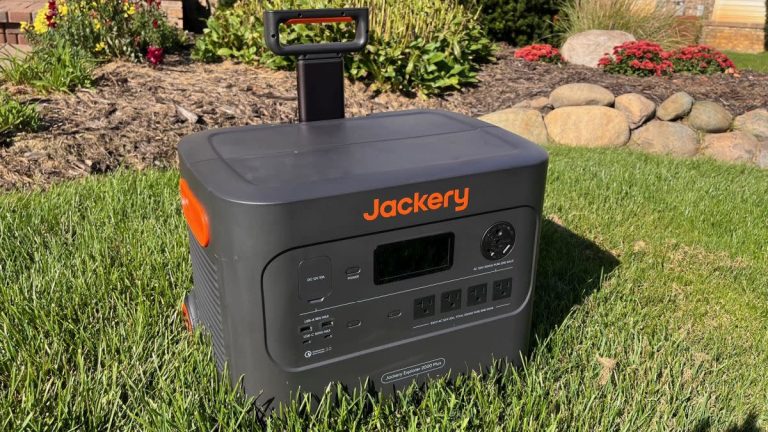
At first glance you could easily mistake the Jackery Explorer 2000 Plus for a beverage cooler, what with its distinctive shape, telescoping handle and convenient rear wheels. No beer in here, though, just a massive battery and even more massive power inverter, one that can crank out a whopping 3,000 watts — more than any other power station in the group.
The Explorer is also one of the most expandable products here, supporting up to five external batteries for a whopping 12,000Wh. You can even link a second Explorer, with five extra batteries of its own, and bring your available power output to 6,000W and capacity to over 24,000Wh — while also adding 240V support for the likes of clothes dryers and well pumps. That’s a lot of juice, enough to run an entire house. (That said, the total cost of such a setup — in the neighborhood of $20K — might require you to remortgage it.)
Back to the power station itself: It has ample AC and DC ports, plus a 25-amp circular AC outlet for use with RVs and various appliances. Unfortunately there’s no Qi charging pad up top, despite there being ample room.
Jackery’s SolarSaga 200 panels are a bit easier than most to set up thanks to a simplified weather-resistant cable that connects to the Explorer. However, although it’s less hassle than the multi-connector cords employed by most panels, it’s also proprietary, meaning it limits your ability to go third-party if you’re looking for cheaper options.
The Jackery app is useful for basic monitoring and enabling settings like battery saver and quiet charging, but it proved a bit flaky, often failing to accurately reflect what was happening on the device. When I manually powered on both the AC and DC outlets, for instance, the app showed only the latter as active. Later, after returning to the home screen, the device showed 0% power remaining, even though it was still fully charged. Hopefully Jackery will address these bugs in either a firmware or app update.
Although it’s priced roughly the same as the power stations from Anker and EcoFlow, the Jackery Explorer 2000 Plus edges out both thanks to higher output power and greater expandability. If those features rank high for you, this is the power station to pick.
Battery type: LiFePO4 | Capacity: 288Wh | Output power: 300W | Weight: 8.3 pounds | AC outlets: 1 | USB ports: 3 | Expandable: No | Solar panel tested: 40W (adds $100)
About as small and lightweight as these things come, the Explorer 300 Plus moves easily from one room to another — great for those times when it’s inconvenient to stay tethered to a big, heavy power station. Weighing in at just over 8 pounds and equipped with a convenient folding handle, Jackery’s little lunchbox goes wherever you need it to.
Of course, a small form factor means limited space for ports. The Explorer has just three USB ports (only one of them Type-A), one AC outlet and one 12-volt DC port. You could potentially charge the unit via your car’s power port (via USB-C), but Jackery doesn’t supply the necessary cable. The good news is that it’s very quiet while charging or operating, even when its fan kicks on.
I tested another charging option, Jackery’s optional SolarSaga 40W folding solar panel, which has a magnetic clasp that makes it easy to store and tote. The company estimates 7.5 hours to fully recharge the 300 Plus using sun alone, but of course that’s based on having 7.5 hours of unobstructed light and optimal positioning the entire time. Unfortunately, there’s no stand or any other means of propping up the panels. I tried leaning them against the power station itself but couldn’t get them to stay fully extended and or angle toward the sun. For what it’s worth, the larger SolarSaga 100W panels ($250) have a built-in kickstand, much like others I tested.
There’s a Jackery app that can connect to the power station for status monitoring and customization, but both an Android phone and an iPhone produced error messages in the final step of the pairing process. I checked Jackery’s support site for help, but at this writing there was no information whatsoever pertaining to the Explorer 300 Plus. For the record, the same phones had no trouble pairing with the Jackery 2000 Plus, so I suspect my review sample was defective in this respect.
Although you lose some versatility with a smaller power station like this, it’s worth considering if you want something that’s easy to move from room to room and suitable for powering small devices.
Battery type: LiFePO4 | Capacity: 403Wh | Output power: 600W | Weight: 20 pounds | AC outlets: 2 | USB ports: 3 | Expandable: Yes | Solar panel tested: No
As a general rule, water and electricity don’t mix well. But splashes and such aren’t a problem for Bluetti’s AC60, which is IP65-rated against dust and water and comes with every port covered by a removable rubber cap. If it gets caught out in the rain or snow, a quick towel-dry gets you back in business.
That’s one of the AC60’s major benefits; the other is expandability. You can connect up to two Bluetti B80 external batteries, each supplying an extra 806Wh of capacity (for a maximum total of just over 2,000Wh). This option lets you keep your up-front cost on the lower side but not lock yourself into the capacity afforded by the main unit.
Speaking of which, the AC60 offers a modest 403Wh on its own. But its output power is impressive: up to 600 watts (or 1,200 in “Power Lifting” mode), enough to run something as substantial as a refrigerator (though not for very long). Meanwhile, it weighs a very manageable 20 pounds and carries easily thanks to its folding handle.
I tested the AC60 with one B80 expansion battery. The former stays almost silent while charging, but when you plug in a B80, its fans kick on and definitely make some noise. It’s unfortunate that the B80 lacks a dedicated AC charging input; you have to connect it to the main unit, or use something like solar panels or a car port if you want to charge on its own.
You can, however, use a B80 on its own; each one has a high-output USB-C and USB Type-A port, plus a 12V car outlet. I like that added versatility; not many power-station expansion batteries support this kind of stand-alone use.
I’m a little disappointed, though, by the sizable rear flashlight, which has only two brightness settings and just isn’t very bright overall. Deeno’s S1500, in comparison, features a similar LED panel that produces considerably more light.
Bluetti’s companion app pairs easily via Bluetooth and provides useful status information, controls and so on. It also provides quick access to customer support, user forums, warranty information and more.
Whether you’re concerned about water or dust mucking up the power-station works, or you want a portable system that can grow as your needs do, the Bluetti AC60 is a top pick.
Pros
Fast AC recharging
IP65 water-resistant
Covered ports
Useful companion app
Qi charging pad for phones
Supports up to 2 expansion batteries
Cons
On the heavy side
Limited main-unit capacity
Expansion batteries require main unit for AC charging
Battery type: Li-ion | Capacity: 648Wh | Output power: 600W | Weight: 15.4 pounds | AC outlets: 2 | USB ports: 4 | Expandable: Sort of | Solar panel tested: No
Most power stations suffer from a key problem: When the power runs dry, you have to wait for it to recharge — if you even have the means to do so. Runhood’s 600 employs swappable batteries, an effective solution and an interesting alternative to dealing with solar panels (though you can easily add those to the mix).
The unit resembles an oversize orange lunchbox, with a carrying handle built into the top and an LED flashlight facing front, just above the control panel. It’s a good design overall, and I like how many outputs Runhood managed to squeeze into this thing. Just one gripe: The stacked AC outlets limit you to just one three-prong plug (the other must be two-prong).
With both batteries installed, the Rallye 600 weighs a manageable 15 pounds. Batteries slide into separated compartments inside the main unit (referred to as the “Host Engine”) and slide out again with ease by pushing a release button. The AC adapter will charge those batteries while they’re inside, as will an included car-port charging cable.
To recharge a battery outside the Host Engine, you’ll need Runhood’s UE256 adapter, which is included with select bundles or available separately. It’s basically a USB port replicator that snaps onto the battery, effectively turning it into a smaller, more portable power bank — but also allowing for external recharging via USB-C. Runhood’s optional solar panels can also recharge a battery outside the Host Engine.
Thus, in something like a camping or power-outage situation, you could swap additional batteries into the Host Engine as needed, charging depleted ones via solar without having to schlep the entire unit outside.
And that’s really the secret sauce here. While something like the Bluetti AC60 can be expanded by way of an external battery pack, the Runhood Rallye 600 affords a more compact and mobile-friendly solution.
Pros
Lots of outputs
Supports hot-swappable replacement batteries
Cons
Only one AC outlet is 3-prong
Using batteries outside unit requires optional adapter
If you’re looking for a power station that charges quickly, serves up an abundance of outlets and pairs with an easy-to-use mobile app, the EcoFlow Delta 2 Max answers the call. It can also accommodate up to two external batteries for even more capacity. Without those benefits, it might be harder to overlook some of the usability frustrations I encountered in my testing.
This 50-pounder is lighter than the Anker and Jackery models, which is good because it lacks wheels. But even with the two sturdy built-in handles, it requires considerable muscle to move around. What’s more, because the handles protrude to the sides instead of up, it’s more difficult to see the status screen that’s embedded in one end. That screen is plenty bright, but you either have to crouch down or tip the unit awkwardly.
Also awkward: EcoFlow put the AC outlets and 12-volt port on one end and the USB ports on the other. Expansion-battery ports live on the side. I can’t say I see any advantage to this design; indeed, it’s annoying having to check both ends to find what I want, especially on a heavy, wheel-less unit. Nearly all other power stations arrange everything front-and-center, which I find far more convenient.
EcoFlow’s 220-watt solar kit is interesting in that the four folding panels are bifacial, aka double-sided, which could potentially result in more sun absorption and higher input wattage. But the execution is strange: The carrying case doubles as a stand for the panels, but it’s not super obvious how it works, and the printed quick-start guide offers little help. You need to clip four included carabiners (all made of flimsy plastic) to both the stand and the panels. If you want to change the angle to better meet the sun, you partially zip the case closed to make it stand up straighter. I have concerns about the long-term durability of this design; zippers are notoriously troublesome, and the clips seem likely to break.
Because the Delta 2 Max relies on standard connectors, you could potentially choose different panels. In the end I found EcoFlow’s to be heavy, cumbersome and an overall pain.
Lest I sound too harsh about this power station, I’ll borrow Han Solo’s description of the Millennium Falcon: She’s got it where it counts. There’s plenty of power on board, room for more outboard and a useful companion app to let you monitor and tweak things. I just don’t love some of EcoFlow’s design decisions, especially with regard to the solar panels.
Pros
Fast charging
Lots of outputs
Bright status screen
Excellent companion app
Double-sided solar panels
Cons
Ports inconveniently spread out across three sides
The Solix F2000 (also known as the PowerHouse 767) is a heavyweight in every sense of the word, starting with actual weight: It’s 67 pounds on its own, and if you tack on the massive 400-watt solar panel array, that’s another 35. Thankfully, in addition to a pair of carrying handles to help you lift this monster, it has wheels and a completely hidden telescoping handle that extends from the front. It’s a clever design, though that handle could get in the way if you’re trying to wheel the unit into a tight space.
Like the Jackery Explorer, the F2000 serves up four standard AC outlets and a TT-30R outlet for use with RVs, though the latter’s amp output isn’t specified anywhere. Is it 20 amps like the other outlets, 25 like on the Jackery or 30 because it’s a “TT-30”? Unfortunately, Anker chose not to label any of the ports — AC, DC, USB or otherwise — with power output numbers. It’s a small thing but definitely inconvenient if you want to make sure any given outlet has the power you need.
I also found myself wishing for a Qi charging pad up top, but you’ll have to use a cord to charge your phone.
If you end up needing more than the 2,048Wh the F2000 provides out of the box, you can double it by adding a second battery — but only one, which is a bit limiting. EcoFlow’s power station can accommodate two, while Jackery’s Explorer supports up to five.
Anker’s HyperFlash technology promises an 80% recharge in under 90 minutes (using AC power), which is extremely impressive. And the company’s solar array brings in almost double the charge of others I tested, but it’s large, heavy and cumbersome — difficult for one person to set up and difficult to reorient toward the sun throughout the day. If you live on your own, you could opt for a pair of 200-watt panels instead.
The nicely polished Anker app shows not only power remaining but also the consumption for each individual port, not just AC or DC on the whole. From the main screen you can quickly toggle power-saving mode on or off and choose from any of the three flashlight brightness settings. (The LED strip is pretty dim overall, though — useful for seeing what you’re doing with plugs and such but hardly a camp light.) Take note that the app relies on Bluetooth connectivity; it doesn’t do Wi-Fi, so your phone needs to be in close proximity.
Although it’s not the most expandable power station in the group, the Solix F2000 provides ample power for lots of devices, large and small.
Battery type: LiFePO4 | Capacity: 1,036Wh | Output power: 1,500W | Weight: 31 pounds | AC outlets: 3 | USB ports: 5 | Expandable: No | Solar panel tested: 200W (add $400)
To borrow a car analogy, the Deeno GT S1500 is the efficient midsize sedan in this roundup, combining a solid selection of ports with some muscle under the hood. It’s comparatively affordable and, er, easy to fit in the garage. (Even its name is car-like!)
Although it weighs only about 30 pounds, the S1500 delivers an impressive 1,500 watts of output power. I like the large, easy-to-read status screen that’s flanked by all available AC, DC and USB ports. There’s also a 15-watt Qi pad up top, awesome for phone charging.
I can’t say I fully understand the handle design, though: The two corner grips telescope up about 2 inches when you lift the S1500, to no discernible advantage. I guess if you’re wearing heavy gloves, now you have more room to slip your hands in. But if the handles didn’t move the way they do, the unit wouldn’t be any easier or harder to carry.
There’s a large LED panel on the rear of the station with three light levels (the highest being quite bright), and it can also produce an SOS flash.
Deeno promises a full recharge (via AC power) in just two hours, a number my informal testing bears out. (In fact, I went from 23% to full in just one hour, so it would appear to be even faster than Deeno’s claim.) There’s an included car adapter for recharging while driving, but that takes roughly three times as long.
As for solar, the optional 200W solar panel array (which is a bit less expensive than most) includes three separate kickstands and a convenient zippered compartment that holds the permanently affixed charging cables. When paired with the solar cables included with the S1500 itself, you get a run of nearly 20 feet — very handy if your solar setup needs to have some distance from the station.
Do I wish Deeno offered a companion app for monitoring, settings and all that? Sure. Would I let that stop me from choosing this “midsize sedan”? Definitely not. Deeno may not be a household name, but the S1500 is a superb portable power station.
Not to be confused with mobile chargers, those little pocket-size batteries many people carry while traveling, power stations employ larger, heavier cells designed to run more and larger devices. Depending on how much capacity it has, we’re talking anything from a laptop or fan to a space heater or refrigerator. Shoot the works and you might be able to power your entire home — or at least most of the major appliances.
The 7 power stations tested in this story. (Rick Broida/Yahoo News)
This stuff can be confusing, though. You’re going to see a lot of numbers pertaining to things like watts and volts, a lot of terms like “peak power” and “LiFePO4” and prices ranging from around $300 on up into the thousands. For purposes of this roundup, we’re focusing less on the techie aspects of this gear and more on the real-world applications: keeping your devices and appliances powered during a power-outage situation and finding the best bang for the buck in terms of capacity, number of ports and ease of use.
Whenever possible we tested solar panels as well, because the sun might be your only lifeline in an extended-outage situation. Just be prepared for some added expense, because these panels can add hundreds of dollars to the cost of your setup. (Good news, though: They may qualify for tax rebates.) They’re also a far cry from a standard AC outlet in terms of power supply; it takes far longer to recharge a power station via solar than it does via a wall plug. (See below regarding the promise of solar versus the reality.)
Before we dive into the stations themselves, let’s review some of the important features and options:
Battery capacity: This is the big one. More capacity equals more juice for your stuff. (Think of it as the, er, gas tank.) It also equals a higher price, more weight and usually more ports, features, etc. The challenge here is determining how much capacity you need, especially because there are different metrics used to identify it: mAh (milliamp hour), Wh (watt hour), kWh (killowatt hour) and so on. Some power stations are also expandable, meaning you can connect supplemental batteries to expand the overall capacity. Bottom line: Buy the highest-capacity power station you can afford, ideally one that’s expandable, while also keeping in mind the next item:
Size and weight: This should come as no surprise: The larger the battery capacity, the larger and heavier the power station will be. So-called lunchbox models — named for their shape and integrated handles — might weigh anywhere from 5 pounds on up to 20, which makes them relatively easy to tote where needed. But a big power station like the Anker Solix F2000 can tip the scales at nearly 70 pounds — not to mention any supplemental batteries you’ve added. If you’re planning on something like that to take up semi-permanent residence, it might behoove you to also purchase a smaller, lighter model that can move around. Also, look for wheels and a luggage-style telescoping handle, which makes relocating the big batteries much easier.
Battery type: More power-station makers are switching to lithium iron phosphate (aka LiFePo4) batteries, which are known to be safer for home use than their lithium-ion counterparts. They also charge faster and have much longer lifespans, by most estimates anywhere from 3 to 5 times longer. That means a better return on your investment, even if you pay a little more up front.
The Deeno GT power station has front-facing ports and an informative display — but no companion app. (Rick Broida/Yahoo News)
Total output power: Different devices and appliances consume different amounts of power. A mini-fridge, for example, might use around 45 watts, while a full-size one might need more like 500. A simple space heater: 1,500 watts. A laptop: 90 watts. A CPAP machine: 30 to 60 watts. Consider numbers like those when evaluating a power station’s total output power. A 300-watt model has a much more limited scope than one capable of 2,000 watts. (But it’s also cheaper and lighter — so, you know, trade-offs.)
Number and type of ports: What do you need to plug in? Most power stations have at least one AC outlet and multiple USB ports. You might also find things like a 12-volt car socket (which used to be called a cigarette lighter), a DC5521 port, a TT-30 outlet (sometimes known as an RV30) and possibly even a Qi charging pad for phones and other devices. Needless to say, more ports and outlets give you more flexibility. Take note, however, that some power stations do a better job than others at labeling; in a few cases it’s not clear exactly what’s what.
Display size and readability: Most of the power stations here employ an LCD status display, showing remaining battery life, input and output measurements, and so on. Readability is usually quite good indoors, but some are harder to see outside, especially under bright sun. And because they’re almost always mounted on one side of the power station, you usually have to tilt the unit up or squat down to see it. That’s why I’m partial to models that have companion apps, which let you monitor everything from your phone and, in some cases, enable or disable ports, tweak settings and so on.
If you’re a total novice when it comes to power stations, look for a model with decent printed instructions. (Rick Broida/Yahoo News)
Printed instructions: Even I get confused by tech sometimes, and power stations can be a little intimidating — especially when it comes to things like solar panels. Unfortunately, not all companies bother to supply decent instruction manuals, even with products costing $1,000 or more. Below, I’ve shouted out the ones that are particularly good — or particularly bad.
3 important things to know about power stations
While I wish I could say that big batteries are the ideal alternative to gas generators, there are three caveats I think you should know.
Power stations aren’t “generators,” at least in the traditional sense. Although some manufacturers use that terminology in their product descriptions, these are not machines that convert mechanical energy into electricity. They’re rechargeable batteries, ones that can themselves be recharged via electricity. Now, if you add solar panels to the mix, you can more accurately describe the setup as a generator, because the sun is indeed generating power. But as you’ll see in the next item, solar doesn’t always pay the rent.
The promise of solar charging is different from the reality of solar charging. In my testing, the various panels rarely produced anywhere near their rated maximum watts — and that means sun-powered charging may take longer than expected. The panels included with Jackery’s Solar Generator 300 Plus, for example, promise up to 40 watts, but when I placed them under direct sun, I never saw the input number climb above 25. On a slightly hazy day, it typically ran around 16 to 17 watts. Anker’s mammoth 400-watt array, meanwhile, rarely went above 270. Deeno’s 220-watt panel topped out around 150 watts. Yes, there are lots of variables that affect solar charging — and that’s the problem. Even under the most optimal conditions — clear skies all day, perfect panel positioning, unobstructed exposure throughout that day — you’d need a lot of hours to fully recharge a power station on solar alone.
Whole-home setups aren’t really here yet. When I started working on this story, my hope was to equip my modest-sized suburban home with an off-the-shelf battery backup system that would live in the basement and keep the lights on during a power outage. Unfortunately, even if I invested thousands of dollars, I wouldn’t get the output power or capacity needed to run the whole house. I learned I could offload certain circuits (furnace, well pump, refrigerator, etc.) to a secondary breaker box, then set up a transfer switch to manually flip when needed, but even then I might get only one or two days’ worth of power. (Better than nothing, to be sure.) And these folding, portable solar panels aren’t really intended for permanent installation; they’d have to be hauled out and set up whenever needed.
One more thought on the whole-home plan: Here in Michigan, I had a hard time finding an electrician who was experienced with this kind of thing. More than a few declined to provide an installation estimate because they weren’t familiar with the equipment.
Companion apps can be helpful for monitoring power-station status, adjusting settings and more. (Rick Broida/Yahoo News)
Make no mistake, systems like this are almost certainly the future, and they can be extremely useful as they are right now. If you live someplace where a gas generator isn’t practical or desirable, they’re an excellent option. But it might be another year or two before you can flip a switch and let a battery do the heavy lifting for your whole house.
CNBC’s Julia Boorstin uses AI tools to plan her vacation to Hawaii and shares details on how major tech companies are entering the AI travel planning space.
Bota’s end-to-end bio-foundry tackles the challenge of transitioning from lab-developed technology to industrial-scale production, and empowers the rapid and efficient translation of cutting-edge biotechnology into tangible commercial value.
SAN FRANCISCO, HANGZHOU and XINCHANG, China, June 24, 2024 /PRNewswire/ — Bota Bio, a global industrial biotechnology company specializing in sustainable biomanufacturing solutions, and NHU, a global leader in the fine chemical industry, have announced the successful commercialization of their first collaborative project and the establishment of a strategic partnership to cooperate in the field of biomanufacturing. This alliance, rooted in NHU’s dedication to innovation and Bota Bio’s proprietary full-stack strain development platform, aims to rapidly and efficiently translate cutting-edge biotechnological achievements into industrial value.
As an industrial biotechnology company, Bota Bio has developed end-to-end technical capabilities from bio-computation and design to high-throughput screening, laboratory-scale validation, process optimization, pilot scale-up, and industrial production. Leveraging NHU’s extensive production experience in specialty chemicals, the collaboration has fully harnessed platform technologies, achieving the optimization and screening of industrial fermentation strains. Together, they have developed a new generation of industrial production strains with higher production efficiency and successfully implemented them in commercial production setting. To date, this project has generated substantial economic benefits for both entities, with expectations for continued growth.
This partnership not only witnesses the application and successful commercialization of Bota Bio’s biomanufacturing technology from the laboratory to industrial production, but also underscores the ongoing collaboration with NHU to further advance the adoption of cutting-edge biotechnology in the industrial setting. Together, they are committed to leveraging their combined strengths to introduce more environmentally sustainable products and solutions to the market.
About NHU Zhejiang NHU Co., Ltd. (abbreviated as NHU) was founded in 1999 and listed in 2004 with the stock code of 002001. Since the inception, we have been firmly holding on to the belief of developing through innovation and thriving in competition. Specializing in functional chemicals with an emphasis on nutritional chemicals, aroma chemicals and polymers, NHU devotes itself in the stages of R&D, production, sales, and service of the products. We offer integrated solutions to customers across over 100 countries and regions in a wide range of domains including nutrition & health, personal and home care, transportation, environmental protection, and new energy. Leveraging our quality, healthy, green, and low-carbon products, we are committed to improving quality of life for all and generating lasting values for stakeholders. Currently ranked among China’s top 100 fine chemical companies and top 100 listed companies, NHU is doubling its effort to rise to the top of the world’s functional chemical industry. For further information, please visit https://www.cnhu.com/en
About Bota Biosciences Bota Biosciences is a global industrial biotechnology company connecting biological design to scale-up manufacturing to accelerate shifts to sustainable living. Bota has built an integrative bioengineering platform, to develop and implement efficient, eco-friendly, and cost-effective biomanufacturing technologies. Committed to its mission, Bota established its own pilot plant and manufacturing facility, affirming its dedication to offering scalable industrial solutions and market-ready products. This infrastructure strengthens support for customers and partners across industries such as nutrition, food, personal care, and animal health. Powered by a dynamic, multidisciplinary team, Bota Bio channels biotech innovations to create a global impact. For further information, please visit http://bota.bio/en
BEIJING, June 24, 2024 /PRNewswire/ — From June 21 to 23, IMCAS Asia was held in Bangkok, Thailand. Wingderm®, a provider of medical aesthetic devices, has garnered significant attention with its innovative aesthetic solutions.
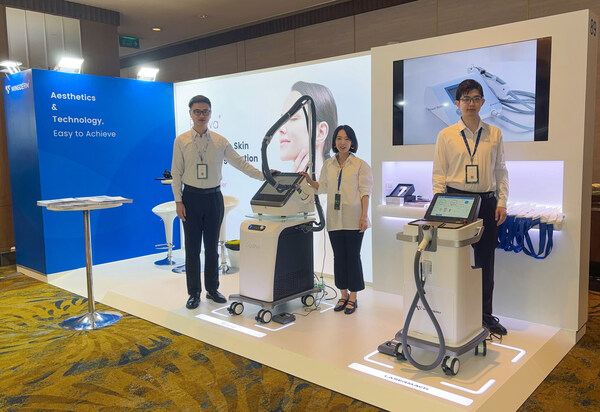
Wingderm® at IMCAS Asia 2024
Many visitors stopped by Wingderm®’s booth and stayed for valuable insights. Wingderm® members communicated and discussed with peers, industry experts and business representatives from all over the world, introducing the design concepts and positionings of the products, staying current with the latest industry and technology trends, learning the successful experience of many outstanding companies. Through communication with all of them, Wingderm® can design the strategies of R&D and market positioning more accurately.
Throughout the exhibition, Derma Innovation, Wingderm®’s distributor in Thailand, has provided substantial support and assistance. With the local advantages of Derma Innovation, Wingderm® can communicate with visitors more effectively, enhancing their trust and recognition of Wingderm®’s products and services.
At every international exhibition, Wingderm® presents professional products and advanced aesthetic concepts, while also improving the reputation. In the future, Wingderm® will continue to participate in international exhibitions and industry events, and look forward to working with excellent partners to provide high-quality products and services for global beauty seekers.
About Wingderm®
Wingderm® since its establishment in 2016, with the aim of “Aesthetics & Technology, Easy to Achieve”, provides leading and reliable intelligent photoelectric medical aesthetic devices, which have been exported to more than 80 countries, with over 10,000 units installed, recognized for safety and effectiveness by experts and beauty seekers.
Sure there are products to turn to when you wear short-shorts. But what about when it comes to facial hair? Well, first and foremost, there’s nothing to be ashamed of — It’s quite common. But if it bothers you there is a solution — the highly-rated TouchBeauty All-in-One Hair Trimmer. This wonder is an affordable alternative, with a dual-head design that works on eyebrows, nose hair, peach fuzz or your particular problem areas. But best of all? It’s on sale for just $13 at Amazon.
Amazon
Have unwanted facial hair? Meet your new best friend.
No one wants rogue hairs popping up at random, inopportune times. And no one wants to shell out tons of cash at a dermatologist’s office to get rid of it. This little gadget does the trick. So if you’re ready to upgrade your hair removal routine, now’s the time to add this to your cart, because we don’t expect the price to drop lower than $13 for a few months.
Why do I need this? 🧐
Shaped like a pen, this portable device boasts an interchangeable head with two blades. One targets everything from eyebrows to rogue chin and ear scruff. And you can use it on your arms and legs if you’d like. These blades are hypoallergenic and made from durable stainless steel, and the head’s tapered end allows for better control and precision.
Its second blade has a rounded shape that’s ideal for tackling nose hairs, though you’ll want to make sure you don’t go overboard. Nose hairs serve an important purpose by keeping irritants from entering your body, so only target the super-long, visible ones — and never pluck!
Another cool feature? The TouchBeauty is waterproof, so you can use it in the shower while you’re waiting for your conditioner to set. (We love a good time-saver!) It also comes with a handy cleaning brush and a cover for easy packing. And pick up some AAA batteries so you can power it up right away.
This compact hair trimmer comes in pink or white and includes two precision heads. (Amazon)
What reviewers say 💬
Amazon shoppers love this portable hair remover — so much so that over 6,000 of them have given it a sleek five-star rating.
Pros 👍
“A must-have!” exclaimed one happy customer. “Love love love this! It works well, is light in weight and you can take it everywhere with you!”
“I recently noticed that I … dare I say … had some longer nose hairs,” wrote an impressed reviewer. “I got this and used one attachment for my eyebrows and the round one for my nose hair … Changing the attachments is very quick and easy. This is a new must-have for me.”
“So easy to use!” raved one pleased shopper. “I was a little scared to use this but there was no pain involved at all. So glad I bought it. No more annoying nose hair!”
Cons 👎
Some shoppers had a couple of suggestions.
“It’s a perfect little size but packs a punch!” wrote a shopper. “I wish it was USB rechargeable instead of battery (AAA) operated, but it does a GREAT job.”
“It’s been working very well for me so far,” another shopper shared. “Remember to only use it in short bursts when the device is in contact with your nose hairs; If you keep it running the entire time you’re trimming, it will get very hot.”
Amazon
Over 6,400 Amazon reviewers rave about this cutie for tackling unwanted body hair.
BEIJING and BRIDGEWATER, N.J., June 23, 2024 /PRNewswire/ — Gan & Lee Pharmaceuticals (Gan & Lee, Shanghai Stock Exchange: 603087) announced the results of the Phase 1b/2a clinical study of the Company’s independently developed glucagon-like peptide-1 (GLP-1) receptor agonist, GZR18 Injection, in an obese/overweight population in China, along with the results of two other innovative insulins’ preclinical studies in poster presentations at the American Diabetes Association’s(ADA’s)84th Scientific Sessions.
This randomized, double-blind, placebo-controlled, dose-escalation Phase 1b/2a clinical study evaluated the safety, tolerability, pharmacokinetics and efficacy of GZR18 Injection in Chinese subjects with obesity/overweight after multiple administration on a once-weekly (QW) or bi-weekly (Q2W) dosing interval. A total of 36 obese participants were enrolled in the study and randomized in a 3:1 ratio to receive a dose titration of 1.5 mg to 30 mg of GZR18 Injection or a matching placebo for a total of 35 weeks.
The study results demonstrated a superior efficacy of GZR18 Injection than placebo for weight reduction in Chinese obese subjects. After 35 weeks of treatment, the mean weight change from baseline in the GZR18 QW group was -16.5 kg (95% CI: -19.9 kg, -13.1 kg); the placebo-adjusted mean percent weight change from baseline was -18.6% (95% CI: -25.5%, -11.6%). Although it was not a head-to-head study, when compared to the published data on weight reduction of similar products currently available on the market, GZR18’s weight-reducing ability outperformed Semaglutide and dual-incretin receptor targeted Tirzepatide in similar study duration. Meanwhile, the mean weight change from baseline in the GZR18 Q2W group was -11.3 kg (95% CI: -15.4 kg, -7.2 kg); the placebo-adjusted mean percent weight change from baseline was -13.5% (95% CI: -21.0%, -6.0%).
In addition, the percentage of participants achieving weight reductions of ≥5%, 10%, and 15% from baseline were 100.0%, 90.0%, and 80.0%, respectively, in the GZR18 QW group, and the percentage of participants achieving weight reductions of ≥5%, 10%, and 15% from baseline were 71.4%, 71.4%, and 42.9%, respectively, in the GZR18 Q2W group. No participant in the placebo group achieved a weight reduction of 5% and above.
In terms of safety, GZR18 Injection was well tolerated in obese participants. The most commonly reported adverse events (AE) during treatment were gastrointestinal related AEs, and all were mild to moderate in severity. This is consistent with the incretin-based therapies approved for the treatment of obesity and overweight and occurred mainly in the early dose-escalation period. There were no serious hypoglycemic events in this study and no serious adverse events related to the investigational drug.
Gan & Lee also announced that a multi-center, placebo-controlled, randomized, double-blind, 30-week Phase 2 clinical study evaluating the efficacy and safety of GZR18 Injection in Chinese adults with obesity and overweight is in progress. A total of 338 adults with obesity or overweight were enrolled in this study, and the study explores a broader dose range and frequency of administration. The main body of the Phase 2 has now been completed, and the priliminary study data further support the results of the reported Phase 1b/2a obese/overweight study, particularly the positive results achieved with bi-weekly dosing frequency.
“We are very excited about the clinical results of the GZR18 program to the present day.” Dr. Gan Zhong-ru, Founder of Gan & Lee, commented. “Our unique molecular design delays the onset of drug action and attenuates the peak effect, thereby improving drug tolerability and achieving smooth and sustained weight loss in a stepwise manner. Moreover, GZR18 has a longer duration of action, which is expected to be administered once every two weeks. Meanwhile, we hope that the clinical results of GZR18 will provide more evidence to reveal the mechanism of action of different targets of Incretins and Glucagon.”
In addition, Gan & Lee announced the results of preclinical trials of the company’s investigational products: GZR4, a once-weekly insulin analog, and GZR101, a premixed dual insulin analog, at the ADA’s 84th Scientific Sessions:
Once-weekly Insulin Analog GZR4
GZR4 is a novel ultra-long-acting basal insulin analog designed for once-weekly administration. Results from preclinical studies have shown that GZR4 has a significantly higher affinity for human serum albumin (HSA) and a significantly lower affinity for the insulin receptor than insulin Icodec, another once-weekly insulin analog. Moreover, unlike insulin Icodec, GZR4 maintains its activity in activating the insulin receptor after binding to albumin. In the studies using animal models of diabetes, the glucose-lowering effect of GZR4 was observed to be 2-3 times greater than that of insulin Icodec. Based on the preclinical results, GZR4 is expected to be the fourth-generation basal insulin that can be administered once a week to achieve an effective glycemic control.
Premixed Insulin Analog GZR101
GZR101 injection is a premixed insulin analog made from a combination of ultra-long-acting basal insulin GZR33 injection and rapid-acting insulin aspart (Rapilin®). Different from traditional premixed insulin analogs, the duration of glucose-lowering effect of basal insulin component (GZR33) in GZR101 can last 72 hours, and there is no significant peak within 24 hours after reaching a steady state with multiple injections. When combined with insulin aspart (Rapilin®️) to make a premixed insulin analog, it can achieve smooth control of fasting and postprandial blood glucose throughout the day. In diabetic animal models, GZR101 is significantly superior than insulin degludec/insulin aspart (IDegAsp) in blood glucose reduction and safety. As a premixed insulin analog developed based on an advanced concept, GZR101 is expected to make an important contribution to the control of blood glucose and the reduction of the risk of hypoglycemia in patients with diabetes globally.
Conclusions and Future Directions The ADA’s 84th scientific sessions highlighted Gan & Lee Pharmaceuticals’ leadership in developing next-generation diabetes and obesity treatments. With these latest preclinical and clinical results, the Company will continue to advance the development of innovative therapeutics for diabetes. While ongoing studies and upcoming trials will further support the positive influence of these innovative medicines on public health issues related to diabetes and obesity.
Forward-looking Statements Forward-looking statements are based on our expectations and assumptions as of the date of the statements. Actual results may differ materially from those expressed in these forward-looking statements due to a variety of factors, and we can give no assurance that such results will be achieved in the future. We undertake no obligation to update or revise any forward-looking statements, whether as a result of new information, future events, or otherwise.
About Gan & Lee Gan & Lee Pharmaceuticals developed the first Chinese domestic insulin analog. Currently, Gan & Lee has six core insulin products, including five insulin analog varieties: long-acting glargine injection (Basalin®), fast-acting lispro injection (Prandilin™), fast-acting aspart injection (Rapilin®), mixed protamine zinc lispro injection (25R) (Prandilin™25), aspart 30 injection (Rapilin®30), and one human insulin injection – mixed protamine human insulin injection (30R) (Similin®30). The company has two approved medical devices in China, namely reusable insulin injection pen (GanleePen), and disposable pen needle (GanleeFine®).
In China’s 2024 National Insulin-Specific Centralized Procurement, Gan & Lee Pharmaceuticals ranked second overall and first among domestic companies in terms of procurement demand for insulin analogs. The company is also making strides in international markets, with the disposable pen needle (GanleeFine®) approved by the US Food and Drug Administration (FDA) in 2020 and received GMP inspection approval from the European Medicines Agency (EMA) in 2024. These achievements significantly boost Gan & Lee’s competitiveness in both international and domestic markets.
In the future, Gan & Lee will strive for comprehensive coverage in diabetes treatment. Moving forward with its mission to become a world-class pharmaceutical company, Gan & Lee will also actively develop new chemical entities and biological drugs, focusing on treatments for metabolic diseases, cardiovascular diseases, and other therapeutic areas.
DONGGUAN, China, June 23, 2024 /PRNewswire/ — Huawei Consumer Cloud Services and Malaysia Airlines have decided to enter a strategic partnership in penetrating Chinese Outbound Travel market. This highly anticipated collaboration was officially announced during the signing ceremony at Huawei’s 2024 Developer Conference. This historic moment was held at the Huawei Developer Conference 2024, adding a highlight to the over 100 exciting events.
Through Huawei Consumer Cloud Services’ advertising platform, Malaysia Airlines will achieve comprehensive digitization of its aviation services. Through data-driven personalized recommendations and precise advertising placements, it will achieve deeply customized marketing effects. This will allow Malaysia Airlines to not only gain insights into travelers’ needs but also grasp market trends, truly embodying a customer-centric service philosophy. The comfortable start to a journey is precisely where Huawei Consumer Cloud Services, as part of the 1+8+N all-scenario ecosystem and media marketing capability, provides advertising marketing and traffic monetization services for advertisers and traffic alliances.
This partnership enables Huawei and Malaysia Airlines to jointly provide travelers with one-stop, full-cycle, and personalized travel services. While meeting travelers’ needs throughout their journey, the two parties have deepened their cooperation, forming a strong win-win situation. As an industry leader in technological innovation, Huawei remains committed to an open ecosystem, providing Malaysia Airlines with advertising marketing and traffic monetization services through its Petal Ads platform, helping it further expand in the Chinese market. This partnership is a strategic decision made by both companies to better serve consumers based on consumer demand.
Mr. Vincent Wen, Director of Cloud Service Business Growth of Huawei, said, ” We are committed to strengthening our partnership with Malaysia Airlines by leveraging our extensive expertise in telecommunications infrastructure, digital solutions, and our deep understanding of the Chinese market. Through collaborative efforts focused on localized strategies and by harnessing Huawei’s robust brand presence and marketing channels in China, Malaysia Airlines can significantly enhance its visibility and market penetration among Chinese travellers. This strategic alignment between Huawei and Malaysia Airlines combines technological prowess, market expertise, and innovation, opening up exciting opportunities in the dynamic Chinese tourism landscape.”
The joint collaboration of MH and Huawei also introduce a young traveler program MHexplorer, empowering young generation to explore the world and broaden their horizons. It incorporated Huawei Consumer Cloud Services’ resource advantage to drive the marketing strategy to ultimate effectiveness and promote the expansion of Malaysia Airlines in the Chinese and Asia-Pacific market. It aims that the perks and conveniences brought by the MHexplorer project will fulfill the yearning for world travel in every young individual’s heart. It also serves as an advocacy and active promotion of the idea.
Mr. Ahmad Luqman Mohd Azmi, Chief Executive Officer of Malaysia Aviation Group (MAG), said, “We are delighted to join forces with Huawei by leveraging their digital capabilities to expand our reach within the APAC region. This strategic partnership aims to elevate our efforts in customer engagement by providing highly personalized experiences and innovative solutions tailored to meet the unique needs of the market. We look forward to exploring new avenues and opportunities that will solidify the Malaysia Airlines position in the region and extend our influence globally as the gateway to Asia and beyond.”
This remarkable collaboration not only showcases the profound cooperation between Huawei Consumer Cloud Services and Malaysia Airlines but also brings a novel aviation travel experience for consumers. In the future, Huawei and Malaysia Airlines will continue to explore and innovate, striving for the development of the global tourism market together. Everything centered around customers, and with continual technological innovation, sincerity, passion, and diligence, they present a broader blue sky to the world.