Monday, June 15, 2026
Google search engine
Home Blog Page 440

iClick Interactive Asia Group Limited Receives NASDAQ Deficiency Notice For Failure to Timely File Form 20-F

0

HONG KONG, May 22, 2024 /PRNewswire/ — iClick Interactive Asia Group Limited (“iClick” or the “Company”) (NASDAQ: ICLK), a leading enterprise and marketing cloud platform in China that empowers worldwide brands with full-stack consumer lifecycle solutions, today announced that it received a notice (the “Notice”) from the Nasdaq Stock Market LLC (“Nasdaq”) dated May 17, 2024 stating that the Company is not in compliance with Nasdaq Listing Rule 5250(c)(1) because the Company did not timely file its annual report for the year ended December 31, 2023 on Form 20-F (the “Annual Report”) with the Securities and Exchange Commission (the “SEC”).

The Notice indicates that, according to the Nasdaq Listing Rules for continued listing, the Company has 60 calendar days from the date of the Notice to submit to Nasdaq a plan to regain compliance. If Nasdaq accepts the Company’s plan, Nasdaq can grant the Company an exception of up to 180 calendar days from the due date of the Annual Report, or until November 11, 2024, to regain compliance. If Nasdaq does not accept the plan, the Company will have the opportunity to appeal the decision to a hearings panel under Nasdaq Listing Rule 5815(a).

The Notice has no immediate effect on the listing or trading of the Company’s securities on the Nasdaq Global Market.

The Company continues to work diligently to file the Annual Report with the SEC as soon as reasonably practicable.

About iClick Interactive Asia Group Limited

Founded in 2009, iClick Interactive Asia Group Limited (NASDAQ: ICLK) is a leading enterprise and marketing cloud platform in China. iClick’s mission is to empower worldwide brands to unlock the enormous market potential of smart retail. With its leading proprietary technologies, iClick’s full suite of data-driven solutions helps brands drive significant business growth and profitability throughout the full consumer lifecycle. Headquartered in Hong Kong, iClick currently operates in eleven locations across Asia and Europe. For more information, please visit ir.i-click.com.

Safe Harbor Statement

This press release contains forward-looking statements, including those related to the Company’s business strategies, operations and financial performance. These statements constitute “forward-looking” statements within the meaning of Section 21E of the Securities Exchange Act of 1934, as amended, and as defined in the U.S. Private Securities Litigation Reform Act of 1995. These forward-looking statements can be identified by terminology such as “will,” “expects,” “anticipates,” “future,” “intends,” “plans,” “believes,” “estimates,” “confident” and similar statements. Such statements are based upon management’s current expectations and current market and operating conditions and relate to events that involve known or unknown risks, uncertainties and other factors, all of which are difficult to predict and many of which are beyond the Company’s control. Forward-looking statements involve inherent risks and uncertainties. A number of factors could cause actual results to differ materially from those contained in any forward-looking statement, including but not limited to the following: the Company’s fluctuations in growth; its success in its strategic shift away from Marketing Solutions to focus on Enterprise Solutions; its success in implementing its SaaS + X business model; its success in structuring a CRM & Marketing Cloud platform; relative percentage of its gross billing recognized as revenue under the gross and net models; its ability to retain existing clients or attract new ones; its ability to retain content distribution channels and negotiate favourable contractual terms; market competition; market acceptance of online marketing technology solutions and enterprise solutions; effectiveness of its algorithms and data engines; its ability to collect and use data from various sources; ability to integrate and realize synergies from acquisitions, investments or strategic partnership; the duration of the COVID-19 outbreak and its potential impact on the Company’s business and financial performance; fluctuations in foreign exchange rates; general economic conditions in China and other jurisdictions where the Company operates; and the regulatory landscape in China and other jurisdictions where the Company operates. Further information regarding these and other risks, uncertainties or factors is included in the Company’s filings with the SEC. All information provided in this press release is current as of the date of this press release, and the Company undertakes no obligation to update any forward-looking statement, except as required under applicable law.

For investor and media inquiries, please contact:
In China:                                                                                   In the United States:
iClick Interactive Asia Group Limited                                    Core IR
Catherine Chau                                                                         Tom Caden
Phone: +852 3700 9100                                                            Phone: +1-516-222-2560
E-mail: ir@i-click.com                                                                E-mail: tomc@coreir.com

Source

Victorian father denies assault and says three-week-old baby died after he accidentally dropped him

0

A Victorian father claims his newborn son died after he accidentally dropped him and denies allegations that he violently assaulted the baby, a jury has been told.

The man, whose identity is suppressed, has been charged with child homicide and is facing trial in the Supreme Court.

Prosecutors have alleged he violently assaulted the baby in a moment of intolerance and frustration — shaking him, striking him, or both after he awoke crying and screaming about midnight.

He initially told paramedics the 24-day-old just went limp in his arms after his partner went to fetch a bottle of milk, the jury was told on Tuesday.

His lawyer said the father repeated the claim at hospital, where the baby later died in November 2017, however police looked into the case and uncovered a different story.

Officers found out the man went to a doctor about his depression and confessed he actually dropped his son, defence barrister Rishi Nathwani SC told the jury on Wednesday.

“It is accepted by (my client) that he was not telling the whole truth,” Nathwani said.

“(But) are there reasons to say (the baby) went limp that are consistent with innocence?”

The man denied the charge of child homicide, he said.

He flagged the defence would question whether a forensic paediatric practitioner, who looked at the baby’s injuries, came into the case with a closed mind.

What was in dispute was whether she “went from an impartial expert to an investigator or an advocate,” Nathwani said.

The fairness and impartiality of the police investigation would also be questioned, the barrister said.

“There’s no dispute there are a number of injuries, but there is a dispute about what they mean,” Nathwani said.

The accused father had no criminal convictions and had worked as a chef, he said.

Prosecutor Mark Gibson KC on Tuesday told the jury the baby died in hospital after sustaining catastrophic injuries, with bruises to his scalp, blood on the brain, brain swelling and bleeding to his eyes.

The injuries raised concern they were non-accidental, and their extent was revealed in scans, he said.

“This case is about what happened in those few minutes in the master bedroom,” Gibson said.

The trial continues.

Source

Equitable access to treatment must keep pace with latest advances in reproductive surgery

0

MANILA, Philippines, May 22, 2024 /PRNewswire/ — Profound benefits of new developments in reproductive surgery that facilitate parenthood and enhance quality of life will only be fully realised by making them accessible to all people experiencing the distress of infertility.

The challenge lies in overcoming socio-economic and geographic influences and ethical dilemmas to ensure equitable and affordable access to these life changing procedures.

Renowned Swiss reproductive surgeon, Professor Anis Feki, will dissect this challenge at the 2024 Congress of the Asia Pacific Initiative on Reproduction (ASPIRE) in the Philippines this week.

Specialist scientists, clinicians, nurses and counsellors in fertility health from around the world are attending the Congress from 23 to 26 May to address new milestones in the diagnosis and treatment of one in every six couples living with infertility.

Professor Feki – Head of the Department of Obstetrics and Gynaecology at Hospital Cantonal and Professor at the University of Fribourg, Switzerland – says it is vital that all segments of society benefit from exciting advances in reproductive surgery and supporting technologies.

In his opening lecture at the ASPIRE Congress in Manila, Professor Feki, will stress that “reproductive surgery extends beyond its medical and technical aspects to touch upon far reaching elements of human life and well-being.

He says: “There are multiple outcomes in the future of reproductive surgery. In helping to facilitate parenthood, this form of surgery also strives to address deep psychological impacts of failing to conceive leading to feelings of inadequacy, stress and depression.

“Additionally, it aims to overcome pain and discomfort from conditions such as endometriosis that impact on quality of life.

“However, there are significant disparities in access to reproductive health care services influenced by socio-economic status, ethnicity and geographic location.

“The role of health insurance and government policies in covering advanced reproductive care can greatly affect accessibility. There is a need for policy reforms to include comprehensive coverage for reproductive health issues.”

Professor Feki, who is Chair-elect of the European Society of Human Reproduction and Embryology, said technological advances, particularly minimally invasive and robotic surgeries, have significantly improved patient outcomes with quicker recovery times.

“Emerging fields such as regenerative and precision medicine are revolutionising reproductive surgery by enabling more personalised and effective interventions,” he said.

“Innovations such as stem cell therapy and tissue engineering to restore fertility and hormone function are at the forefront offering new possibilities for treating infertility and other reproductive conditions.

“Artificial intelligence algorithms can analyse vast amounts of medical data to enable surgeons to make more informed decisions and tailor approaches to each patient enhancing surgical precision and safety.

“Machine learning algorithms can also sift through genetic information to identify mutations and genetic markers associated with infertility, guiding personalised treatment strategies.

“Robotic surgery has enhanced the precision, flexibility and control beyond the capabilities of conventional techniques, especially in complex procedures.

“However, these approaches can be costly, making them inaccessible to some patients in different countries. The challenge lies in ensuring equitable access to these life-changing procedures so they are available to wider populations.”

The ASPIRE Congress is being held at the Philippine International Convention Centre in Manila from 23 to 26 May. For further information, go to the Congress website www.aspire2024.com 

Source

Want to fit in while in Japan? Follow these unusually specific ‘life rules’ issued by the government

0

Japan recently introduced a Digital Nomad Visa that allows foreigners from 49 countries to live in the country for six months.

But before they pack their bags, they may want to read Japan’s “Life and Work Guidebook,” which is aimed at helping foreigners fit in.

The guidebook, published by Japan’s Immigration Services Agency, provides advice on immigration, medical care and housing. But the chapter on “Daily Rules and Customs” is where foreigners will find specific guidance on “life rules” that illustrate Japan’s emphasis on collectivism and respect.

Here are some of the rules.

1. Making noise 

According to the guidelines, “Japanese people tend to think that loud sounds and voices bother others.”

Not only party and music levels should be kept to a minimum, but also “voices” and “TV” levels, the guidebook states.

Foreigners are also advised to avoid making noise when using “a washing machine, or a vacuum cleaner, or taking a shower early in the morning or late at night.”

A Japanese guidebook for foreigners advises against making noise by using washing machines early in the morning or late at night.

Runstudio | Moment | Getty Images

Listening to music through earphones may not even be enough on buses and trains.

“Be sure that your music is not too loud and cannot be overheard outside of the earphones,” the guidebook states.

2. Coughing manners 

Section 2.2 of the rulebook deals solely with “coughing manners.”

There are even separate rules for “sudden” coughs and persistent coughs.

“If you suddenly cough or sneeze, do so in your elbow or inside your sleeves of jacket,” it states. “Do not use your hands.”

Others should wear a mask, it states.

Mask-wearing was a fixture in Japanese daily life even before the Covid-19 pandemic, according to the Ministry of Foreign Affairs, thanks to the country’s focus on personal hygiene and cleanliness.

“Japan is home to a culture of being considerate of other people,” the Ministry of Foreign Affairs said in an article about mask culture. “These defining characteristics of the Japanese people reinforced their awareness so as to avoid causing trouble to others around them, and this may have made it easier for masks to come into extensive use.”

Mask usage rose in prominence in Japan during the Spanish influenza, which began in 1918, and increased through the years, according to the ministry. Now, they’re considered “a stylish fashion item,” it added.

3. No phones on bikes

Many countries prohibit using mobile phones while driving cars. In Japan, this rule also applies to bikes.

Bicycles are a popular way for locals and tourists to get around the country, with many tourist destinations offering rental bicycles, according to Japan Guide.

Cyclists in Tokyo cannot hold, talk or text while riding a bike. Earphones are also prohibited by law.

Recep-bg | E+ | Getty Images

4. How to act on public transport

Talking on the phone on buses and trains is frowned upon in Japan.

The guidebook highlighted that such a gesture is deemed highly impolite as it “bothers other people.”

Talking to seatmates can also offend in Japan —if it’s too loud.

“Speaking in a loud voice is considered to be manner violation,” the guidelines states, in reference to passengers on buses and trains.

“Talking on the phone on a bus or train is considered to be bad manners in Japan,” states a guidebook for foreigners published by Japan’s government.

Daj | Amana Images | Getty Images

Most Japanese passengers stand or sit in silence when riding public trains, according to Japan Rail Pass, a website for train travel in Japan.

Foreigners are expected to abide by such rules and are reminded to speak to the train driver only in “emergency situations,” it said.

Anyone who has ever been hit in the head by an errant backpack may appreciate the government’s final tip for public transport: “When a bus or train is crowded, take care so your backpack does not bother other people.”

Why Japan’s advice is so detailed

Japan is a ethnically homogeneous country with lower rates of immigration than other countries, said Henri Vlahović, the managing director of Meiji Academy, a Japanese language and culture school.

As such, it’s focused on retaining its culture by encouraging foreigners to conform, he said.

“Immigration is usually seen as something more sensitive,” said Vlahović. “The government is very concerned about reducing or omitting any type of trouble that could occur by foreigners not following certain rules.”

Vlahović explained that those rules govern how Japanese society functions, which is also expected from foreigners living and visiting Japan. 

Source

You got an air quality alert. What now?

0

If you’re in the United States this summer, you may notice an uptick in air quality alerts coming to your phone. As we saw last summer — when wildfires in Canada caused much of the East Coast to experience smoke and air pollution, not to mention hazy, orange-tinted skies in New York City — air quality is expected to be impacted by seasonal changes. For one, wildfire season has become more frequent and intense, a pattern experts expect to continue as climate change creates warmer conditions. But other factors can also contribute to air pollution, which is associated with negative health effects, especially for certain vulnerable groups.

How can you stay safe, and what should you do if your area is experiencing poor air quality? Here’s what to know.

An air quality alert is a notification given by various public health officials, including state and local air quality agencies, that warn the public when air pollution reaches unhealthy levels. You can sign up to get alerts on your phone from the Environmental Protection Agency.

The Air Quality Index (AQI) is the system that warns the public when air pollution is dangerous. Different advisory levels for air quality range from the green “good” level to the “hazardous” maroon level.

There are about 4,000 monitoring stations owned and operated mostly by state environmental agencies and regulated by the EPA that send hourly or daily measurements of these main air pollutants:

  • Ground-level ozone

  • Particulate matter

  • Carbon monoxide

  • Sulfur dioxide

  • Nitrogen dioxide

Ozone and particulate matter threaten public health the most, Peter DeCarlo, associate professor of environmental health and engineering at Johns Hopkins University, tells Yahoo Life.

When particulate matter — defined by the EPA as “a mixture of solid particles and liquid droplets found in the air” — reaches levels that exceed unhealthy levels for the public, it triggers an alert.

“People are probably familiar with this from wildfire,” DeCarlo says.” That kind of haze that you see in the air and the particles in the air are particulate matter.” Indeed, air quality alerts for Montana, North Dakota, South Dakota and Minnesota went out on May 13 as Canadian wildfires sent heavy clouds of smoke into the region, creating hazy conditions.

Meanwhile, ozone — defined by the EPA as natural and man-made “highly reactive gas … that occurs in the Earth’s upper atmosphere (the stratosphere) and lower atmosphere (the troposphere) — gets worse in the U.S. during the summer because of increased sunlight.

“Ozone is formed by chemistry that happens in the atmosphere … and the summertime conditions — where it’s hot, and there’s a lot of sunlight — kind of push that chemistry to go faster and make more ozone,” DeCarlo explains. ”That’s why the summertime is when we see the ozone [and] air quality alerts.”

Yes, experts say. Marianthi-Anna Kioumourtzoglou, associate professor of environmental health sciences at Columbia University’s Mailman School of Public Health, tells Yahoo Life that when a person breathes in pollutants, the particles produce local oxidative stress — an imbalance between free radicals and antioxidants in your body — and inflammation in the lungs, which can expand throughout the body.

According to Kioumourtzoglou, air pollution has been linked to “adverse” cardiovascular, pregnancy and neurodevelopmental outcomes. Experts also told Yahoo Life last year that research has linked exposure to pollution with behavioral and cognitive issues in infants and toddlers, while the effects of wildfire smoke have been associated with a higher risk of preterm birth and lower birth weight. Air pollution can also exacerbate symptoms of asthma, such as wheezing.

If you receive an air quality alert, pay attention to its color-coding: the darker the color, the more necessary it is to stay indoors. Experts also advise people to plan outdoor activities such as exercising or doing lawn care at times when ozone levels are lower, usually in the morning and evening.

Here are some ways to stay safe if you get an alert:

  • Limit outdoor activities, especially if you fall into “sensitive groups,” including children, people with heart and lung disease, respiratory issues, pregnant people and older adults

  • Wear a mask if you have to be outdoors

  • Minimize exercising outdoors to prevent taking bigger breaths in poor air quality conditions

  • Keep pets inside

  • Turn on the air conditioner to recirculate the air inside

  • Monitor online tools like Purple Air that share real-time air quality data

Kioumourtzoglou acknowledges that while it’s important to avoid air pollution in general, many people do not have the option to stay indoors.

“It’s one of these things that, unfortunately, the people who work outside are also lower socioeconomic status, potentially, and may be already at higher risk for diseases,” Kioumourtzoglou says. “Many of us cannot move houses if we live near a highway, and cannot install filters in our homes, because all these things cost [money] and maybe we cannot afford these things.”

Source

CHAGEE Targets 100 Countries and 15 Billion Cups Annually in Global Expansion Drive

0

With 130 million registered members worldwide, the Chinese tea brand aims to sell 15 billion of servings annually as it pioneers modern Oriental tea in future

SHANGHAI, May 21, 2024 /PRNewswire/ — CHAGEE, a leading tea brand in China, is aggressively expanding its global reach.

Junjie Zhang, Founder and CEO of CHAGEE

At the International Tea Day 2024 – Modern Oriental Tea Innovation Forum, held on May 21st, Junjie Zhang, Founder and CEO of CHAGEE, revealed that the brand now serves over 130 million registered members worldwide. CHAGEE has set its sights on catering to consumers across 100 countries and delivering 15 billion of modern oriental tea each year.

Since opening its first shop abroad in Malaysia in August 2019, CHAGEE has further expanded into Thailand and Singapore, and now operates over 4,500 stores globally. The expansion underscores the increasing international demand for oriental tea, with CHAGEE at the forefront of the trend.

Speaking at the forum, Zhang said, “CHAGEE is dedicated to revitalizing ancient tea-making methods that date back 900 years through the use of modern technology. The initiative not only returns us to the origins of tea but also redefines the contemporary tea-drinking experience. CHAGEE is focused on promoting the health benefits of our products while facilitating cultural exchanges between China and the global community. Our objective is to build a world-class brand in the ready-to-drink tea market, offering consumers worldwide the opportunity to enjoy the taste of contemporary Asian tea.”

The Rise of Oriental Tea Brands on the Global Stage

CHAGEE, which was established just six years ago in Yunnan province—considered one of the historic origins of tea in China, —has swiftly climbed the ranks to become a leader in the competitive tea beverage sector. Specializing in raw-leaf fresh milk tea, the company melds traditional oriental culture with tea heritage and innovation. Its expansion across all major provinces and cities throughout China illustrates CHAGEE’s rapid growth and significant penetration in the global market.

In 2023, CHAGEE achieved a Gross Merchandise Value (GMV) of 10.8 billion yuan in Chinese market. As of the first quarter of 2024, CHAGEE had achieved over 5.8 billion GMV and it’s expected over 20 billion yuan by the end of 2024.

More importantly, the oriental tea brand is increasingly attracting a younger audience.

Diverging from the traditional tea market, which typically skews older, CHAGEE has captured the interest of consumers in the 15 to 50 age demographic. The broad appeal is significantly unifying the perception of modern oriental tea across generations.

Over the past few years, CHAGEE has fused modern technology and health-conscious values with oriental traditions to promote its innovative tea products worldwide. In 2023, the brand enhanced its product formulations by removing artificial flavorings from its tea bases, eliminating creamers from its milk, and ensuring that its beverages contain zero trans fatty acids. CHAGEE also introduced novel features such as the Product ID Card and a Health Calculator, and took the unprecedented step of publishing calorie and nutrient content reports for its products, a first in the ready-to-drink tea industry.

In early 2024, the company continued the lead in the industry by implementing the Nutritional Choice label at its Shanghai locations, introducing the first nutritional grading system specifically for tea beverages. The development ushers in a new era focused on managing sugar intake. In March, CHAGEE announced the glycemic index (GI) values for several tea beverages for the first time, providing a scientific basis for sugar management.

Today, CHAGEE’s signature offering, Jasmine Green Milk Tea, enjoys robust sales, with over 230 million servings sold annually. The standout beverage not only maintains a growing repurchase rate but also demonstrates the brand’s commitment to meeting consumer expectations for quality, user experience, and health benefits.

Modernized Operation Boosts Profitability

Over the past few years, CHAGEE has dramatically transformed its operational processes, crucial in its mission to become a competitive force worldwide.

The company has integrated modern management tools into its operations, establishing an online system that synchronizes the management of personnel, inventory, delivery, and store locations. This integration has led to the development of a holistic digital operations framework and a comprehensive digital management system, marking significant advancements in the industry’s operational practices.

CHAGEE stands alone as the sole freshly brewed tea company in the country to have successfully implemented a decentralized local service center. The company operates according to the ‘1+1+9+N’ model, which encompasses a central headquarters, a dedicated local team, nine directly-managed stores, and an unlimited number of franchised stores. This structure offers substantial support for its franchisees, bolstering local operational capabilities and enhancing responsiveness to market dynamics.

CHAGEE also maintains a policy of operating directly-managed stores prior to opening up a new market to franchising. When entering a new city, it first opens a flagship store to test the business model and establish a market presence. Depending on local market needs, the number of directly-managed stores may exceed nine to ensure business consistency is achieved prior to expanding the franchise network. The strategy has enabled rapid expansion and high profitability rates among CHAGEE’s domestic stores over the past six years, significantly aiding its franchisees in becoming profitable.

In the critical areas of digitization and intelligent technology, CHAGEE has continued to invest and achieve significant results. The company began integrating automated tea-making equipment in select shops in 2022 as part of a pilot initiative. The subsequent year, CHAGEE unveiled the next-generation TEA BAR, featuring innovative offerings like Tea Extreme Extract and Oriental Ice Tea, modernizing the traditional tea-drinking experience with a technological twist. The period also marked the official rollout of CHAGEE’s proprietary automated tea-making equipment across its stores.

To ensure a robust supply chain, CHAGEE directly sources all tea and milk for its domestic operations, managing distribution through the group’s headquarters. The company has established multiple urban warehouses across the country to maintain optimal freshness of all raw materials. Internationally, tea products for CHAGEE’s shops are also sourced and logistics are handled through the headquarters, adhering to all necessary international quarantine protocols. Additionally, high-quality milk and other raw materials used in each location comply with local regulations, supported by CHAGEE’s local supply chains and storage solutions to facilitate procurement and distribution.

At the forum, Zhang also discussed the intrinsic appeal of tea as one of the world’s primary beverages, capable of transcending age, borders, and economic cycles. He envisages the future of modern oriental tea as both a return to its roots and a means of connecting people globally. “CHAGEE is focused not on creating demand but on discerning and satisfying the expectations of tea drinkers around the world.” Zhang added.

CHAGEE Targets 100 Countries and 15 Billion Cups Annually in Global Expansion Drive

Source

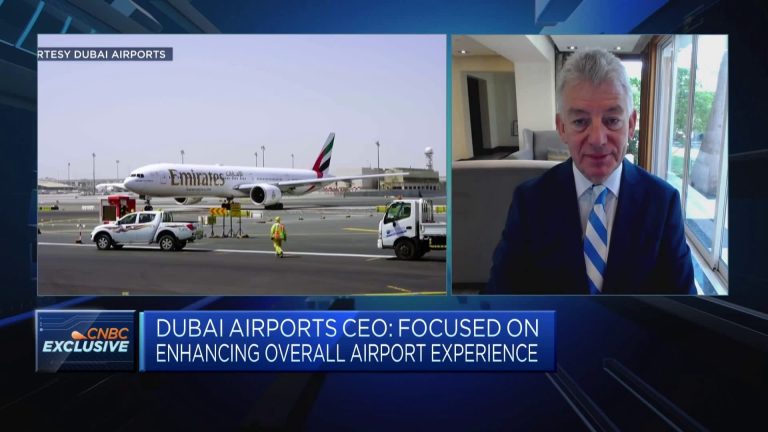
Dubai Airports expects record passenger traffic this year, set to top 100 million by 2027

0

Dubai Airports CEO: Very strong post-pandemic recovery

The CEO of Dubai Airports is bullish on the future and expects passenger traffic to surge to a record this year and top 100 million by 2027.

Paul Griffiths said the airport operator has seen very strong post-pandemic recovery, adding the city’s “never been in a stronger place than it is now.”

Dubai Airports is the owner and manager of both Dubai International Airport (DXB) and Al Maktoum International Airport (DWC).

A shortage of aircraft capacity, coupled with efforts to promote Dubai as a safe haven to attract people and “hangover” demand from the pandemic, could lead to a surge in passenger numbers, Griffiths added.

“Those three reasons, suggests we are on for a record year — 91 million forecast for the end of 2024,” he told CNBC’s “Capital Connection” on Tuesday.

“We expect by 2027, to be topping the 100 million passenger mark. So, very optimistic future ahead.”

Dubai International Airport posted its busiest quarter in history this year, receiving over 23 million passengers — a 8.4% rise in the first quarter compared to the same period last year, the company said in a statement.

This was partly due to increased destination offers by flagship carrier Emirates and its sister low-cost airline Flydubai, it added.

'We've never seen anything like this': Dubai Airports CEO discusses flood

Total passenger traffic in the first quarter reached 23,052,060 guests, recording the highest traffic at 7.9 million passengers in January.

The stellar growth further strengthens the airport’s role as a key driver of Dubai’s economy and the aviation sector in the Middle East.

In April, Dubai’s government approved a 128 billion dirham ($35 billion) plan to build a new passenger terminal at the emirate’s Al Maktoum International Airport. This will make it five times bigger than Dubai’s main international airport in terms of size — and the biggest in the world upon completion.

Griffiths said the airport operator will continue to invest in the latest technology to improve “the flow rate through our airport facilities,” to allow passengers to get a quicker and more convenient experience.

“Secondly, it does enable us to get huge increases in capacity out of our existing infrastructure without building too much additional capacity,” he said.

Source

NUS scientists discover a novel way of activating muscle cells’ natural defences against cancer using magnetic pulses

0

This drug-free, non-invasive approach could open the doors for new developments in cancer therapy and cancer biomarker discovery

SINGAPORE, May 21, 2024 /PRNewswire/ — A team of researchers led by Associate Professor Alfredo Franco-Obregón from the NUS Institute for Health Innovation & Technology (iHealthtech) has unveiled a novel approach to stimulate muscle, by way of using brief and mild pulsed electromagnetic field exposure, to produce and release proteins possessing anticancer properties. These soluble chemical molecules can then be carried in the blood stream to all regions of the body for system-wide protection against cancer.

Exercise is known to have protective effects against cancer, including reducing the risk of developing breast, prostate, and colon cancers, as well as improving the survival rate of patients with cancer. However, given the debilitating effects of cancer progression and treatment-related side effects, patients with cancer may not be able to exercise and benefit from muscle’s anticancer effects.

“The BICEPS lab’s method of stimulating muscle cells uses a form of magnetic therapy that exhibits key commonalities with exercise. This latest study demonstrated that our non-invasive method of muscle stimulation mobilises a similar anticancer defence as exercise, bringing us a step closer towards the development of drug-free therapeutics and the discovery of cancer-related biomarkers to help patients with cancer benefit from exercise-stimulated anticancer agents while not being able to exercise,” said Assoc Prof Franco-Obregón.

The NUS (National University of Singapore) team published the details of this new drug-free and non-invasive approach in Cells on 5 March 2024.

Anticancer properties of magnetically-stimulated muscle cells

In a previous study, Assoc Prof Franco-Obregón and his team demonstrated that briefly exposing isolated muscle cells to 10 minutes of low-energy magnetic fields was capable of boosting muscle development by stimulating their release of regenerative and rejuvenating proteins into their surroundings. In the body, these same muscle factors are also known to be protective against common diseases such as diabetes and cancer.

In the new study, the team explicitly investigated whether the same magnetic stimulation protocol could encourage the production and release of anticancer agents from the intact muscles in preclinical models and to identify and validate anticancer factors.

The NUS team first tested their hypothesis at the cellular level and found that muscle cells that underwent magnetic therapy could inhibit breast cancer cell growth, invasion and migration, which are hallmarks of cancer progression. In addition, magnetically-stimulated muscle cells were found to be able to shrink micro-tumours as well as reduce their blood vessel formation.

Next, the researchers conducted preclinical studies to validate their tissue culture findings. They demonstrated that 10-minute exposure to magnetic therapy once a week for eight weeks was sufficient to evoke similar anticancer properties – such as preventing the growth, invasion and migration of breast cancer cells – as that produced by exercising twice a week for 20 minutes per session for eight weeks.

The researchers further demonstrated that a previously suspected tumour suppressor, HTRA1, was secreted from muscle cells exposed to 10 minutes of magnetic fields per week, similarly as exercising for 20 minutes twice a week. Importantly, selectively removing HTRA1 secreted by the muscle cells eliminated its anticancer potency, whereas directly applying synthetic HTRA1 to cancer cells recreated the anticancer effect of magnetic field exposure and exercise. These results demonstrate that HTRA1 is necessary and sufficient to explain the anticancer effect of muscle.

Interestingly, HTRA1 is necessary for muscle development and for the build-up of muscle’s anticancer protein arsenal, which contributes to our muscle being our greatest natural defence against cancer. In this respect, the researchers showed that early exposure of isolated muscle cells (in tissue culture) to HTRA1 stimulated their development and increased their anticancer potency.

In other words, HTRA1 could adapt muscle cells outside the body to become better anticancer factor secretors even when not stimulated by the magnetic fields, essentially recapitulating exercise adaptations in the laboratory, which are normally seen in the body.

“HTRA1 released during exercise may cause muscles to adapt to be capable of secreting HTRA1 even at rest. This helps to explain why exercise makes us more resistant to cancer. To extend the analogy even further, if muscle is our anticancer pharmacy, magnetic field therapy may be an inexpensive, yet effective, prescription,” said Assoc Prof Franco-Obregón.

Next steps

Following up on the promising results generated from this preclinical study, the NUS team is initiating clinical trials to assess the anticancer potential of muscle-targeted magnetic therapy in humans and to corroborate the anticancer effects of HTRA1 in humans with breast and other cancers.

The team also looks forward to conducting further studies to identify other anticancer biomarkers produced and released by muscle cells, which could serve as potential targets for the development of drugs and therapeutics to treat cancer. As muscle is a foundation of rejuvenating and disease fighting factors, this approach should prove quite fruitful.

Read more at: https://news.nus.edu.sg/muscle-cells-natural-defences-against-cancer-using-magnetic-pulses 

Source

McDonald’s worker filmed in ‘disgusting’ act near food at Queensland restaurant

0

A McDonald’s worker has been filmed appearing to dry a dirty mop head under the restaurant’s fry warmer, near full packets of fries.

Customers are “disgusted” over the video, which was captured at Booval McDonald’s, southwest of Brisbane, in recent weeks.

WATCH THE VIDEO ABOVE: ‘Disgusting’ act by Queensland McDonald’s worker goes viral.

The footage — shared on the Facebook page Subtle Bogan Traits — has also raised serious questions over food safety standards at the eatery.

“Absolutely disgusting. (The) local council should be informed … as it’s broken hygiene protocols,” one person said on social media.

Another described it as the “most brainless thing I’ve seen this year”.

“This woman needs her hygiene and food safety procedure certificate ripped up,” they commented.

Others argued it was a sign of slipping standards among a host of restaurants, including the famous golden arches.

“The state of cleanliness in a lot of Macca’s stores is disgusting. Their toilets in some stores are a health hazard,” one person claimed.

A McDonald's worker has been filmed appearing to dry a mop at a fry warming station.
A McDonald’s worker has been filmed appearing to dry a mop at a fry warming station. Credit: Subtle Bogan Traits/Facebook

McDonald’s moved to assure customers it was an isolated incident and said it follows strict procedures when it comes to hygiene.

“McDonald’s takes food safety extremely seriously and follows strict cleaning, sanitisation and hygiene procedures in all restaurants,” the fast food giant said in a statement.

“We have addressed this with the restaurant directly and conducted thorough re-training for all employees on McDonald’s sanitisation, hygiene and food safety procedures.

“This was an isolated incident, and we will continue to work with the restaurant to ensure this does not happen again.”

Source

GARDENS BY THE BAY SINGAPORE’S CHILDREN’S FESTIVAL RETURNS WITH DISNEY AND PIXAR’S INSIDE OUT 2

0

Children can get acquainted with their emotions through play at Southeast Asia’s only Inside Out 2-themed outdoor carnival with large-scale installations

SINGAPORE, May 21, 2024 /PRNewswire/ — Get ready to delve into the fascinating world of emotions as Gardens by the Bay Singapore’s Children’s Festival returns for its 10th edition – this time, featuring an exciting collaboration with Disney and Pixar’s Inside Out 2! 

Right in the feels: Disney and Pixar's Inside Out 2 lands at Gardens by the Bay Singapore's Children's Festival this May
Right in the feels: Disney and Pixar’s Inside Out 2 lands at Gardens by the Bay Singapore’s Children’s Festival this May

Kicking off on 25 May at the iconic Supertree Grove, this will be the only Inside Out 2-themed outdoor carnival in Southeast Asia with large-scale installations. Children can learn about their feelings through play at the various interactive areas inspired by beloved Inside Out 2 characters, such as Joy, Anger, Sadness, Fear and Disgust – alongside new Emotions Anxiety, Envy, Ennui and Embarrassment! Get in touch with your emotions ahead of the release of Inside Out 2 (13 June: Malaysia, Singapore and Thailand, 14 June: Indonesia).

Gardens by the Bay is a premier horticultural attraction, and its Children’s Festival is a signature school holiday event. Most of the activities are free, and this year’s edition runs until 22 June.

Disney and Pixar’s Inside Out 2 returns to the mind of newly minted teenager Riley who’s about to begin high school, just as headquarters is undergoing a sudden demolition to make room for something entirely unexpected: new Emotions! Joining the core Emotions is a group of new arrivals perfectly suited for the teenage years!

Gardens by the Bay CEO Felix Loh said, “We all want our children to be happy and healthy. This year we are excited to team up with Disney for the 10th edition of Gardens by the Bay’s Children’s Festival. Kids can learn about stress and emotions in a fun way through relatable characters and heartwarming stories such as those from Disney and Pixar. More importantly, the event will allow families to bond and spend meaningful time together.”

Singapore Tourism Board’s Director of Attractions, Entertainment and Tourism Concept Development Ashlynn Loo said, “We are thrilled to support Gardens by the Bay’s Children’s Festival – the only place in Southeast Asia where families can enjoy an Inside Out 2-themed outdoor carnival with large-scale installations. We hope visitors will enjoy the fresh and captivating experiences by exploring the various zones inspired by Inside Out 2’s Emotions. As we continue to welcome more visitors back to Singapore, we look forward to bringing more compelling leisure experiences that will appeal to both local and international visitors, as part of our continued collaboration with Disney, solidifying our position as a vibrant leisure and entertainment destination.”

Embark on a journey of self-discovery inspired by Inside Out 2 characters

At this year’s Children’s Festival, families can look forward to an array of installations and activities inspired by both the core and new Emotions of Inside Out 2.

Kaleidoscope of Memories

Emotion Mirrors
Emotion Mirrors

  • Kaleidoscope of Memories

This centrepiece installation is inspired by the Long Term Memory storage facility that houses millions of Riley’s memories in the Inside Out story.

Children’s Festival has brought this scene to life with colourful, illuminated Memory Orbs at Supertree Grove. Visitors can create their own Memory Orb by scanning a QR code at the installation and completing three simple steps: select the character that best reflects one’s emotion, pose for a photo, and upload your very own Memory Orb to the Kaleidoscope of Memories, where it will be projected alongside others’ memorable moments on the animated wall of this installation.

  • Mood Swings

The Emotion Joy is the theme of this installation, featuring swings that will be sure to delight children and all who are young-at-heart.

  • Expression Doodles

Coping with complex emotions is explored at this installation. With designs themed after Sadness and Embarrassment, children may “paint” with a water brush and watch doodles on the installations appear before their eyes.

  • Emotion Mirrors

Can you keep your cool at this tricky installation? Inspired by the Emotions Fear and Anxiety, attempt to complete the mirror maze and gigantic buzz wire games in nerve-wracking time challenges.

  • Fort Pillowtown

Inspired by Ennui, children can lie back and relax at the Fort Pillowtown installation, or let their imaginations run wild within the cosy pillow fortresses that they can build.

  • Memory Orb Mountain

The whirlwind of emotions experienced throughout the evocative journey culminates in harmony and balance at this play area of large inflatable balls symbolic of embracing and balancing all our emotions. Visit in the evenings to catch the balls aglow!

Visitors can also look forward to a special edition of the nightly Garden Rhapsody light and sound show during the duration of Children’s Festival. Garden Rhapsody is a signature night show at Supertree Grove, where the lights on the Supertrees dance to a musical soundtrack every evening at 7.45pm and 8.45pm. The special edition, titled The Medley of Emotions, will see the lights on the Supertrees as well as the Memory Orbs within the Kaleidoscope of Memories installation synchronise their illumination and change colours in harmony with the Inside Out soundtrack.

Complimentary Disney and Pixar themed activities, movie screenings and more

Free activity trail booklets are available, with suggested activities to keep kids entertained such as collecting stamps. Visitors who complete their booklets and collect all the stamps may redeem an Inside Out 2 sticker sheet that is exclusive to Gardens by the Bay’s Children’s Festival.

Visitors with a complete set of stamps may also redeem a souvenir keychain with a Gardens by the Bay exclusive design, that can be customised with little charms inspired by Inside Out 2, while stocks last. Visit the redemption counter to find out more.

Members of the public are also invited to enjoy complimentary outdoor screenings of Disney and Pixar favourites such as Coco, Elemental, Finding Dory and Incredibles 2 on the first two weekends of 25 May and 26 May, and 1 June and 2 June.

Visitors looking for a different experience can buckle up and hop aboard the Train of Emotions for a scenic train ride through Supertree Grove. Separate charges apply for the train ride.

Fringe performances and carnival games

Fringe performances such as bubble blowing, juggling and magic shows will come on during evenings of the first three weekends for all to enjoy.

There are also carnival games for the active ones and, for those who like to get hands-on, craft workshops to create their own Memory Orbs, musical boxes, friendship bracelets and more. Separate charges apply for these activities.

Be among the first to bring home Inside Out 2-themed merchandise in Singapore 

Gardens by the Bay’s Children’s Festival will also be one of the first places in Singapore where shoppers can get their hands on Inside Out 2-themed merchandise at a special retail pop-up. Inspired by fan-favourite Disney and Pixar characters, discover a delightful range for all ages, spanning apparel, reversible bucket hats, tote bags, drinkware, cushions, stationery and more.

For more information, visit www.gardensbythebay.com.sg/childrensfestival

Gardens by the Bay’s Children’s Festival 2024
Date: 25 May – 22 June 2024
Time: 10.00am – 9.00pm*
Location: Supertree Grove at Gardens by the Bay (Free admission, charges apply for selected activities)
*The Inside Out 2 installations will close at 7.00pm, with the exception of Kaleidoscope of Memories, which will remain open till 9.00pm along with the rest of the Children’s Festival activities.

Hi-res images can be downloaded via this link.

About Gardens by the Bay

An integral part of Singapore’s “City in Nature” vision, Gardens by the Bay is a national garden and premier horticultural attraction that showcases the best of garden and floral artistry for all to enjoy. Spanning 101 hectares in the heart of Singapore’s downtown Marina Bay, it comprises three waterfront gardens – Bay South, Bay East, and Bay Central. Bay South, the largest at 54 hectares, officially opened on 29 June 2012.

Guided by the vision to be a world of gardens for all to own, enjoy and cherish, the Gardens’ extensive plant collection, ever-changing floral displays, and myriad of engaging programmes have captured the imagination of many, while its Gift of Gardens community initiative, with Mr Tharman Shanmugaratnam, President of the Republic of Singapore as Patron, reaches out to people from all walks of life.

Since opening, Gardens by the Bay has welcomed more than 100 million visitors and garnered numerous international awards including Best Theme Attraction at TTG Travel Awards 2022 and 2023, a silver for Destinations Building Back Better Post-Covid at the World Responsible Tourism Awards 2021, Best Attraction Experience at the Singapore Tourism Awards 2019, and ASEAN Sustainable Tourism Award presented by ASEAN Tourism in 2018. The Gardens continues to refresh and refine its offerings, to be a place that everyone can enjoy – a garden where wonder blooms.

For more information, visit www.gardensbythebay.com.sg

Source