Monday, June 15, 2026
Google search engine
Home Blog Page 453

Tencent Partners With Mercedes-Benz and Electronic Arts, To Bring New ‘Need for Speed™’ Mobile To The Chinese Market

0

The game will offer 100 million square meters of open world with 500 different play points, accessible via Bluetooth gaming controller for an immersive in-car gaming experience.

BEIJING, April 30, 2024 /PRNewswire/ — Tencent together with Mercedes-Benz and Electronic Arts (EA) announced their partnership at the Auto China 2024 that will make in-car gaming even more exciting. An open-world mobile racing game named ‘极品飞车™:集结’ in Chinese, roughly translating as ‘Need for Speed™: Assemble’, will be available in Mercedes-Benz cars in China by the end of the year. The game will be made available via over-the-air (OTA) on Mercedes-Benz vehicles equipped with the third generation MBUX, a precursor to the Mercedes-Benz Operating System, MB.OS.

Tencent Partners With Mercedes-Benz and Electronic Arts, To Bring New ‘Need for Speed™’ Mobile To The Chinese Market

The new mobile game was launched amid the popular ‘Need for Speed™’ gaming franchise that just celebrated its 30th anniversary in 2024. It is an open world racing game developed by Tencent’s TiMi Studio and licensed by Electronic Arts. Building on the success of the ‘Need for Speed™’  franchise that has already been played by hundreds of millions of players worldwide, this new game combines street driving and track racing on internationally recognized circuits and fictional cities.  Users will be able to use either their Bluetooth gaming controller or play the game via the touch-sensitive screens to play the game when the vehicle is stationary.

Tencent and Mercedes-Benz have an established and close collaboration. Tencent sees this in-car gaming partnership as a new beginning to support Mercedes-Benz in developing products and services that better cater to the needs of local users in China. Together, we aim to explore innovative approaches to push the boundaries of automotive value, enriching the driving experience for customers,” shared Dowson Tong, Tencent Senior Executive Vice President and CEO of Tencent Cloud and Smart Industries Group.

Tencent and Mercedes-Benz have been cooperating in the field of smart vehicles for many years. In 2015, Tencent and Mercedes-Benz launched ‘MyCar,’ to revolutionize the in-car experience for Chinese users. They signed a memorandum in July 2022 to strategically collaborate to explore high-level automated driving, utilizing cloud computing, big data, and AI. This marks a new start, driving innovation in in-car gaming and cloud services, and advancing intelligent automotive experiences.

Media Contact: Judy Wong, judywong@global.tencent.com, Global Communications

Source

Dubai’s new airport will be five times the size of its current one and aims to be the largest in the world

0

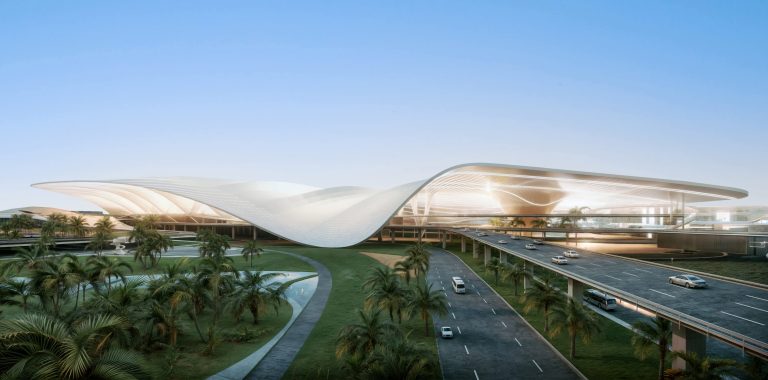
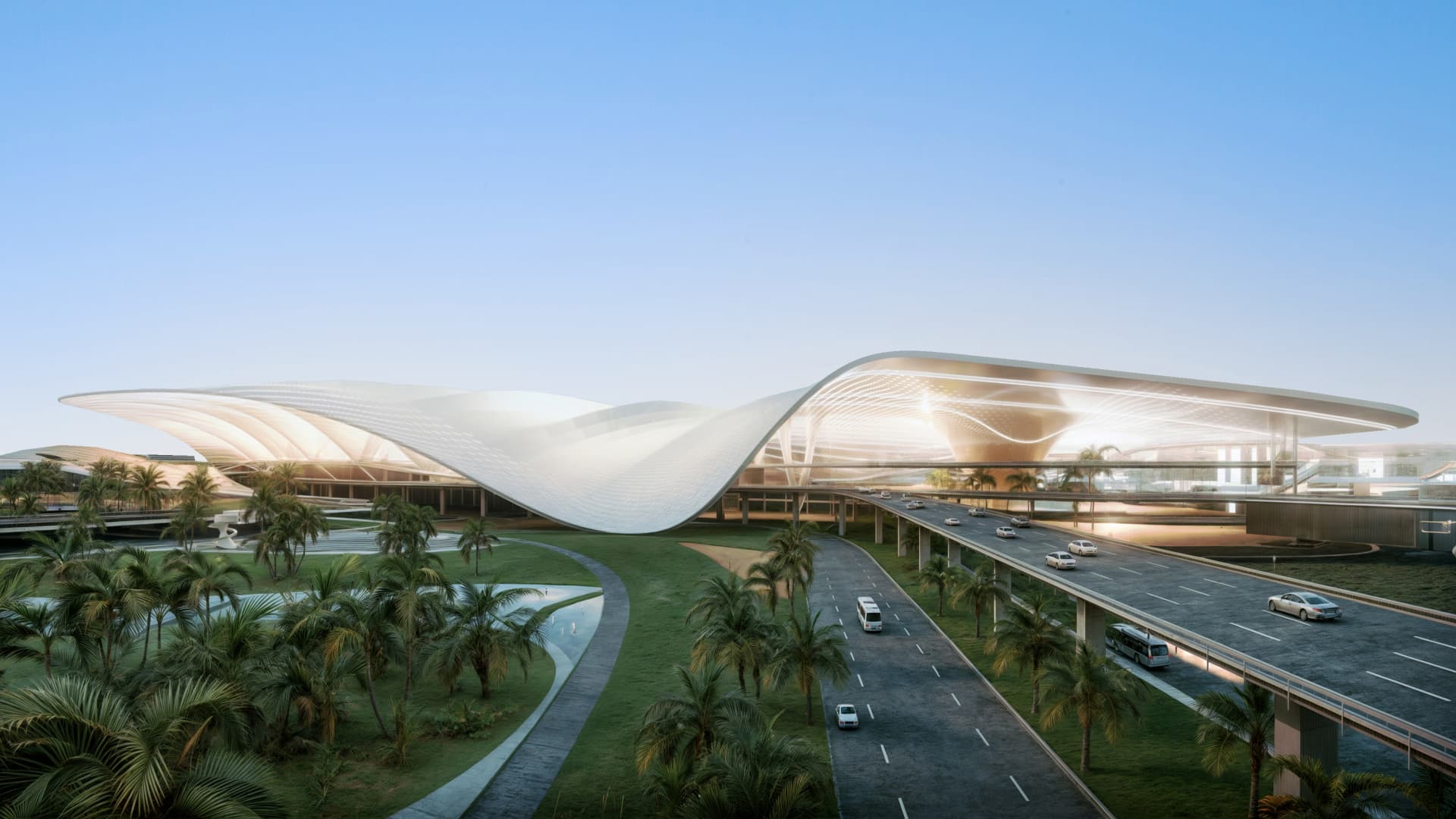
Digital render of the planned entrance of Dubai’s Al Maktoum International Airport, set to be the biggest in the world upon completion.

Dubai Media Office

DUBAI, United Arab Emirates — Dubai’s leadership approved a 128 billion dirham ($35 billion) plan to build a new passenger terminal at the emirate’s Al Maktoum International Airport, which will make it five times bigger than Dubai’s main international airport in terms of size — and the biggest in the world.

“Al Maktoum International Airport will enjoy the world’s largest capacity, reaching up to 260 million passengers,” Sheikh Mohammed bin Rashid Al Maktoum, the ruler of Dubai and prime minister of the UAE, said in a statement Sunday.

For reference, Dubai International Airport in 2023 serviced 86.9 million passengers, the second-highest in the world after Atlanta’s Hartsfield-Jackson International Airport in the U.S.

All of the operations at Dubai International Airport, currently the second-busiest in the world by passenger traffic, will be transferred to it in the coming years, the statement said, adding that the new airport will have 400 aircraft gates and five parallel runways. “New aviation technologies will be employed for the first time in the aviation sector,” it added.

The Dubai Media Office shared digital renderings of the planned airport, which showed futuristic images of expansive airport infrastructure, enormous terminals and space-age looking designs.

The airport will be in Dubai South, at the southern end of the UAE’s glitzy commercial capital, where property and logistics development is underway. An entirely new city will be built around the airport, which the Dubai ruler said will create demand for housing for a million people.

Dubai’s current primary international airport is at the northern end of the emirate, meaning a likely dramatic change in traffic patterns and transport plans for travelers once the new travel hub is in full operation.

The new city around the airport “will host the world’s leading companies in the logistics and air transport sectors,” Sheikh Maktoum said. “We are building a new project for future generations, ensuring continuous and stable development for our children and their children in turn. Dubai will be the world’s airport, its port, its urban hub, and its new global center.”

Sheikh Ahmed bin Saeed Al Maktoum, CEO of Dubai’s flagship Emirates Airline, posted pictures on X of himself with the Dubai ruler looking at plans for the new developments.

“Al Maktoum International will be the new home of @emirates, @flydubai, and all airline partners connecting the world to and from Dubai,” he wrote, referring to Emirates Airline and its low-cost subsidiary FlyDubai.

“We are investing to provide the best future travel experiences, best-in-world logistics capabilities, and to contribute to Dubai’s D33 economic agenda.”

Digital render of the planned exterior of Dubai’s Al Maktoum International Airport, set to be the biggest in the world upon completion.

Dubai Media Office

Digital render of the planned baggage claim area of Dubai’s Al Maktoum International Airport, set to be the biggest in the world upon completion.

Dubai Media Office

Dubai’s D33 agenda aims to double the size of the city’s economy by 2033, drawing in more investment, talent and economic diversification.

The Al Maktoum International airport, which also goes by the name of Dubai World Central (DWC), is set to cover 27 square miles when completed. In addition to its projected capacity of 260 million passengers annually, it also aims to have a capacity of 12 million tons of cargo per year.

The project’s “first phase” is expected to be ready within 10 years, with a capacity to accommodate 150 million passengers annually, the Emirates CEO said.

Source
A Potential First-In-Class Drug: CDE Approved Single-Arm Pivotal Clinical Study of LBL-024, An Anti-PD-L1/4-1BB Bispecific Antibody Developed by Leads Biolabs

0

NANJING, China, April 30, 2024 /PRNewswire/ — Nanjing Leads Biolabs Co., Ltd. (hereinafter referred to as “Leads Biolabs”) announced that LBL-024, an anti-PD-L1/4-1BB bispecific antibody independently developed by Leads Biolabs with global intellectual property rights has received approval to conduct the single-arm pivotal study for registration and market authorization from the Center for Drug Evaluation (CDE) of the National Medical Products Administration (NMPA). Currently, there are no similar products approved for marketing domestically or internationally.

LBL-024 is a bispecific antibody composed of anti-programmed death ligand-1 (PD-L1) and anti-4-1BB (CD137) antibodies. It binds to PD-L1 with high affinity, blocking the PD-L1/PD-1 immunosuppressive pathway while conditionally activating the 4-1BB costimulatory pathway in the tumor microenvironment. This activation of T cells exerts a powerful immune response, resulting in a stronger antitumor effect than anti-PD-1/PD-L1 monoclonal antibodies alone.

Mechanism of LBL-024

LBL-024 received IND approvals from both FDA and NMPA on July 30, 2021 and September 9, 2021 respectively to conduct phase Ⅰ/Ⅱ clinical research, and has achieved outstanding results. The clinical study results of LBL-024 monotherapy in patients with advanced malignant tumors demonstrated good safety profile and encouraging efficacy signals in the advanced solid tumors.

The approved Phase IIb pivotal clinical study is led by Professor Shen Lin from Peking University Cancer Hospital, and detailed clinical data will be disclosed during the ASCO Annual Meeting on May 31st to June 4th, 2024. LBL-024 has First-in-Class potential and is expected to offer an effective treatment option to patients with advanced solid tumors.

Dr. Charles Cai, Chief Medical Officer of Leads Biolabs, said ” The approval of this pivotal clinical study is an encouraging news. Based on the current treatment status and the available safety and efficacy data, LBL-024 meets the requirements of the drug registration management measures for ‘innovative drugs used to prevent and treat diseases that seriously endanger life or severely affect the quality of life, and for which there are no effective prevention or treatment methods, or there is sufficient evidence to demonstrate significant clinical advantages compared to existing treatment methods.’ The approval of the single-arm pivotal clinical study by CDE will help accelerate the marketing process of LBL-024 and bring more effective treatment options to patients as early as possible.”

Dr. Xiaoqiang Kang, founder, chairman and CEO of Leads Biolabs, said ” We are delighted to see the positive progress of LBL-024, which has the potential to become an effective immunotherapy and prove 4-1-BB to be druggable immune checkpoint target approved for marketing following PD-1/PD-L1, CTLA-4, and LAG-3. This milestone achievement also reflects our corporate philosophy of focus on innovation and our determination to discover and advance First-in-Class products. We have always been guided by clinical needs in our differentiated approach to innovation, deploying novel targets while combining some targets based on a deep understanding of their biological mechanisms and disease mechanisms to achieve a 1+1>2 effect. The vision of Leads Biolabs is to become a company that can truly develop innovative drugs, delivering safe, effective, and accessible new therapies to patients worldwide. To this end, we will continue to make full efforts to support the subsequent clinical research of LBL-024, and look forward to delivering the benefit earlier to patients around the world. “

About Leads Biolabs

Nanjing Leads Biolabs Co., Ltd. is a clinical-stage biotechnology company founded in Nanjing by a team of senior U.S.-trained antibody drug developers. Since 2014, Leads Biolabs has been dedicated to the discovery and development of novel antibody drugs with independent intellectual property rights for the treatment of oncology and other major diseases of high unmet medical needs, particularly the challenges in cancer immunotherapy. Our extensive R&D pipeline consist of more than twenty novel tumor immunotherapy, autoimmunity and ADC molecules based on monoclonal and bispecific antibody technology platforms. Leads Biolabs is committed to providing safe, effective, accessible and affordable new drugs to address the unmet needs of patients around the world.

Source

‘Walking on clouds’: Grab the slip-on Skechers with 42,500+ fans for just $40 — plus other deals of the day

0

TechCrunch

The first-ever race between four self-driving cars and a Formula 1 driver just happened in Abu Dhabi

Modern teams are awash in real-time digital feedback from the cars. The A2RL, as it is known, is not the first autonomous racing series: There’s the Roborace series, which saw autonomous race cars setting fast lap times while dodging virtual obstacles; and the Indy Autonomous Challenge, which most recently ran at Las Vegas Motor Speedway during CES 2024. While the Roborace focused on single-car time trials and the Indy Autonomous series centers on oval action, A2RL set out to break new ground in a couple of areas.

Source

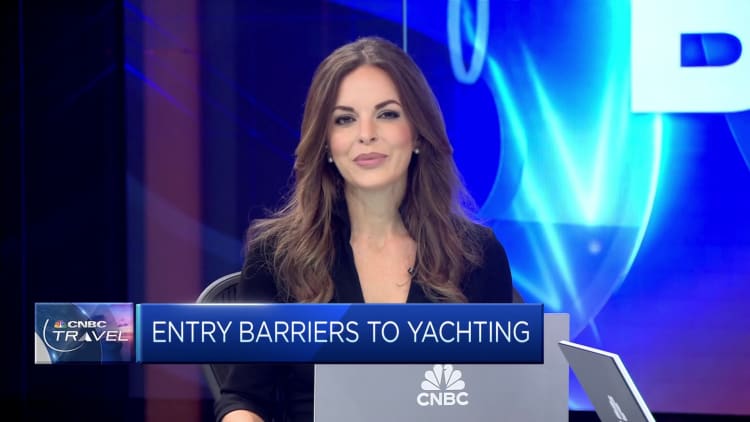
Covid caused a ‘massive spike’ in yacht sales — now some of those boats are back on the market

0

Some pandemic-era yacht owners are headed back for dry land.

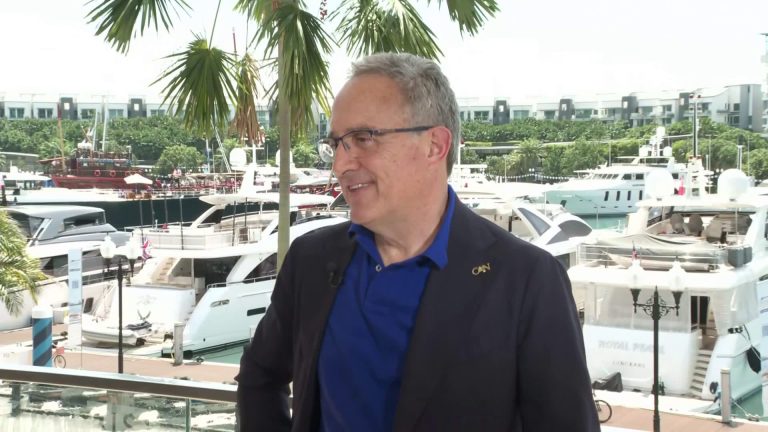
The pandemic spurred a “massive spike” in yacht sales, said Richard Allen, chief operating officer of the Hong Kong-based yachting company Simpson Marine.

“We’ve seen a lot of those people, that had their boats for two years, sort of now wanting to travel,” he told CNBC. “In the last probably few months, talking with other people in the industry, we’ve seen an increase in brokerage activity of … boats being sold.”

That was expected, said Paolo Casani, CEO of the Monaco-based yachting company Camper & Nicholsons.

“We sold, as an industry worldwide, more than the double the yachts [in 2021] than 2019,” he told CNBC. When this happens, “they go to the market starting from a couple of years later.”

Prices in the pre-owned market

Enthusiasm for yachting remains high, even if sales have fallen since 2021, said Casani.

“The industry is going back to 2019,” he said. “And we have to distinguish between brokerage and new builds, because the demand for new builds is still quite high.”

With more yachts hitting the brokerage market, prices are down, albeit slightly, from pandemic-era highs, he said.

Demand for yachts 'still quite high' says Camper & Nicholsons CEO

“Prices are still quite high,” he said. “There is still a gap between the demand and the offer … but we do believe that there will be still a reduction in the course of 2024.”

Asia yacht growth ‘less than expected’

Some yachts buyers in Asia aren’t selling, though, said Allen — in fact, they’re trading up for larger vessels.

“Some have actually really enjoyed the boating lifestyle, and are already upgrading … to bigger boats,” he said.

Asia — a continent of rising wealth and numerous island nations, many bathed in year-round warmth — has long been viewed as the next frontier for global yacht growth.

Casani and Allen, who spoke to CNBC on April 26 while attending the second annual Singapore Yachting Festival, agreed that the continent’s yachting market is growing.

But, Casani said, the pace is “less than expected” for many reasons, including culture, lifestyle and lack of infrastructure.

Asia is beautiful and warm, but here's what's its yachting industry back

“But we still believe that Asia has a very high potential,” he said.

Allen said the disparate and onerous “rules and regulations” in the region are thwarting progress.

“We need to make it easier for boats to move around between the region,” he said. “In one country you might be able to drive a certain size boat, but then another you can’t. So those sort of things — the red tape, shall we say.”

Complex visa requirements for foreign boat crews are problematic, as are high import taxes, which can reach 40% in some markets, he said.

“We need to do a lot of lobbying with governments to make it easier to import boats,” said Allen. “There’s a lot of lobbying groups like ICOMIA … that are working much more collaboratively with the different dealers to have a voice to government.”

The International Council of Marine Industry Associations, or ICOMIA for short, hosted a two-day conference ahead of the Singapore Yachting Festival to address issues the industry faces, from sustainable propulsion to the lack of marina infrastructure in high-potential countries, such as Indonesia, Philippines and Vietnam.   

Beyond buying and charters

Simpson Marine estimates the global marine leisure market will reach an estimated $46.5 billion in 2027 — which it says will trickle down to the local economy through job creation and tourism revenue.

“The yachting industry employs thousands and thousands of people building boats, supporting boats, all the component servicing,” said Allen. “This is a … great industry for countries to embrace.”

Newer forms of ownership make yachting less expensive, which is opening the industry to more people. One model that is especially popular in Australia is fractional, or syndicated, ownership, where owners buy a share of a yacht, he said.

Others are avoiding ownership altogether, opting for flexible subscription models, which are now the norm for many forms of entertainment, from music to television.

“We’ve seen massive growth in boat clubs,” said Allen. “It’s a bit like joining a gym or a golf club. You pay a monthly membership, and you get the use of a boat so many days a week. And that’s very popular for people that don’t really want all the hassle of owning a yacht.”

Source

86% of expats report being stressed out, but study suggests they may also cope better with burnout

0

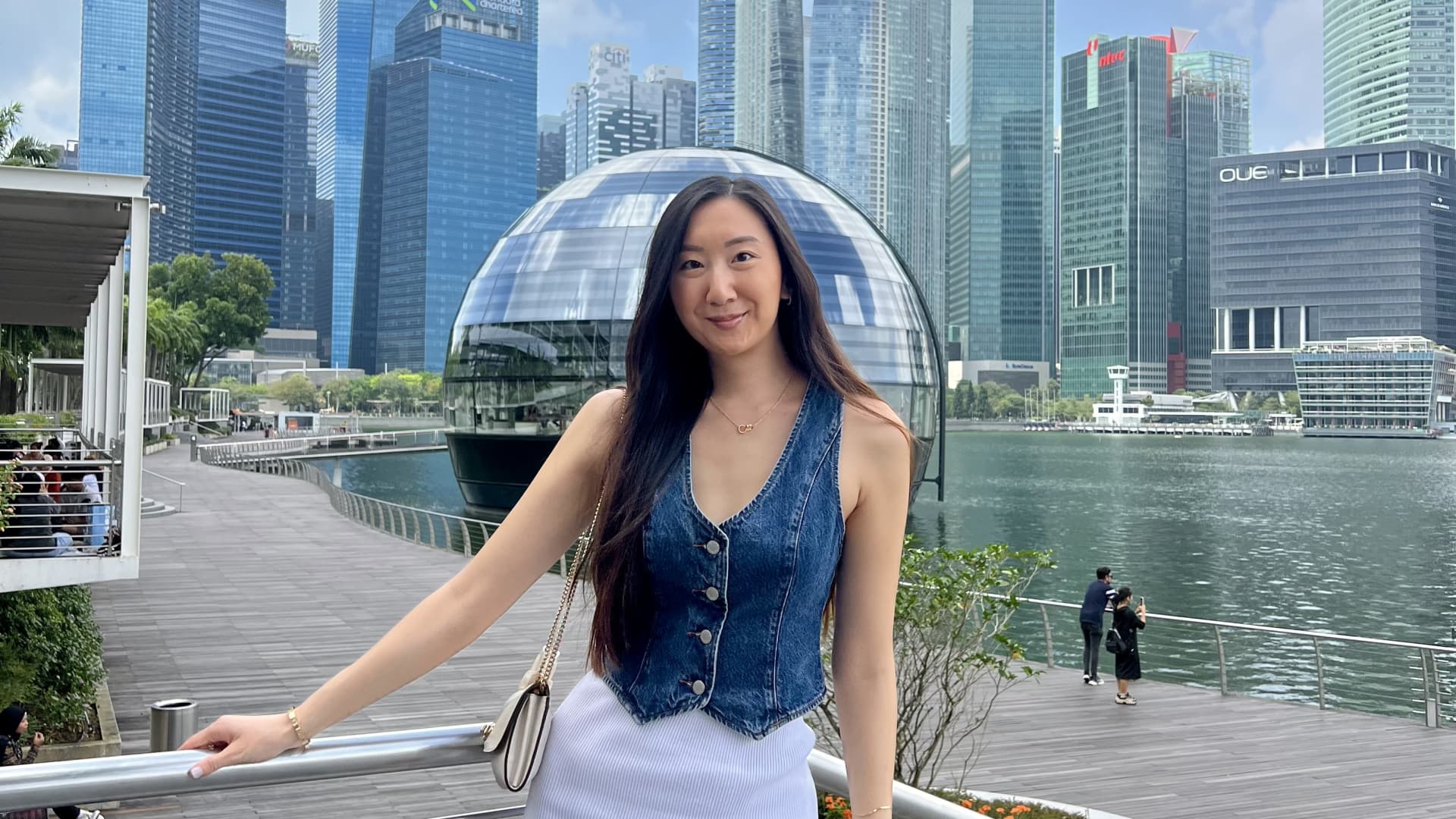
I moved from the United States to Singapore in 2024.

Courtesy of Ernestine Siu

It’s not easy to pick up your life and move overseas to work abroad, but it can also be very rewarding.

As someone who recently moved from the United States to Singapore, I am the first to say that while the opportunity to do so is a privilege, it also comes with its own unique set of challenges.

Being a 16-hour flight from your closest family is daunting, but having the chance to completely immerse in a new culture and having the time to focus on yourself are priceless.

“The globally mobile – individuals living and working overseas – are an increasingly important element of workforces in most markets,” according to the Cigna Healthcare Vitality Study released April 2024.

“We have also seen a growing appetite for this lifestyle, with nearly a third (30%) of people who still live in their home country saying they are likely to live overseas,” according to the study.

The study surveyed more than 10,000 people, including more than 2,600 globally mobile individuals across 12 markets: the U.S., U.K., Spain, Netherlands, Belgium, Switzerland, Kenya, United Arab Emirates, Saudi Arabia, mainland China, Singapore, and Hong Kong.

Who are today’s globally mobile?

Globally mobile individuals tend to display a higher than average vitality score — 71.7 out of the maximum score of 100, compared to people who live in the home market — 66.7.

Globally mobile employees often have… a mental and physical feeling of being healthy, capable, and energetic – and a strong sense of meaning and purpose.

Wendy Sherry

CEO for Global Health Benefits, International Health, at Cigna Healthcare

The vitality scores used in this study are based on The Evernorth Vitality Index, which provides a measure of “people’s capacity to pursue life with health, strength, and energy,” according to the report.

The survey asked questions to gauge respondents’ sense of physical, spiritual, emotional, environmental, social, occupational, financial and intellectual well-being.

Additionally, this group reported better mental well-being than their local counterparts (58% vs. 42% with excellent or very good mental well-being), according to the study.

“Globally mobile employees often have higher levels of vitality – a mental and physical feeling of being healthy, capable, and energetic – and a strong sense of meaning and purpose,” according to Wendy Sherry, CEO for Global Health Benefits, International Health, at Cigna Healthcare.

“The various facets of our lives – including social, occupational, and financial – are all connected,” she added.

This is apparent in how this group is 10% more likely to feel like they can build strong connections with others. Additionally, globally mobile people are more likely to be engaged, energized and enthusiastic at work compared to locals, according to the report.

Despite having more vitality, this group also experiences high levels of stress (86%) and particularly high levels of burnout (96%), compared to locals.

“On the other hand, expats may experience social isolation, which can compound emotional difficulties, aggravate stress, and increase the chances of burnout,” Sherry said.

Additionally, this group is particularly susceptible to experiencing “feelings of detachment or loneliness, self doubt, and negative outlook,” according to the study. Notably, these feelings are more pronounced in Asia, Middle East and Africa.

“In Asia, stress levels are at 89% in Singapore and 91% in Hong Kong. In the UAE and Saudi Arabia, they reach 90%, and 94% in Kenya. Conversely, in Europe, particularly in Spain and the Netherlands, stress levels are comparatively low, at 79% and 67%, respectively,” according to the study.

Here are the biggest challenges faced by those living and working abroad:

  • Financial challenges (38%)
  • Homesickness (23%)
  • Difficulty maintaining work/life balance (18%)
  • Health issues like difficulty accessing health care (18%)
  • Difficulty finding housing (17%)

Expats in Asia, particularly in Hong Kong (22%) and mainland China (24%), are more prone to encounter work-related challenges. Hong Kong-based respondents (40%) also report needing more assistance in navigating local health care compared to about 28% of respondents in other regions.

A seeming disconnect?

So why do globally mobile individuals score higher on vitality despite reporting higher stress and burnout levels compared to local counterparts?

Globally mobile employees emerge as a highly valuable and resilient segment of the workforce. Despite facing unique stressors associated with their situation, they exhibit distinct skills and a high level of motivation, resulting in higher vitality.

2024 Cigna Healthcare Vitality Study

The study suggested it could be due, in part, to the group’s tendency to be adaptable and resilient.

“Globally mobile employees emerge as a highly valuable and resilient segment of the workforce. Despite facing unique stressors associated with their situation, they exhibit distinct skills and a high level of motivation, resulting in higher vitality,” according to the report.

Although this group tends to exhibit more resilience, the stress they face shouldn’t be overlooked.

“For foreign professionals, work can be all-encompassing, serving as a crucial support system, a source of purpose, and a center of social connections. This differs from the experience of local employees, where the boundaries between personal and professional life may be more distinct,” according to the study.

“A comprehensive approach is essential – employers must address work-life balance, facilitate social well-being, and provide support that goes beyond just physical and mental dimensions of health.”

Want to make extra money outside of your day job? Sign up for CNBC’s new online course How to Earn Passive Income Online to learn about common passive income streams, tips to get started and real-life success stories. Register today and save 50% with discount code EARLYBIRD.

Plus, sign up for CNBC Make It’s newsletter to get tips and tricks for success at work, with money and in life.

Source

Family’s history in Scotland is focus of maze shaped in 5-pointed star: ‘Bringing it back to life’

0

A maze in Scotland is shaped uniquely in a nod to a family’s decades-long history — and is today a favorite travel destination for many, especially during the spring and summer months. 

The Murray Star Maze at Scone Palace in Scotland was planted in 1991 in the shape of a five-point star as a nod to the history of the Murray family — one of “the great families” of Scotland. 

“As soldiers and statesmen, ambassadors and lawmakers, they have for centuries been close to the heart of Scottish affairs,” the website of Scone Palace points out.

NEW JERSEY SHORE TOWN OFFERS BOARDWALK IN SHAPE OF THE CROSS DESPITE CRITICISM: ‘CAN’T HIDE OUR FAITH’

The maze includes 2,000 beech trees and is roughly half a mile long, per the Scone Palace. 

An international maze designer named Adrian Fisher created the unique feature at the palace, making sure the center contained a statue to represent the water nymph Arethusa. 

Star maze view

The Murray Star Maze at the historic Scone Palace in Scotland is half a mile long. The maze includes 2,000 beech trees.  (SWNS)

The Scone Palace notes that the maze’s shortest walk to the center for a view of Arethusa is only about 100 feet from the start — but good luck figuring out how to manage that. 

The unique star shape of the maze, however, resembles the Earl of Mansfield’s family tartan, according to the Scone Palace — and is shaped with five points that were part of the family’s historical emblem

ON GOOD FRIDAY YEARS AGO, NYC SKYSCRAPERS LIT UP WITH CROSSES AND SHOWED A NATION THAT EMBRACED FAITH

Additionally, the area in which the maze is planted has a mixture of copper and green beech trees. 

The head gardener at Scone Palace, Brian Cunningham, told British news service SWNS that he’s been taking care of the maze for the last 13 years. 

Center of the maze

The center of the maze has a statue of the water nymph Arethusa.  (SWNS)

“You could blindfold me and spin me around, and I could make my way out of the left half,” he joked. 

He added, “But I must admit I’m still prone to getting lost on the right-hand side.”

Cunningham said there’s only one way in and one way out of the maze — which is a bit of a secret, he added. 

LAWN CARE IS MADE EASY THIS SUMMER WITH SYNTHETIC GRASS, SAYS HOME CONTRACTOR

As for upkeep, Cunningham said it takes him about two weeks to trim the hedges since the paths are narrow. 

“To get the hedge clippings out, we’ve got to go in with wheelie bins,” he said. 

Star maze aerial view

The star maze contains thousands of plants and hedges.  (SWNS)

Cunningham and his team of gardeners work on other projects throughout the palace, noting that the maze is “great.”

Cunningham told SWNS the palace was built 220 years ago but was abandoned during World War I.

CLICK HERE TO SIGN UP FOR OUR LIFESTYLE NEWSLETTER

“For the last 20 odd years, it’s just been grass, so we’re starting an ambitious project now to bringing it back to life,” he added. 

“We’re maintaining and developing this pretty remarkable garden and grounds around the palace.”

Gardener working

Scone Palace gardeners work on the grounds, including the maze, all year long. (SWNS)

During the summer, the public can visit the Scone Palace seven days a week.

The grounds include gardens, plus a coffee and food spot. 

Here, “nature awaits in abundance,” says the palace’s website. “There are no formal gardens at Scone, but 100 acres of woodland gardens with their borders, flowering shrubs and trees create a gloriously peaceful setting for strolling or picnicking.”

CLICK HERE TO GET THE FOX NEWS APP

For more information on visiting Scone Palace in Perthshire, Scotland, and understanding its 1,000-plus years of history, anyone can check out scone-palace.co.uk. 

Fox News Digital reached out to Scone Palace for further comment.

For more Lifestyle articles, visit www.foxnews.com/lifestyle.

Source

5 Amazing places to visit in Türkiye, according to an American

0

Join Fox News for access to this content

You have reached your maximum number of articles. Log in or create an account FREE of charge to continue reading.

Please enter a valid email address.

People love asking travel writers like me for recommendations on where to go. It makes sense. In the last 18 months alone, I’ve touched down on all seven continents. But don’t ask me about Türkiye if you’re in a hurry. Despite being a broke 25-year-old when I first visited 10 years ago, I will sing the destination’s praises until I lose my voice. Whether you’re looking for budget-friendly fun or a five-star sojourn (which I’m all about these days), Türkiye has it all. And thanks to new nonstop flights from Detroit to Istanbul, it’s never been more accessible. Ideally, you can take a month off to criss-cross the country. But if you only have a week, or two, below is where I’d begin. 

Istanbul

It’s hard not to fall head over heels for this seaside city that straddles two continents and was once the capital of three iconic empires. The locals are sincere, and even the street cats seem like they’re on holiday. Plus everything – from sipping your morning tea (served in a clear glass so you can enjoy the color) to bathing in an underground Turkish hammam – is an inviting experience. I learned the art of the barter in the bustling Grand Bazaar, took in 180-degree views of the Bosphorus from the Galata Tower, and house hunted in the effortlessly hip neighborhood of Karaköy because I wanted to move there so badly after just two nights. Despite being Catholic, I can’t deny that the Hagia Sophia is the most stunning house of worship I’ve ever stepped foot in. 

Pro tip: Wear socks; shoes aren’t allowed in mosques. 

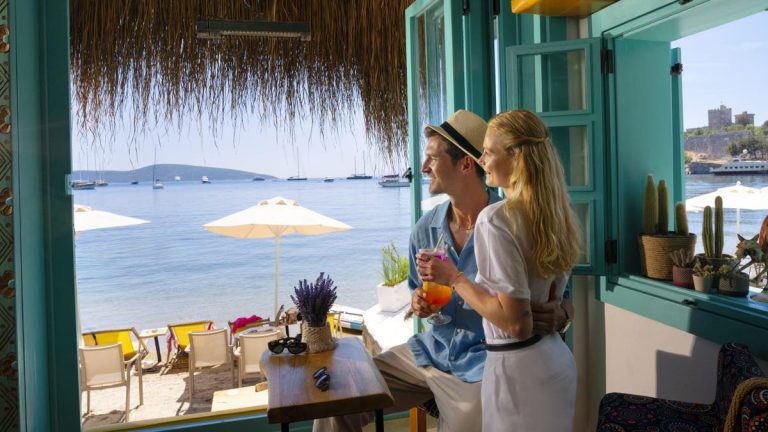
Bodrum (GoTürkiye)

Bodrum

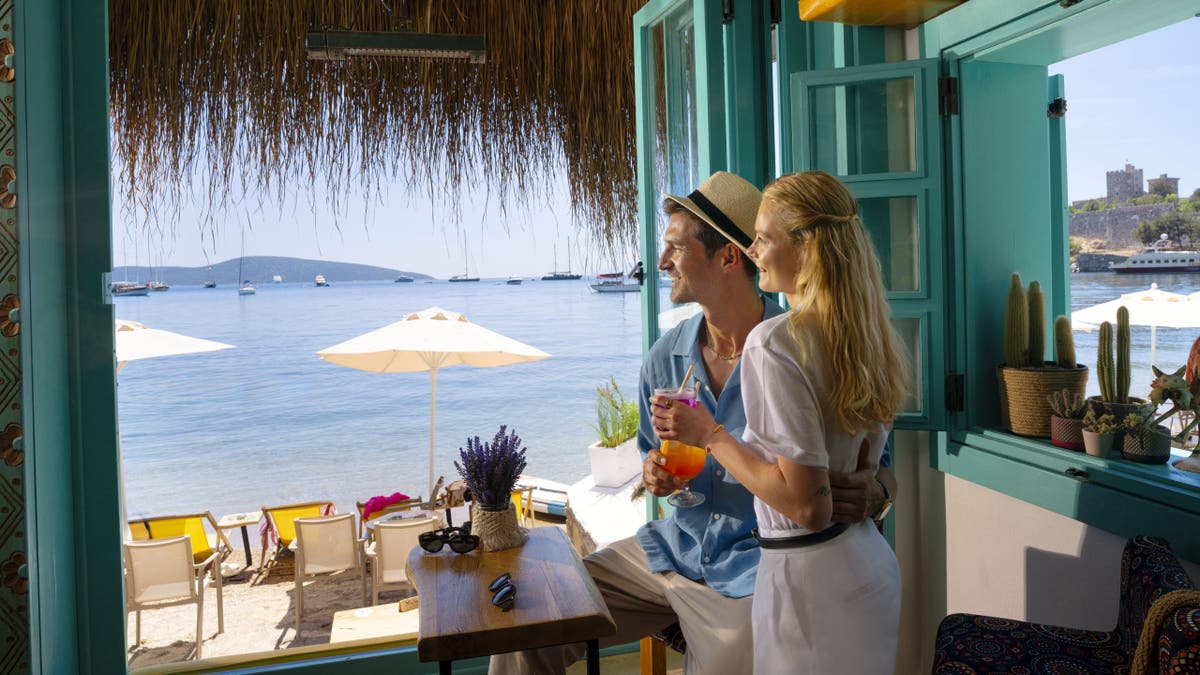
A coastal city of contrasts, Bodrum is where the traditional wooden gulet I was on for an 8-night Sun Fun You cruise docked next to a multi-million dollar fiberglass yacht. This port city along the boasts Yalıkavak Marina, one of Europe’s finest marinas where you can shop in Dior and dine at Zuma. But it’s also home to the Mausoleum at Halicarnassus, one of the Seven Wonders of the Ancient World. While exploring on foot – everywhere in the old town is walkable – I saw remnants of Bodrum’s previous life as a quiet fishing village. In the evenings, however, I drank and danced my way up Bar Street, a mile-long strip specializing in nightlife. And forget FOMO. Thanks to the laidback Turkaegean way of life, I was fully present and even the mundane moments felt magical.

Pro tip: Don’t miss the “Anatolia show”, where martial arts meet acrobats, at the city’s oldest club, Halikarnas. 

Aerial view of hot air balloons, Göreme, Cappadocia, Türkiye. (GoTürkiye)

Cappadocia

Cappadocia is more than the hot air balloon capital of the world. It’s rich in history (take a tour of Derinkuyu, a subterranean city dating back to the 7th century BCE, or explore Göreme’s mysterious cave churches) and chock full of geographic formations. From whimsical 100-foot-tall fairy chimneys to a snow-covered 12,851-foot-tall inactive volcano, this part of Central ​​Türkiye is made for the ‘gram. Here, it’s all about perspective, hence the hundreds of hot air balloon safaris that launch daily. Still, many think this magical landscape is best enjoyed on horseback. And don’t forget to embrace your inner sommelier and sample the region’s fine wines. Cappadocia’s fertile soil produces the rare Emir grape, among other renowned varieties. 

Pro tip: Make your own ceramic souvenir at Avanos Pottery Workshop or shop for a hand-woven rug in Cappadocia’s colorful bazaars. 

Türkiye’s iconic Sümela Monastery. (GoTürkiye)

Trabzon

A former Silk Road hub hugging the Black Sea and surrounded by mountains, Trabzon appeals to my inner adrenaline junkie. My bucket list includes paragliding over Uzungöl Lake, a popular alpine escape for adventurers, laying first tracks at Zigana Ski Centre, one of more than 40 ski resorts in the country, and hiking to the Sumela Monastery, a Greek Orthodox engineering marvel dating back to the 4th century CE. It’s carved out of a cliff and on clear days, offers breathtaking views of the always verdant Altindere Valley National Park below. Of course, no trip to Trabzon is complete without refueling with Akçaabat köftesi (fried meatballs). 

Pro tip: If you’re not claustrophobic, go spelunking at Cal Cave, the self-proclaimed second-longest cave system in the world. 

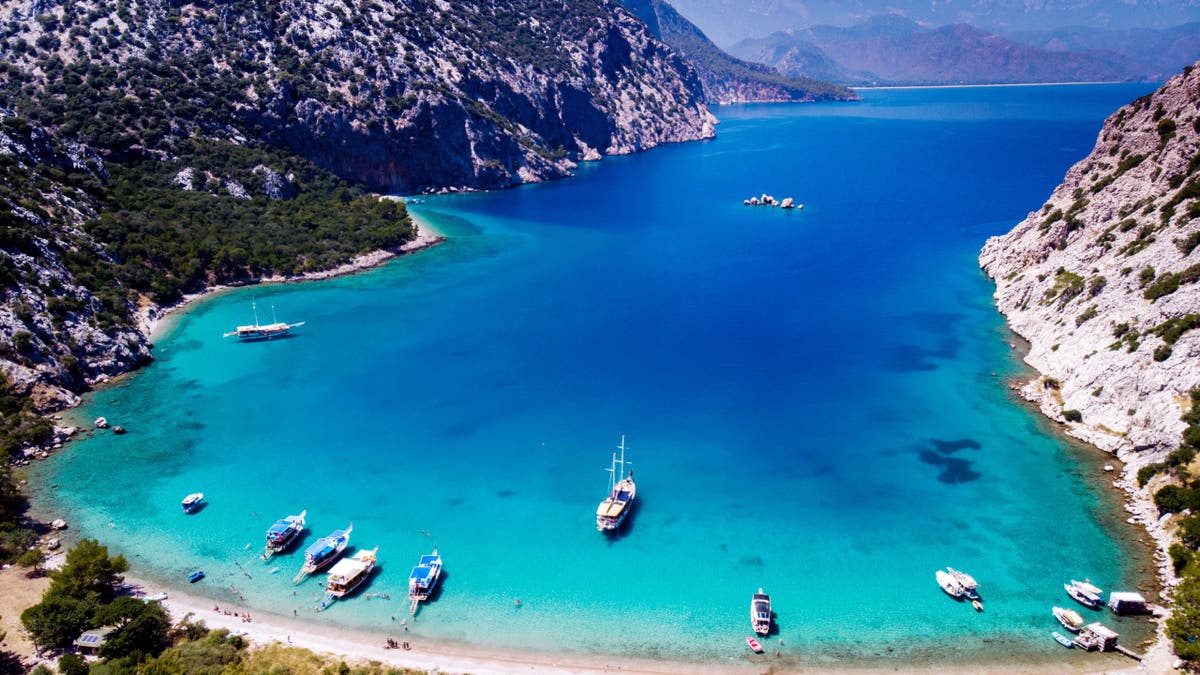
Aerial view of Porto Ceneviz Bay, Antalya, Türkiye. (GoTürkiye)

Antalya

The beating heart of the Turkish Riviera is blessed with 231 Blue Flag Beaches. For comparison, the U.S. has just two. But there’s so much more to this resort-filled region than world-class sand and surf. Just 55 miles north of the city, a crystal clear river meanders through Köprülü Canyon National Park – a natural playground for rafters, campers, and hikers. Closer to town, the dramatic Duden Waterfalls are a popular place to picnic. The Lower Falls even cascade over a cliff into the sea. Antalya, with its Roman, Ottoman Turkish, Seljuk Turkish, and Eastern Roman influences, doesn’t disappoint in the culture department either. Its 2,000-year-old Aspendos – the best preserved theater from the ancient world – still hosts concerts, operas, and ballets. And Kaleiçi, Antalya’s old town, is a living, open-air museum. 

Pro tip: Embrace your inner emperor and enter Kaleiçi through the triple-arched Hadrian’s Gate, built specifically for the Roman ruler’s visit in 130 CE. 

Katie Jackson is a freelance travel writer. When she’s not working, she’s chasing after a Leonberger named Wilco.

Source

‘Seinfeld’ set stage for sitcom gold in NYC diner, tourists still flock to eateries that played a part

0

Influential sitcom “Seinfeld” celebrated the central role diners play in the social fabric of New York City during its hilarious 10-season romp through American pop culture. 

“You’d be hard-pressed to find a year in American television and film that doesn’t have at least one scene set in a diner,” Ed Levine wrote for Serious Eats in 2019. 

No series, film or performer did more to celebrate the diner than “Seinfeld” and its classic cast of comedians led by namesake Jerry Seinfeld, who turns 70 on Monday, April 29, 2024.

5 FRUIT-FRIENDLY FACTS FOR NATIONAL BLUEBERRY PIE DAY: ‘HEALTHY’ AND ‘TASTY’

“I’d even go so far as to call it the quintessentially American restaurant,” Levine added.

Diners exist across the nation but are largely a northeastern phenomenon. New Jersey recently staked claim to be the home of 500 diners, more than any other state. 

Seinfeld diner scene

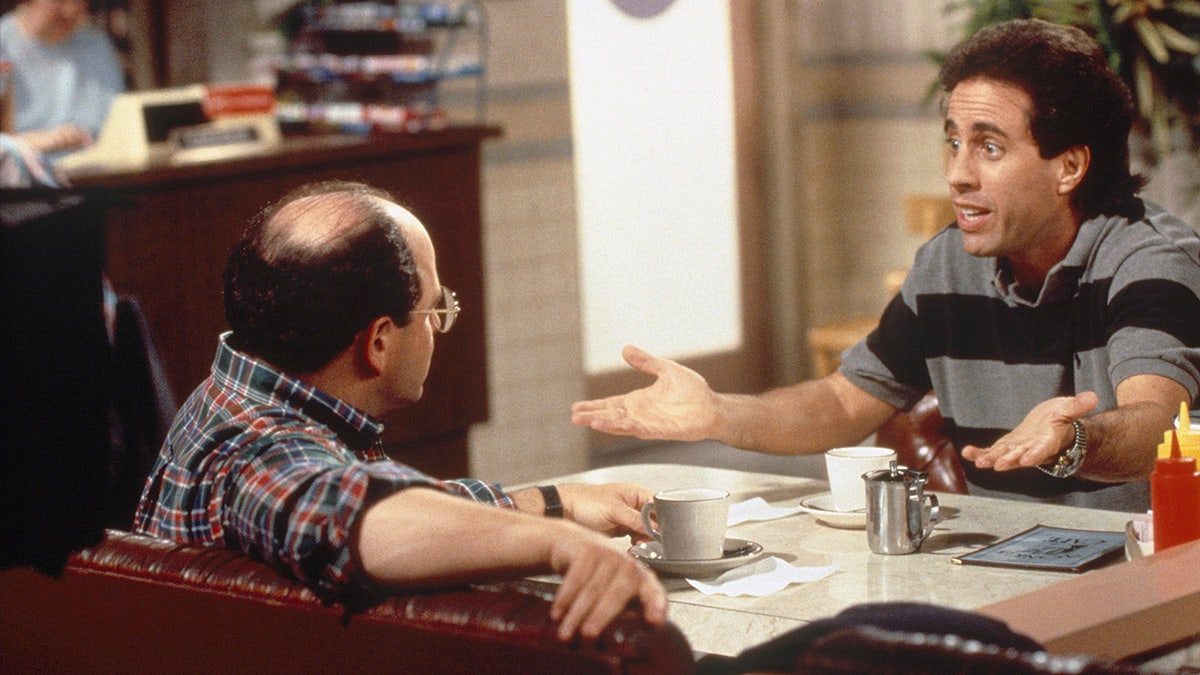
A scene from the first episode of “Seinfeld.” Jason Alexander as George Costanza, left, and Jerry Seinfeld as himself.  (Gary Null/NBCU Photo Bank/NBCUniversal via Getty Images)

New York City easily tops the list among municipalities, with more than 400 diners in Gotham alone, according to various estimates.

The role of Monk’s Café on “Seinfeld” was actually played by three diners. Two of them are still Manhattan tourist attractions today, more than 25 years since the last episode aired in 1998.

Monk’s Café itself, however, was purely fictional. 

The interior scenes of the diner where Jerry, George, Elaine and Kramer kibitzed about life and love over tuna salad and rye were shot in a Los Angeles studio.

TRAVEL HOTSPOTS INCLUDE 5 QUIRKY MUSEUMS CELEBRATING BARBERSHOPS, MUSTARDS, SPUDS, SPAM AND SUPERHEROES

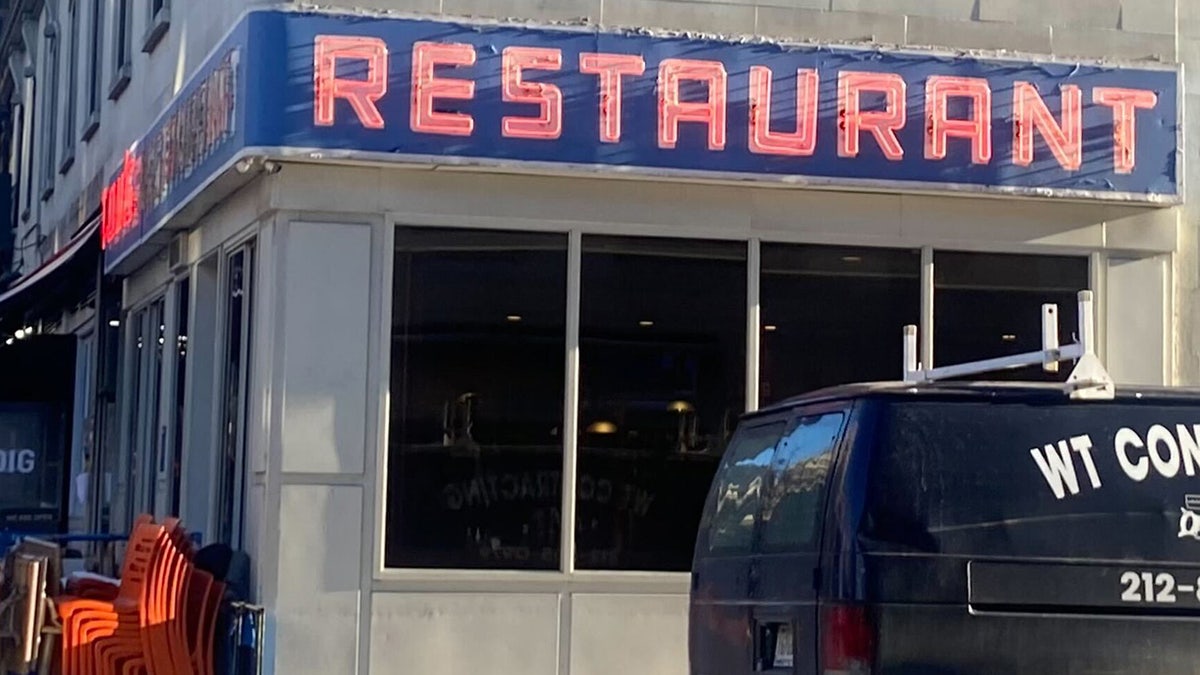
Tom’s Restaurant on Broadway in the Morningside Heights section of Manhattan served as the facade of the diner on “Seinfeld.” 

Tom’s remains a popular photo and selfie spot today.

It’s located just three blocks from the main quad of the Columbia University campus, the site of so much chaos in recent days. 

Tom’s emerged as the true celebrity setting of the series. Its photogenic sign and constant appearances (minus the “Tom’s”) on “Seinfeld” rendered it an American pop-culture landmark. It remains a popular photo and selfie spot today.

Westway Diner

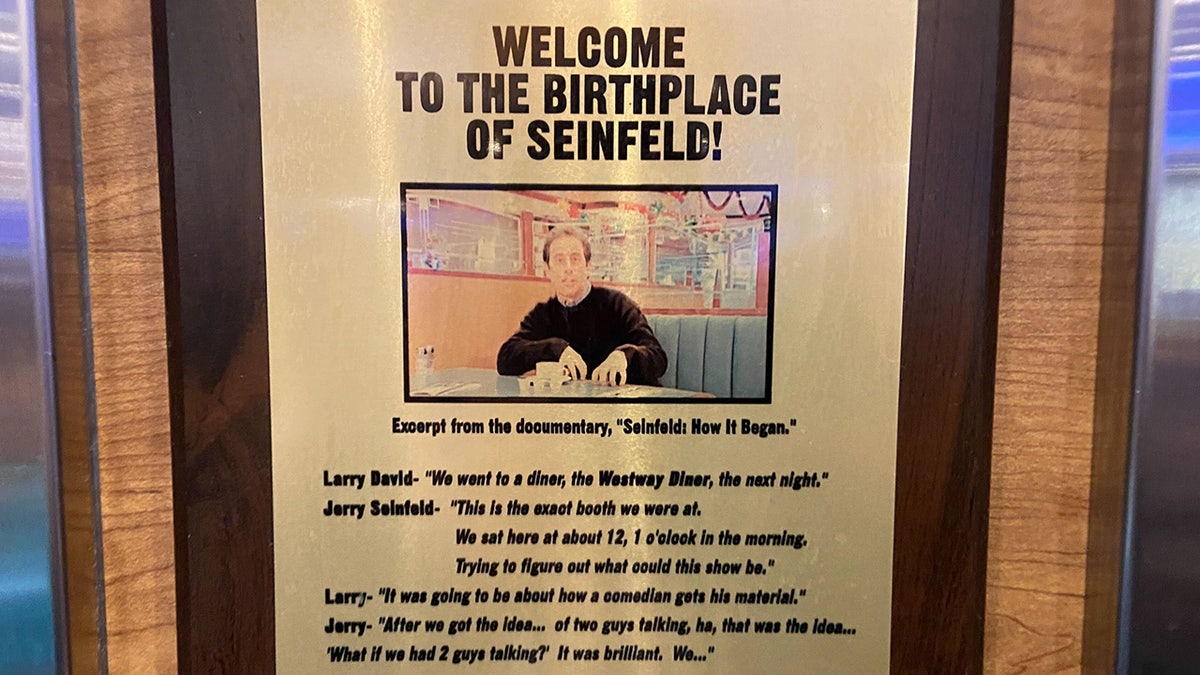
The celebrated sitcom “Seinfeld” was conceived by Jerry Seinfeld and Larry David at Westway Diner in Manhattan. A plaque memorializes its role in TV history today. (Kerry J. Byrne/Fox News Digital)

Westway Diner in Manhattan’s Hell’s Kitchen neighborhood, however, is the real spiritual home of “Seinfeld.”

It slowly emerged as a perpetually popular tourist destination, and remains one today, even though it never appeared nor was mentioned on the TV series — a testament to the sitcom’s enduring impact.

“In 1988 at the Westway Diner on 9th Ave., Larry David and I hatched a show about a comedian but with no story,” Jerry Seinfeld shared on X (then Twitter) in 2021.

AMERICAN DINER LINGO EXISTED IN PATRIOTIC ERA WHEN ‘BURN THE BRITISH!’ MEANT TOASTED ENGLISH MUFFIN

David lived diagonally across the street, at the corner of Ninth Avenue and West 43rd Street, in Manhattan Plaza. The twin-skyscraper development is a haven of subsidized housing for artists and performers, many of whom work in Broadway theaters, most of which are just a couple blocks away.

“Larry David was a writer for ‘Saturday Night Live’ when he lived here and created ‘Seinfeld,’” Marisa Redanty, president emeritus of the Manhattan Plaza Tenant Association, told Fox News Digital. 

Tom's Restaurant

The facade of Tom’s Restaurant in the Morningside Heights section of Manhattan was made famous while providing the exterior shots for the diner scenes in hit TV series “Seinfeld.” (Kerry J. Byrne/Fox News Digital)

“Jerry performed at the old Improv comedy club around the corner on West 44th Street. Westway Diner is right in between. So that’s why they met there.”

The old comedy club, she added, is now the home of Don Giovanni Ristorante. 

A plaque inside Westway Diner, meanwhile, honors the eatery’s role in TV history today.

CLICK HERE TO GET THE FOX NEWS APP

Westway Diner is a perpetually popular tourist destination today, even though it never appeared nor was mentioned on the TV series – a testament to the sitcom’s enduring impact.

A plaque honors its role in TV history today.

“We sat here about 12, 1 o’clock in the morning, trying to figure out what this show could be,” Seinfeld is quoted on the small memorial today, recounting Westway Diner’s role in TV history.

Manhattan Plaza, meanwhile, is a pop-culture icon in its own right. 

It was the home of many famous entertainment figures, including Samuel L. Jackson, Patrick Dempsey and Alicia Keys. 

She’s known internationally for, among many other hits, the atmospheric ode to Gotham “Empire State of Mind” with Jay-Z. 

Her new musical, “Hell’s Kitchen,” just debuted on Broadway. Manhattan Plaza serves as one of its settings.

Jerry Seinfeld diner split

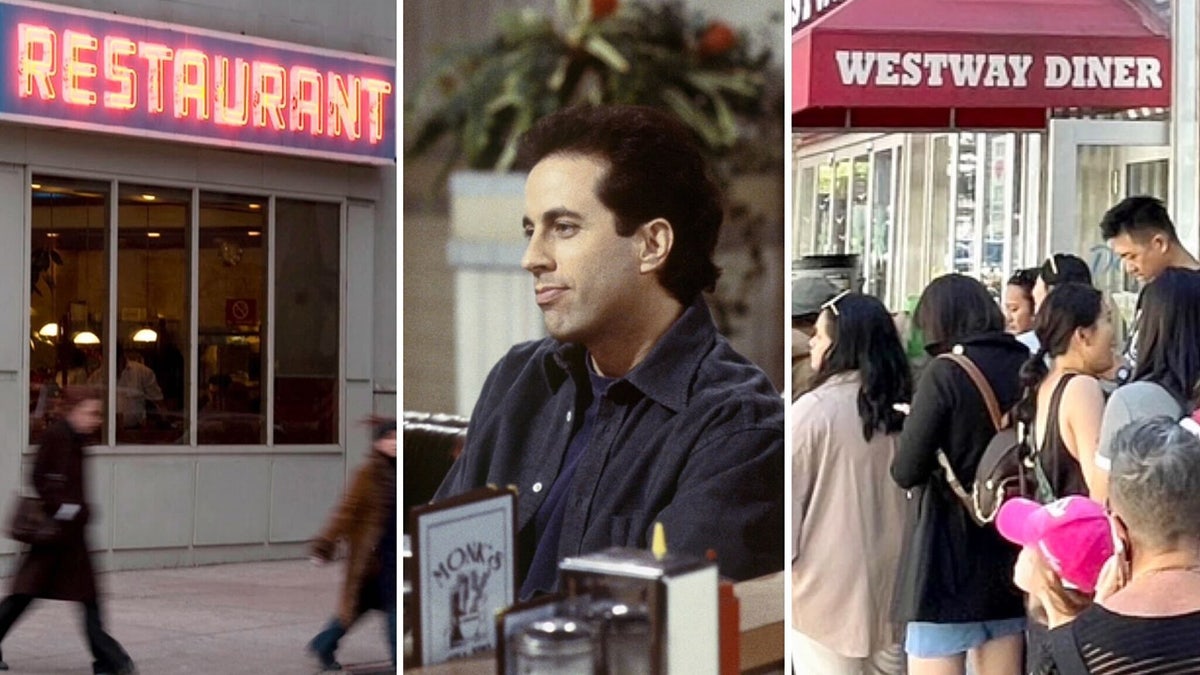
“Seinfeld” starring comedian Jerry Seinfeld helped popularize New York City diner culture and made two Manhattan diners tourist landmarks. (Robert Caplin/Bloomberg; Joesph Delvalle/NBCU Photo Bank; Deb Cohn-Orbach/UCG/Universal Images Group, each via Getty Images)

Manhattan Plaza still boasts one resident famous for a role in “Seinfeld.”

CLICK HERE TO SIGN UP FOR OUR LIFESTYLE NEWSLETTER

“Kenny Kramer, the inspiration for Kramer on the show, still lives here,” said Redanty. 

“I just talked to him the other day. He lived across the hall from Larry David. They used to try to leap from one apartment to the other without touching the hall in between. That’s why you saw all those crazy entrances by Kramer on the show.”

For more Lifestyle articles, visit www.foxnews.com/lifestyle.

Source

With daily entrance fee ‘Disney-fication’ of Venice, the world hits its overtourism tipping point

0

Demonstrators try to break through the blockade created by police officers to enter the city at Piazzale Roma, opposing the charge for tourists to enter the city on April 25, 2024 in Venice, Italy. Today Venice authorities launched a pilot program charging visitors a 5-euro entry fee in the hope that it will discourage at peak time, making the city more livable for its residents.

Stefano Mazzola | Getty Images News | Getty Images

Venice isn’t only sinking, it’s shrinking. In the 1970s, there were about 175,000 residents in Centro Storico, the main island and historic center of Venice. As of last year, that number was below 50,000. What has been growing steadily is tourism, which due to economic and quality-of-life pressure, has been pushing out residents. In fact, there are now more tourist beds in Venice than there are residents. Last year, 20 million people visited, winding their way through its two square miles.  

Last week, Venice took action on overtourism, introducing a 5€ fee to day trippers who want to access the city. The aim, Venice’s Mayor Luigi Brugnaro said in a press conference, “is not to close the city, but not let it explode.”

The program, officially launched on April 25 — a historically significant day, as it is both Italy’s Liberation Day and the feast day of the city’s patron saint, St. Mark — took the mayor’s words in a direction he hadn’t intended, with roughly a thousand protestors gathered in Piazzale Roma to oppose the measure, ultimately clashing with police in riot gear. 

Residents voiced a range of concerns despite the measure being designed in part to help make their city more livable. They objected to the idea of living in a closed city. Some argued that selling tickets reduces their city to an amusement park — Veniceland. There’s also a central irony, critics say, in a government that at the same time is considering multiple ways to increase tourism, from weighing the idea of cruise ships returning to the lagoon to relaxation of limits on Airbnbs.

A once-in-a-lifetime destination for many travelers from around the world, the most important criticism may be that the cost is unlikely to deter anyone from visiting the city.

“Almost the entire city is against it,” Matteo Secchi, leader of a residents’ activist group, told the Guardian. “You can’t impose an entrance fee to a city; all they’re doing is transforming it into a theme park. … I mean, are we joking?” 

On the first day of its implementation, according to data from the mayor’s office, 113,000 people registered, and of those 16,000 paid the fee — others were exempt for various reasons, including hotel stays, being a commuter, a student, or visiting family or friends. 

Tourists stand in front of Santa Lucia train station in Venice as they wait to pass controls and buy the five-euro ticket to enter the historic city center on April 25, 2024.

Marco Bertorello | Afp | Getty Images

Despite its many detractors, the day fee is a significant move on the part of Venice’s government to confront the challenge of overtourism, which has become a significant global problem since the pandemic. “This administration is the first one after 30 years of chit-chat on putting a brake to tourism growth that has actually done something,” said Antonio Paolo Russo, who was born in Venice and is a professor of urban geography at Rovira i Virgili University in Tarragona, Spain.

But Russo, offering a view representative of many experts, said the measure seems likely to fall short in terms of effectiveness, and smacks of political gestures, as well as obscure profit motives. “5€ won’t make any difference with such a large demand. … the tourist destiny of the city is scripted in the way it is regulated,” he said. 

The program is in its experimental phase and has been in its planning stages since 2019. Covid and travel restrictions associated with the pandemic first paused the action, and then accelerated it once travel resumed. “Covid made us realize that what was an everyday occurrence before Covid isn’t acceptable anymore — the mentality has changed, as has the sensitivity [towards crowds],” Simone Venturini, the city councilor for tourism, told CNN in 2023. “Aware of the urgency to find a new balance between the rights of those who live, work and study in Venice, and those who visit the city, we are setting ourselves up as global frontrunners,” he said. 

Although plans initially included different fee structures — from higher fees, to sliding scales, to fees charged on more days — and the possibility of raising funds to help offset the cost of spikes in visitors, the current plan will serve only to cover the administrative costs of the program.

Venice is the first location to require a ticket to enter a city — to make the city itself the attraction — and legal challenges could still be ahead, in national or EU courts, under laws covering freedom of movement in public places. Other popular tourist destinations have similar programs, but limited to locales and attractions within a city, such as Barcelona’s Park Guell.

Charging tourists to enter popular destinations has worked around the world, but only when there is a clear indication of where the money will go, such as environmental preservation, and when the revenue is kept separate from the general government ledger. Belize’s Protected Area Conservation Trust was a pioneering movement 25 years ago which met these criteria, and programs of this type are on the rise. Bali recently introduced a tourist tax to protect the destination’s environment, nature and culture. Barcelona just increased its tourist tax, while Amsterdam recently raised its tourist tax to the highest rate in Europe. The various taxation schemes being applied to tourists are likely to continue to grow around the world. 

How Macchu Picchu, Venice and Bali are fighting overtourism

But Venice is Venice, and it remains singular in conversations surrounding overtourism, owing in part to its small size, its historic nature, its beauty, and, in many ways, the symbolic impact of seeing enormous cruise ships pulling up to it like Godzilla. All of which makes the stakes for the new fee greater, and the hope for its success higher. 

Experts say good data is essential to success in combating overtourism. Existing programs — such as those in the Balearic Islands or Amsterdam — collect thorough data for analysis. Russo said this makes him concerned about the Venice program, which was not been matched by published studies leading up to its implementation. “I am not aware of any kind of prior study commissioned by the city to evaluate the effects from the introduction of this system on visitation behavior. They might exist, but the academic and the local community have not been informed,” Russo said.

More taxes, more marketing, more tourists

“One of the biggest concerns is how the money is used and protected,” said Megan Epler Wood, managing director of Cornell’s Sustainable Tourism Asset Management Program. In the case of Venice, the fee won’t deter visitors, but she said that does not mean it isn’t necessary: “There is a real need for these funds,” Epler Wood said. But the majority of tourism taxes goes into tourism marketing, and the more taxes go into marketing, the more tourists come, raising more taxes to pump back into marketing, leading to more tourists still. “The longer that goes on, the harder it becomes to manage those numbers, as we’ve seen in Venice,” Epler Wood said. 

Taxation won’t necessarily help if it doesn’t specifically deal with the “invisible burden” of tourists, particularly in vulnerable locations. In Venice, Epler Wood said, that can only be done by having good data on how much each tourist “costs” in impact to the places they visit, including the pressure they put on infrastructure. This is particularly true in Venice, where the presence of cruise ships in recent years and thousands of people disembarking on the small, historic city, has made it a poster child for over-tourism.

“Managing utilities is part of the invisible burden of tourism, because no one accounts for it, and that’s the problem with Venice’s new fee. They’re guessing. They don’t know how much money they need per tourist to combat associated costs,” Epler Wood said.

Lack of initiatives systematically adopted on the demand side leads to overtourism in the high season months to a few internationally renowned cities, places and attractions, and very low demand for the rest, said Max Starkov, a hospitality and technology consultant. If the desire is to curb the number of visitors, then it comes down to applying typical supply/demand algorithms to high seasons and popular destinations via a centralized booking system, much like airlines, and theme parks, already do. 

Venice is trying to accomplish something like this with its booking system, Venturini said, from allowing the city to know ahead of time how many people to expect on particular days, to warning visitors that their selected day is particularly high traffic. “We can say, ‘Dear visitor, we don’t advise coming on this date because it’s Ferragosto [August public holiday] or Easter – there’ll be a lot of people so it will hinder you from having a peaceful visit, and if you make it a week later you can enjoy your visit more,'” he told CNN.

The access fee will, at this stage, only apply to certain days during certain periods — 30 days in total, spread across the high travel season — according to the city’s website. On those days, travelers will need to purchase access to the city, and have a QR code to access it.

The city’s statement released in May 2023 when its municipal council voted to enact the order described the objective as “to discourage daily tourism in certain periods, in line with the delicacy and uniqueness of the City.”

“Overtourism is becoming the new normal,” Starkov said. Travel, in his view, has “become figured into people’s sense of basic human needs. After you take care of your physiological needs: food, shelter, clothing, sleep, etc., next comes health, family and … travel.”

Compounded in the aftermath of the pandemic through the phenomenon known as revenge travel, the Venice day-trip fee may become an emblematic symptom of overtourism, rather than solution to it.

“Overtourism is more than simply too much tourism. It’s about a failure of government policy and an inability to regulate and shape the way tourism manifests,” said Joseph Cheer, professor of sustainable tourism at Western Sydney University, Australia, & co-chair of World Economic Forum Global Future Council on Future of Sustainable Tourism. 

The Venice fee, he said, arrived at the end of an already troubled process, rather than entering on the demand side to better control it. “Taxes and fees are a blunt instrument based on the premise tourists are price-sensitive. This is problematic when it comes to destinations like Venice that are ‘once in a lifetime’ places to visit,” Cheer said. 

Source