Sunday, June 14, 2026
Google search engine
Home Blog Page 461

Pioneering Cutting-Edge Technologies: High-End Medical Imaging Developer VITAL HealthCare Debuts at CMEF

0

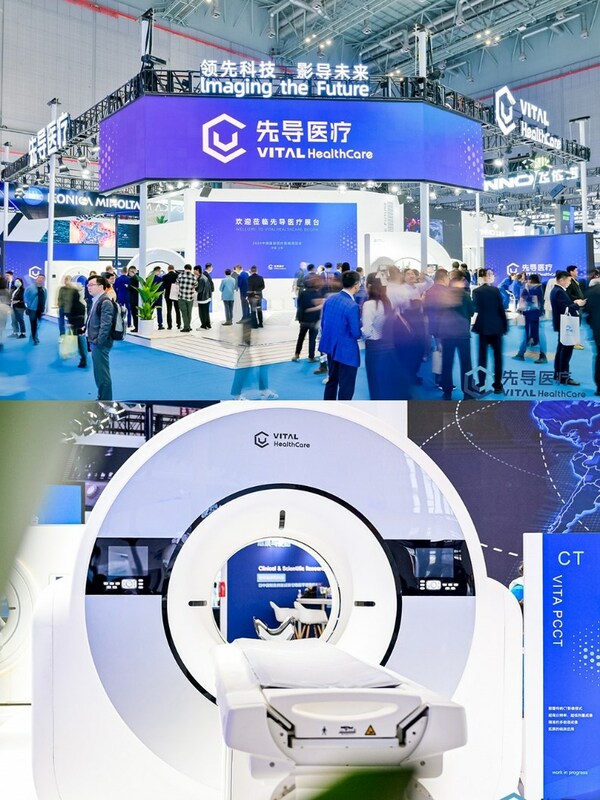
SHANGHAI, April 13, 2024 /PRNewswire/ — On Apr. 11, 2024, VITAL HealthCare, one of the 5 core business divisions of the VITAL Group, marked a stunning debut at the 89th China International Medical Equipment Fair (CMEF) in Shanghai. Drawing on the Group’s core competence in R&D and its wealth of top-quality raw materials, devices, modules, and system R&D resources, VITAL HealthCare has captured the spotlight with its forward-looking product development plan on this inaugural showcase.

At the exhibition, VITAL HealthCare unveiled a portfolio of advanced imaging solutions. Spearheading the lineup was its in-development photon counting CT (PCCT) system – VITA PCCT, a next-generation CT imaging technique poised to redefine the future of imaging diagnostics. Also featured were the VITA 7.0T ultra-high field MRI and VITA PET/CT, both in the pipeline, as well as the commercially available ASTA 1.5T superconducting MRI. These products, each with its unique strength, are pillars of support for early detection and precise diagnosis of medical conditions. They also exemplify VITAL HealthCare’s dedication to pioneering the cutting edge of medical imaging and building an industry-wide matrix of high-end medical imaging products.

VITA PCCT
VITA PCCT

Revolutionizing conventional CT technology, PCCT adopts photon counting-based tomography using CZT (Cadmium Zinc Telluride, CdZnTe) detectors for photon counting and energy analysis, which allows accurate measurement and recording of each X-ray photon that passes through to reveal unparalleled details of internal structures. PCCT’s direct imaging innovation transcends conventional CT imaging constraints of crosstalk, electronic noise, and energy mixing, significantly enhancing image resolution, which is fundamental to pinpointing minute abnormalities. In addition, PCCT’s heightened sensitivity and precision in photon counting provide improved imaging with less radiation exposure, minimizing radiation risks faced by patients. PCCT also excels in actual multi-spectral imaging through its capacity to differentiate substances and tissues by various energy signatures of photons.In an era of change and innovation, high-end medical imaging confronts a dual landscape of opportunities and challenges. By ramping up R&D investment and sharpening its technological edge, VITAL HealthCare is set to broaden its market reach while fostering collective growth in the global medical imaging industry through synergistic partnerships.

Source

Xi Jinping on the Belt and Road Initiative informs and inspires readers in Chile

0

SANTIAGO and BEIJING, April 13, 2024 /PRNewswire/ — A news report from Beijing Review:

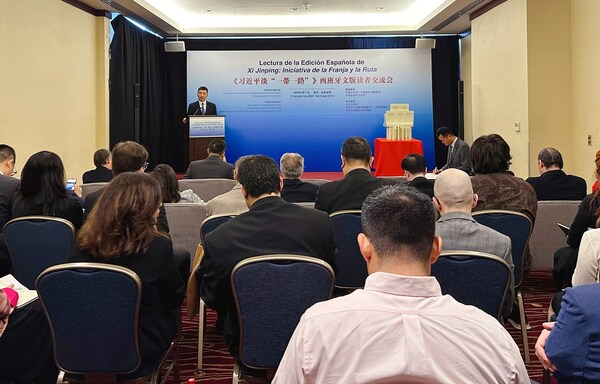
A seminar for readers to share their views on the Spanish edition of Xi Jinping on the Belt and Road Initiative underway in Santiago, Chile, on April 11 (COURTESY PHOTO)

The Spanish edition of Xi Jinping on the Belt and Road Initiative is helping Latin American countries better understand and participate in the China-proposed Belt and Road Initiative (BRI), officials and scholars said at a seminar held for readers to share their ideas in Santiago, Chile, on April 11.

“Within the BRI framework, China and Chile have worked together effectively in the construction of infrastructure such as ports, subways and highways, as well as in the development of a science and technology center,” Yu Tao, Vice President of China International Communications Group (CICG), said at the seminar.

Chinese President Xi Jinping put forward the BRI in 2013 to boost connectivity along and beyond the ancient Silk Road routes. Chile is the first Latin American country to voice support for the initiative and sign a memorandum of understanding on Belt and Road cooperation with China. 

The Spanish edition of Xi Jinping on the Belt and Road Initiative gives Latin American readers an in-depth, nuanced understanding of the initiative, thereby contributing to more productive collaboration, Yu said. CICG is China’s leading international communication institution and owns the book’s publisher, the Beijing-based Foreign Languages Press (FLP).

The book is a collection of 42 articles by President Xi on Belt and Road cooperation, dated from September 2013 to July 2018, addressing issues ranging from how and why the initiative was introduced to its principles and goals. Its English, French, Russian, Arabic, Spanish, Portuguese, German and Japanese editions have been published by the FLP for international audiences. 

The book is a definitive work that is assisting all sectors of Chilean society to familiarize themselves with China’s proposals and the rationale behind them, so that the two countries can work in concert more efficiently, Ma Zhen, Political Counselor at the Chinese Embassy in Chile, said.

Fernando Reyes Matta, former Chilean Ambassador to China and Director of the Center for Latin American Studies on China at Chile’s Andres Bello University, said the BRI aims to benefit the international community and the Spanish edition of Xi Jinping on the Belt and Road Initiative enables Latin American people to understand China’s concepts and policies.

Ricardo Gamboa Valenzuela, Deputy Director of the Institute of International Studies (IEI) at the University of Chile, said his institute pays great attention to China’s increasingly important role in Latin America and the rest of the world. The book provides authoritative reading materials for professors and students, giving them a deeper understanding of China.

Carlos Olguín, an associate professor at the IEI and former Director of the Asia-Pacific Department at Chile’s Foreign Ministry, Luis Ajenjo Isasi, General Manager of Radio Cooperativa, and Malva Venturelli, President of the José Venturelli Foundation, also shared their views. They all recognized the book’s role in cementing mutual trust.

Hu Kaimin, FLP President, said he hoped the book will make the initiative more popular in Chile and the rest of Latin America, build new cultural ties, and promote the two-way understanding of the Chinese and Latin American civilizations.

With the guidance of CICG and the Chinese Embassy in Chile, the seminar was organized by the FLP, CICG Center for Americas and the IEI. Approximately 50 representatives from sectors including politics, academia and culture participated in the event.

Source

Should you swap red meat for herring? Can this 1 strategy help you feel less angry? What to know about this week’s health headlines.

0

Welcome to your weekly check-in on the latest health news you might have missed. This week, the Environmental Protection Agency set its first limits ever on “forever chemicals” in drinking water. These chemicals, also known as PFAS, have been linked to a slew of health issues, including fertility problems and cancer. Also, if you are a woman older than 65 seeking guidance about hormone therapy, a new study suggests that the majority of women don’t have to stop, as was previously believed — but treatment course and dose matter.

If recent natural events have affected your health, read on: Yahoo Life has a guide for why you may feel weird after an earthquake (like the surprising one that hit the East Coast last week). And if you didn’t follow proper eclipse protocols — and now your eyes are hurting — Yahoo Life has all the information on what to do. Plus, does so-called “oatzempic” really help you lose weight, or is this mix of oats, water and lime juice nothing more than a strange food combo? Find out what nutritionists think about it.

For more health news, read on.

🚶🏽‍♀️Reminders — and monetary incentives — can get people moving

A study published in Circulation found that adults at risk of heart disease who received reminders or incentives to exercise every day increased their daily steps by over 1,500 in a year, which correlated to an extra 40 minutes of activity per week. This reduced their risk of premature death by 6% and their risk of cardiovascular-related death by 10%. While simple reminders to exercise were effective, offering rewards — like money or points in a game — was even more so. The researchers suggest that apps or other systems that offer incentives for exercise could help people at risk for health issues move more.

🐟 Swapping red meat for small fish like herring could save lives

A study published in BMJ Global Health suggests that replacing red meat with small fish like herring, sardines and anchovies could save up to 750,000 lives annually by 2050 and reduce disability from diet-related diseases, such as heart issues. These fish, which are rich in omega-3 fatty acids, are affordable and abundant, particularly in low and middle-income countries where heart disease rates are high.

🖐️ Touch can boost your well-being

Touch can greatly improve mental and physical health — and exactly who is touching you may not matter that much, according to a new study from the Netherlands Institute for Neuroscience. Touch — whether from a friend, massage therapist or even a robot — was found to significantly reduce pain, anxiety, depression and stress in adults, with even greater benefits observed in those with health issues. While duration and the person touching you did not appear to be very significant, frequency was found to be important. So the more often you are touched, the bigger the benefits.

🧘🏻‍♂️ Getting in touch with your spiritual side may lower blood pressure

Research presented at the American College of Cardiology’s Annual Scientific Session suggests that receiving daily WhatsApp messages focusing on nonreligious spirituality led to significant improvements in blood pressure and blood vessel health among those with high blood pressure. Though more research needs to be done, these findings follow previous research that linked meditation and other spirituality-based practices with improved heart health.

✍️ Feeling mad? This practice may help ease anger

A new, small Japanese study published in the journal Scientific Reports says that people who wrote down their reaction to a negative incident and then destroyed the paper were able to release nearly all of their anger. Participants who did the same thing but kept the piece of paper intact after the exercise instead of destroying it felt only slightly less angry by the end of the exercise.

This article contains affiliate links; if you click such a link and make a purchase, we may earn a commission.

Source

Smart preservation

0

BEIJING, April 12, 2024 /PRNewswire/ — A news report from chinadaily.com.cn:

Smart preservation
Smart preservation

To the outside world, Yunnan, an inland province, at a low latitude and high elevation in southwestern China, is well known as a tourist destination that is characterized by many ethnic cultures and its rich biodiversity. It’s well known for its diverse ethnic minorities and its abundance of plants and animals.

It has more than 19,000 high plant species or 50.2 percent of China’s total and 2,273 vertebrate species or 52.1 percent of China’s total, catapulting it to the top of the list in terms of biodiversity in China, which ranks the eighth on the global biodiversity ladder.

Occupying a mere 4.1 percent of China’s total land area, Yunnan houses 171 rare and endangered plant species, constituting 44 percent of China’s protected plants. Alongside this, out of 335 prioritized species of protected wild animals in the nation, Yunnan has 243, accounting for 72.5 percent of China’s total, 15 percent of which are species endemic to Yunnan.

While the fragility of global biodiversity is constantly under severe threat, notably due to the onslaught of climate change, Yunnan has made positive response by leveraging digital technology to protect its mosaic of unique ecological heritage.

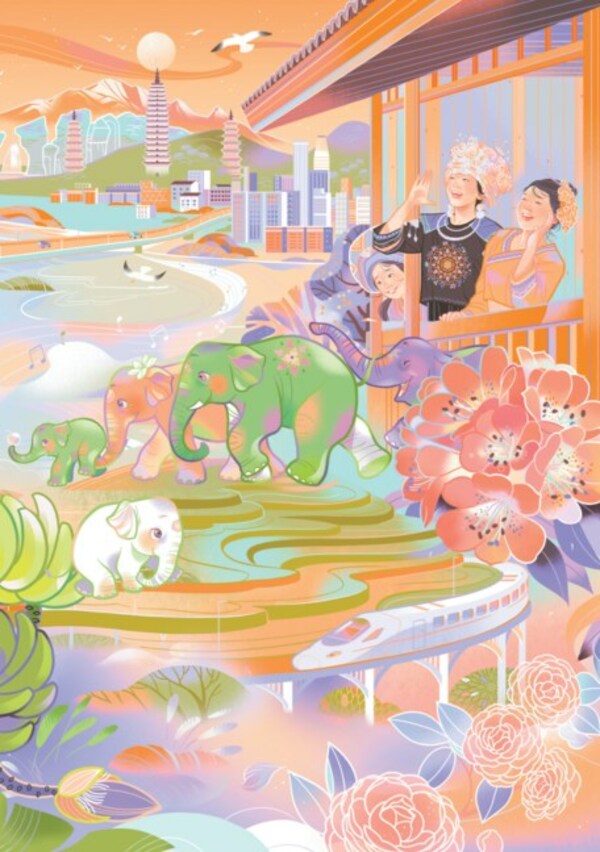
Its model of digital biodiversity conservation provides accurate and up-to-date biodiversity big data for effective conservation efforts. A groundbreaking case in point lies in the success in establishing a comprehensive artificial breeding management system for its terrestrial wildlife. This witnessed the growth of the elephant population in Yunnan, much to the surprise and delight of the involved parties.

As a nexus of technological innovation and rich biodiversity, digital biodiversity conservation does not merely offer a new viable avenue to preserve nature, but also frames a picture of compatibility between nature and humanity where development can be harmonized with environment. This has been augmented by the continuous discovery of new species of plants and animals in the province.

As such, Yunnan remains a robust bulwark of biodiversity in China, if not the entire region. It showcases the juxtaposition of sustainable development and ecological protection, demonstrating that they are not mutually-exclusive.

In this context, the mitigating of environmental impacts caused by the China-Laos rail link project in Yunnan has been a real eye-opener to the skeptics of the developed world. To the developing Global South, it comes as a confidence booster in the face of mounting challenges when the sustainability of development is called into question.

It hogged the international limelight for a totally different reason in December 2021 when the inauguration of the China-Laos railway service for the first time put Yunnan on the world map of railway connectivity. It signifies a great triumph for China’s Belt and Road Initiative in Southeast Asia. At the same time, the dormant Pan-Asian railway network was given a timely wake-up call from its decade-long slumber.

Since then, the economic pundits and logistical players have good reasons to stay upbeat with the leaps and bounds made in rail logistics statistics across the YunnanLaos border. More tropical fruits from its peninsular neighbors of the Association of Southeast Asian Nations can now be conveniently shipped into China via Yunnan, making it increasingly relevant in the progression of China-ASEAN trade.

The 1,035 km long stretch, once dubbed mission impossible due to the challenging terrain, has made a contribution of 44.7 percent to such a quantum leap in the rail logistics. Now Yunnan is all set to be the nexus between China and ASEAN that ultimately links to the Pan-Asian Railway system. Yet, cargo trade is not the entirety of its future.

From the macro perspective, the successive roll-out of Chinese initiatives, ranging from the inaugural BRI to the subsequent global initiatives, plays a pivotal role in enhancing regional economic integration, alongside realizing the ideal of fostering a community of shared destiny in the region. However, the vast tapestry of economic endeavors will remain incomplete without being woven with the rich threads of cultural and normative heritage from Yunnan and its neighboring partners in the Peninsular ASEAN.

The shared origin of the myriad of ethnic cultures across Yunnan, Myanmar, Thailand, Laos and to a lesser extent, Malaysia, has much to be tapped as the building block for people-to-people connectivity, an integral part of the track 2 diplomacy underpinning the five-pillar connectivity of the BRI. This is no less significant vis-a-vis the physical connectivity through infrastructure development under the framework of the BRI.

However, sinews of cultural affinity across the region will only serve as a natural boon to the realization of the shared destiny community ideal if full blown interactions take place. In this context, the passenger traffic provided by the China-Laos rail service, alongside the upcoming China-Thailand stretch — another branch of the Pan-Asian Railway system — provide a timely answer to the call for greater cohesion and amity in the region.

In nurturing its enduring relations with ASEAN, it has never been a luxury for China to have multiple windows of outreach with the regional bloc. From the ASEAN perspective, Yunnan provides a viable sinew of China-ASEAN cultural connectivity alongside the existing window of seaborne trade ties via Nanning, capital of the Guangxi Zhuang autonomous region.

After all, the China-ASEAN partnership is multidimensional in essence. All strengths in the various areas of forte on the part of China are to be tapped effectively in dealing with the diverse member states of ASEAN. Vice versa, the complementarity of the 10 ASEAN member states in engaging with their biggest trading partner, China, should also be given due significance, albeit competition in specific areas remains inevitable.

The author is Ong Tee Keat, who is president of the Belt and Road Initiative Caucus for the Asia-Pacific and is former transport minister of Malaysia. The author contributed this article to China Watch, a think tank powered by China Daily.

Source

Point of convergence

0

BEIJING, April 12, 2024 /PRNewswire/ — A news report from chinadaily.com.cn:

Point of convergence

Yunnan, a province in Southwest China, shares borders and cultural affinity with Southeast Asia, and ancient trade routes such as the ancient Southern Silk Road and the Tea Horse Road have facilitated economic and cultural exchanges between Yunnan and these regions. Yunnan has been a well-deserved regional trade and cultural center between China and the Indochina Peninsula. Since the 1980s, Yunnan has been at the forefront of China’s opening-up. In 1992, Yunnan participated in the Greater Mekong Subregion Economic Cooperation (GMS), taking advantage of its geographical location to initiate China’s involvement in the regional integration processes of Southeast Asia. Since the 21st century, the scope of Yunnan’s openness has expanded from South and Southeast Asia to the Pacific and Indian Ocean, as well as the Middle East and Africa, making it one of the most international provinces in China.

With its increasingly prominent role as a hub linking South and Southeast Asia, Yunnan serves as the overlapping intersection in the process of community building on various levels; for example, the building of a community with a shared future for mankind, the Asia-Pacific community with a shared future, and the China-ASEAN community with a shared future, as well as the ChinaCambodia, ChinaLaos, ChinaMyanmar, ChinaThailand, and ChinaVietnam bilateral communities with a shared future. Based on its abundant biodiversity resources, Yunnan is also becoming the gateway for China’s initiatives to promote a community with a shared future for all life on earth.

The advantages of Yunnan’s multi-dimensional convergence are reflected in four aspects:

First, Yunnan has become an increasingly prominent hub in the southwest direction of the Belt and Road Initiative over the past decade, and its important gateway role in deepening exchanges and cooperation between China, and South and Southeast Asia has been continuously highlighted in China’s foreign policies. Currently, the bilateral provincial cooperation mechanisms between Yunnan and five Mekong countries have been fully established.

Second, Yunnan has formed a framework of inner-outer integration. Yunnan is located at the center of Asia’s five-hour aviation circle, and at the intersection of ASEAN 10+1 Free Trade Area, GMS economic cooperation, and the Pan-Pearl River Delta Economic Zone. The China-Laos Railway, ChinaEurope freight train, and the new western land-sea corridor, enable Yunnan to smoothly connect itself with the six corridors and routes of the BRI. The ChinaVietnam, ChinaLaos, and ChinaMyanmar international expressways have empowered Yunnan as a pan-Asian transportation hub. Southeast Asian countries can enter western China through Yunnan, connecting to the second Eurasian Continental Bridge. This will be a spectacular continental “bridge”, connecting Asia, Europe, and Africa, bridging the Pacific, Indian and Atlantic Ocean.

Third, Yunnan is a crucial pivot point in the Yangtze River Economic Belt, linking South and Southeast Asian market with the internal markets of China, which enables production factors from surrounding areas to converge in Yunnan. In 2023, the total trade between Yunnan province and the five Mekong countries reached about $15 billion, and the province has established cross-border renminbi settlement channels with a total of 120 countries and regions. Furthermore, Yunnan has gradually formed a value chain optimization and restructuring system led by the China (Yunnan) Pilot Free Trade Zone.

Fourth, Yunnan is the preferred destination for students from South Asia and Southeast Asia studying in China, and the Yunnan-Mekong Vocational Education Training Base has trained over 55,000 Southeast Asian students. In addition, the secretariat of South and Southeast Asian University Network, as well as the national focal point of the GMS Knowledge Network, are both in Yunnan University, which enhances the systematic knowledge-sharing on development experiences and policy lessons among China and South and Southeast Asia.

In the future, Yunnan’s opening-up can focus on cultivating the soft power that brings together all kinds of communities with a shared future.

First, Yunnan should continuously leverage the Lancang-Mekong corridor as a long-term strategic pivot, and closely interact with domestic development policies. Especially, Yunnan should focus on logistics corridors connecting Asia and Europe, as well as the new western land-sea corridor, with strategic development plans for integrating energy and computing power.

Second, given the importance of understanding the world when implementing the BRI, it’s crucial to strengthen area studies to adopt a “one country, one policy “approach. With its numerous universities, Yunnan has distinct advantages in the research on Southeast Asia, South Asia, the Middle East and Africa. Based on that, developing and synthesizing policy advice on key issues related to greater regional development should be one of the priority issues for Yunnan’s area studies.

Third, Chinese language education and promotion is essential for China’s international communication in the coming decades. Yunnan has wide exposure to the outside world, and can develop new models for rapid Chinese language learning through industry-academia-research collaboration in order to enhance the capacity of Chinese international communication.

Last but not least, a global ecological civilization center should also be proposed in the near future. Given its abundant biodiversity resources, Yunnan has unique advantages in establishing a global or China-ASEAN ecological civilization center. By conducting interdisciplinary research and human resource development, Yunnan can assume a leading role in experience and knowledge sharing on environmental protection and the building of an ecological civilization.

In a word, Yunnan will enhance its soft power on convergence, and contribute significantly to achieving more integrated, prosperous, sustainable and inclusive development in the region and beyond.

The authors are Zhai Kun and Zhang Lei. Zhai Kun is a professor at the School of International Studies and deputy director of the Institute of Area Studies at Peking University. Zhang Lei is an associate professor at the Institute of International Studies of Yunnan University.

Source

Annual Memorial to Chinese Legendary Ancestor Marks the Blessing to the Nation

0

ZHENGZHOU, China, April 12, 2024 /PRNewswire/ — The Memorial Ceremony to Ancestor Huang Di in His Native Place was held in Huang Di’s Hometown on April 11. The celebration takes place every year on the third day of the third month in the Chinese lunar calendar in Xinzheng City of Zhengzhou in central China’s Henan province. And this year is specially called the Jiachen Year (2024).

The Memorial Ceremony to Ancestor Huang Di in His Native Place in the Jiachen Year

Themed “Peace, Concord and Harmony with One Same Root, Ancestor and Origin”, the ceremony was jointly sponsored by the People’s Government of Henan Province, the Henan Committee of the Chinese People’s Political Consultative Conference, the Taiwan Affairs Office of the State Council, the All-China Federation of Returned Overseas Chinese, the All-China Federation of Taiwan Compatriots and the Association for Yan Huang Culture of China.

Chinese from around the world worshiped the legendary ancestor Huang Di, or the Yellow Emperor, praying for the prosperity of Chinese civilization and wishing the world peace and harmony.

The ceremony started at 9:40 a.m. with a gun salute, followed by a series of sections, including flower basket offering, incense burning, bow worshipping, prayers reading, carol singing, worship through song and dance, prayers for China, and prayers for harmony between nature and humans.

At 10:40 a.m., the conclusion of the ceremony was announced, which was witnessed by about 5,000 attendees, including representatives from all walks of life and reporters from nearly 100 media organizations.

The grand Memorial is not only a cultural event, but a platform for cooperation aimed at promoting mutually beneficial development. This year’s ceremony was held alongside an event for business negotiation and investment promotion, through which a number of project agreements were signed.

It has been a tradition in China since the Spring and Autumn Period and the Warring States Period (770-221 BC) to worship the Yellow Emperor. In 2008, the Memorial Ceremony was inscribed onto the national list of intangible cultural heritage of China.

Each year, Chinese all over the world, including those in Hong Kong, Macao and Taiwan of China and those in the United States, the United Kingdom and Australia hold activities to worship the Yellow Emperor, paying tribute to the respected ancestor.

Source

4 simple ways to improve your workout

0

If you’re making an effort to work out more often, it’s likely because you’re looking to improve your health, increase strength and maybe even make everyday tasks easier to perform. However, it’s not just consistent exercise that leads to those positive outcomes, but also doing your workouts using proper form.

It’s something that Beth Nicely, a National Association of Sports Medicine (NASM) certified personal trainer, corrective exercise specialist and founder of New York-based fitness studio The Limit, emphasizes in her instruction for clients of all fitness levels. “There’s so much bad form, and a lot of people just don’t know it. But if you do things in bad form, over time you’re going to injure yourself,” she tells Yahoo Life. “You’re going to get a muscle imbalance and you won’t get the benefits that you’re supposed to get from that specific exercise.”

While Nicely says people should be “applauded for just working out,” she explains that correcting errors in form can be the key to better performance overall and getting rid of any discomfort such as knee or back pain. Here, Nicely lays out four ways to address some of the most common mistakes to ensure a more effective — and safer — workout.

Keeping your knees aligned with your toes is key for a proper squat. (Getty Images)

Keeping your knees aligned with your toes is key for a proper squat. (Getty Images)

Be mindful of your knees

If you notice your knees drawing towards each other during a squat, lunge or jump, you’re not alone. It’s a “very common structural issue,” according to Nicely and most noticeable during those moves. The key, she says, is to keep your knees aligned with your second and third toe.

“If you continue to do exercises where your knees don’t stay aligned over your second and third toe, you’re going to have ankle issues, you’re going to have knee issues, you’re going to have hip issues because it’s all connected. And a lot of the time, the knee valgus” — when knees cave in — “is stemmed from weak hips,” she says. However, the simplest advice is to keep the knees and toes facing the same direction.

Focus on correcting rounded shoulders while doing rows. (Getty Images)

Focus on correcting rounded shoulders while doing rows. (Getty Images)

Keep a flat back

Keeping a flat back when doing movements that target the triceps, like a bent-over row or extension, helps make sure that the correct muscles are activated. “Everybody is just more hunched over from computers and phones. It’s a common postural thing that everyone just needs to be aware of,” says Nicely. “What I see is not enough activation in the muscles between your shoulder blades.”

She suggests focusing on squeezing your shoulder blades together, rather than using arm strength. Keeping your back flat and resisting the urge to round the shoulders will help.

The same goes for abdominal exercises done while laying on a mat. “You want to make sure that the work’s not going into your lower back when you do abdominals, and the way to do that is to try to keep your back flat on the mat,” she says. “An excessive arch of the lower back could cause a lot of different muscle imbalances.”

Place palms firmly into the ground when in a plank position. (Getty Images)

Place palms firmly into the ground when in a plank position. (Getty Images)

Place palms flat on the ground

Burpees and planks might not be your favorite exercise, but Nicely says to do them correctly, you need to have your palms pressed into the floor. The alternative she sees are people with just their fingers making contact with the mat, which she says will put stress on finger and wrist joints.

“If [the weight is] just in your fingers, it’s going to work your forearms. If it’s in your palm, it’s going to go more to your triceps and biceps — your actual arm muscles,” she says. “Your palms should always be flat in exercises like that.”

She also warns that exercises in a tabletop position should be done with either both hands on the mat or both elbows for the sake of your spine. “There’s a trend in fitness to do a leg series with one elbow down and your other hand on the mat,” she says. “It just twists your spine too much and there’s too much connecting in your hips and core.” That imbalance can cause lower back or neck pain, she says.

Focus on your breath

You’ve likely heard a fitness instructor remind you to breathe in the middle of a workout — that’s not just to ensure that you make it out alive, but also to make the exercises easier to perform and more effective. “Breathwork is huge,” says Nicely. “The rule of thumb is that you always breathe out from your abdomen when you’re doing the work or exerting the effort. So if you’re going to do an overhead press, when that arm goes up, you breathe out. It helps engage your core to help with the press.”

Nicely admits it’s difficult to do a move perfectly with each rep, but says that “just working on it and getting better at it is important.” She adds: “Everyone has good intentions when they work out, but we want our bodies to be working functionally and as healthily as they possibly can so you do get the correct benefits.”

If you have any doubt about your form, Nicely suggests doing your workouts in front of a mirror so that you’re able to pay close attention to your movements. And if you’re seeking more information on proper form she isn’t against searching online. “Just make sure that your resource is a certified trainer,” she says.

Source

AI-DOL: Revolutionising the Future of Entertainment with AI-Powered Virtual Idols

0

SINGAPORE, April 12, 2024 /PRNewswire/ — In an era where artificial intelligence is reshaping industries, AI-DOL emerges as a trailblazer, crafting an extraordinary ecosystem of AI-powered virtual idols that are set to captivate the global audience. This innovative foundation is not only redefining the boundaries of entertainment but also creating a new paradigm for fan interaction and engagement.

AI_DOL
AI_DOL

Innovative Products and Cutting-Edge Technologies

At the heart of AI-DOL’s mission is the utilisation of a suite of advanced AI technologies including audio-to-animation, audio-to-emotion, text-to-music, and text-to-speech. These are complemented by proprietary AI Character Models and IP Rights, ensuring a unique and immersive experience. By abstracting crypto into a fan-control and engagement platform, AI-DOL is setting new standards for live streaming and real-time interactions on mainstream platforms such as TikTok and Instagram.

In reflecting on the journey of AI-DOL, Erica, Co-founder of AI-DOL, shared, ‘Our vision with AI-DOL has always been to bridge the gap between technology and human emotion, creating a world where fans can connect with idols on a deeper level, anytime, anywhere. The rapid growth of our first virtual girl band on platforms like TikTok is a testament to the universal appeal of this new form of entertainment. As we continue to innovate and expand our reach, we’re excited about the potential to not just entertain, but also to create a meaningful impact on the global entertainment landscape. The future of entertainment is here, and it’s powered by AI. Join us as we embark on this thrilling journey to make the impossible, possible.'”

In just one month since its inception, AI-DOL’s first girl band is on track to amass over 1 million TikTok followers. With ambitious plans to incubate 3 groups of AI artists by the end of 2024, AI-DOL aims to build a fanbase in the billions, revolutionising how music and entertainment are consumed and enjoyed worldwide.

Strategic Partnerships and Global Collaborations

AI-DOL is gearing up for an exciting future with upcoming music videos and an album featuring collaborations with globally acclaimed DJs and artists by June 2024. Furthermore, a strategic partnership with 50 top TikTok creators is set to unlock a reach of over 100 million fans across Asia, significantly expanding AI-DOL’s influence and presence in the digital entertainment landscape.

Unwavering Support and Expertise

The project’s ambitious vision is backed by Virtual Protocol, an AI foundation with a substantial treasury and support from industry heavyweights such as DeFiance Capital, Canonical Capital, LongHash Ventures, and Merit Circle. AI-DOL’s team consists of seasoned professionals from diverse backgrounds, including former executives from TikTok, alumni from prestigious institutions like Imperial College London and Massachusetts Institute of Technology (MIT), and consultants from Boston Consulting Group (BCG). This collective expertise ensures that AI-DOL is poised for unprecedented success in the digital age.

As AI-DOL continues to push the boundaries of what’s possible in the realm of virtual entertainment, it invites fans and enthusiasts to join this exciting journey into a future where virtual idols reign supreme. Stay updated on all things AI-DOL by visiting their website, reading their whitepaper, and following them on Twitter and TikTok.

Join us in welcoming the dawn of a new era in entertainment with AI-DOL — where technology meets creativity, and virtual idols become a global phenomenon.

For more information, please visit:

Website: http://www.ai-dol.ai/
Whitepaper: https://ai-idol.gitbook.io/ai-dol 
Twitter: https://twitter.com/ai_dol_official 
TikTok: https://www.tiktok.com/@aidolofficial

Source

2024 Spring K-Royal Culture Festival: A Decade of Enrichment

0

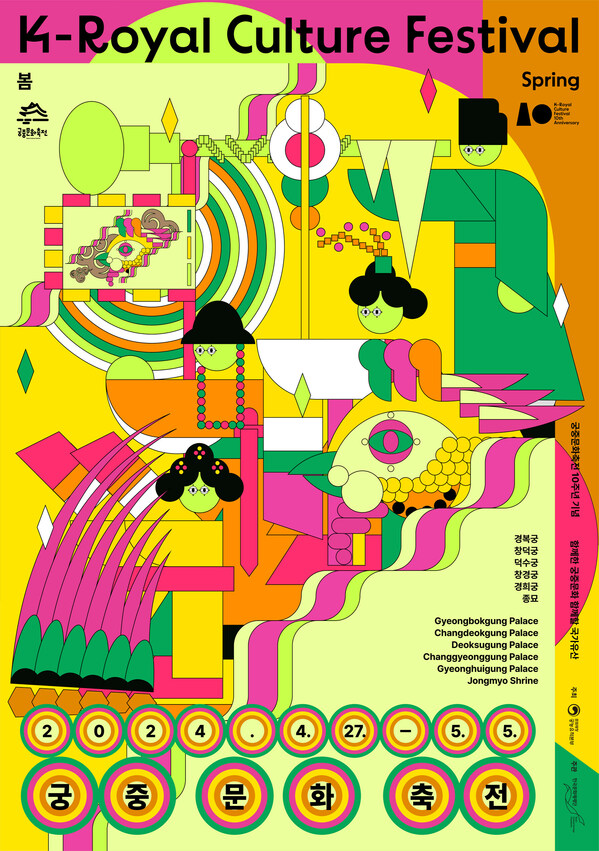
SEOUL, South Korea, April 12, 2024 /PRNewswire/ — The 2024 Spring K-Royal Culture Festival, in collaboration with the Korea Cultural Heritage Foundation, will grace Seoul’s historic royal palaces – Gyeongbokgung, Changdeokgung, Deoksugung, Changgyeonggung, and Gyeonghuigung – and Jongmyo Shrine from April 27 to May 5, marking its tenth anniversary. Last year, the festival drew over 675,000 visitors, promising an even richer program this year.

2024 Spring K-Royal Culture Festival’s poster

The opening ceremony, themed “Love for the People,” reimagines King Sejong the Great’s historic proclamation of the Hunminjeongeum script in 1446, setting the stage for a captivating display of Korea’s rich royal legacy.

Gyeongbokgung Palace will host immersive programs offering insights into the Joseon Dynasty’s royal court. From May 1 to 5, the “Time Travel, King Sejong” program will offer a glimpse into palace life during King Sejong the Great’s reign. The “Royal Music Concert – Harmony of 100 Court Musicians’ Song in Peaceful Times” promises a magnificent showcase of traditional Korean musical instruments on May 4 and 5.

Following its success last year, the “Palace Musical – Sejong, 1446” will return from April 28 to 30 at the historic Geunjeongjeon Hall, portraying King Sejong’s pivotal role in creating the Korean alphabet, Hangul.

Gyeongbokgung’s Heungryemun Square will host the vibrant “K-Heritage Market,” offering traditional crafts and cultural products amidst a lively atmosphere.

Changdeokgung Palace introduces the inaugural “Coexistence: Overlapping Time and Space” craft exhibition, showcasing traditional Korean crafts in the historic Injeongjeon Hall. The “Waking Up the Palace” morning program offers a rare opportunity to experience the tranquil ambiance of the palace.

At Deoksugung Palace, the engaging “Royal Hobby Club” program and a talk show delving into the palace’s history during the Japanese colonial era await visitors.

Changgyeonggung Palace will host the delightful “Children’s K-Royal Culture Festival,” offering interactive activities for children and the enchanting “Changgyeonggung Night Tour – Water Splendour” program.

Gyeonghuigung Palace invites visitors to explore under the theme “Encountering Gyeonghuigung Palace,” with educational, exhibition, and performance programs tailored to children.

Advance reservations for paid programs can be made via Ticketlink, with free events also requiring reservations. Foreigner-exclusive performances can be booked via the global reservation platform “Creatrip.” Additionally, limited “K-Royal Palaces PASS” tickets, offering unlimited access to the grand palaces, are available for pre-sale until April 26.

For detailed information, visit the websites: Cultural Heritage Administration Royal Palaces and Tombs Center (https://royal.cha.go.kr/ENG/main/index.do), Korea Cultural Heritage Foundation (https://www.chf.or.kr/chf/eng), or K-Royal Culture Festival (https://www.chf.or.kr/fest/en).

Source

Toshiba TV’s AI-Enhanced REGZA Engine ZRi Delivers an Immersive Viewing Experience

0

HONG KONG, April 12, 2024 /PRNewswire/ — Toshiba TV is taking a leap forward in television technology with its AI-powered REGZA Engine ZRi, delivering an engaging viewing experience for users. The integration of AI has improved user interaction with their TVs, offering customization and optimization tailored to individual preferences and environments.

At the core of Toshiba TV’s innovation is the REGZA Engine ZRi Chip, a key technological component that enables the TV to deliver stunning visuals in up to 4K resolution, enhanced by Dolby Vision IQ and HDR 10+ adaptive. This chip ensures sharp visuals and vibrant colors, elevating the content for viewers. In addition, by leveraging machine learning algorithms, the REGZA Engine ZRi Chip automatically adjusts the picture and sound settings according to the content being viewed and the viewing environment, creating an immersive experience for viewers.

Toshiba TV’s commitment to delivering exceptional audio-visual experiences through AI innovation is evident in its range of products. Its flagship model, the X9900, features an AI Picture Optimizer and AI 4K Upscaling technologies, setting new standards in picture quality through sharpness and vibrancy. Additionally, it includes Eye Comfort technology, which intelligently reduces glare, enhances clarity, and adjusts screen brightness according to the surrounding environment, ensuring a comfortable viewing experience.

For sports enthusiasts, the Z870 introduces an array of features tailored specifically for immersive sports viewing experiences. With its AI Football Mode and AI Sports Mode, viewers can expect to dive deep into the action, where every detail and movement is vividly portrayed with exceptional clarity and realism.

When it comes to sound quality, the Z670 incorporates AI Sound technology, automatically adjusting the balance between high, mid, and low-frequency sounds for a rich audio experience.

Toshiba TV continues to lead in innovation by merging advanced technology with AI, setting a new benchmark for viewing experiences. Toshiba TV wants viewers to experience the future of entertainment, where every moment unfolds as a masterpiece.

About Toshiba TV:

With a 70+ years history in TV production, Toshiba TV is known for its innovative ideas and groundbreaking inventions. By prioritizing superior image quality and auditory experiences, Toshiba TV sets new standards in entertainment. Emphasizing attention to product details and technological advancement, Toshiba TV integrates aesthetically pleasing design, quality assurance, and brand reputation to underscore its commitment to excellence, showcasing Toshiba TV’s long-standing design philosophy and continuous pursuit of product quality.

Source