


Max Layton, Citi global head of commodities research, joins ‘The Exchange’ to discuss the IEA’s decision to release barrels of oil, which parts of the energy complex will remain under pressure and much more.
04:19
Wed, Mar 11 20261:38 PM EDT

Max Layton, Citi global head of commodities research, joins ‘The Exchange’ to discuss the IEA’s decision to release barrels of oil, which parts of the energy complex will remain under pressure and much more.
04:19
Wed, Mar 11 20261:38 PM EDT

 |
WUXI, China, March 12, 2026 /PRNewswire/ — LabConnect, a leading provider of technology-driven central laboratory services and functional service provider solutions for clinical trials, today announced the grand opening of its new facility in Wuxi, China. As clinical trials become increasingly global and complex, sponsors are seeking laboratory partners that can provide integrated testing, logistics and data oversight across regions. Together with LabConnect’s laboratory capabilities in Australia, the new site strengthens the company’s ability to support multi-regional clinical trials while helping Asia-Pacific pharmaceutical, biotechnology and clinical research organizations expand their research programs globally.
Fully integrated into LabConnect’s global infrastructure, the Wuxi facility enables study teams to operate across regions with unified data, consistent operational oversight and advanced sample logistics and handling procedures.
The facility was developed in collaboration with Teddy Laboratory, now part of Frontage Laboratories, combining Teddy Laboratory’s local laboratory expertise with LabConnect’s global central laboratory services, logistics capabilities, and technology-driven decentralized network model.
“This facility reflects LabConnect’s continued investment in building the global services needed to support clinical trials today and the next generation of clinical research,” said Wes Wheeler, Chief Executive Officer of LabConnect. “We are proud to offer China-based capabilities and a global service network that supports both multinational pharmaceutical and biotechnology companies entering China and Chinese companies expanding into international markets.”
The Wuxi facility will support a range of clinical trial services, including custom kit building, advanced sample tracking and logistics, and biorepository services, all designed to meet international regulatory standards.
The grand opening event, held today at the facility in the Xinwu District of Wuxi, included a ceremonial ribbon cutting, guided laboratory tours and presentations highlighting LabConnect’s technology-driven approach to central laboratory services. Representatives from LabConnect, Teddy Laboratory, government officials, and members of the regional clinical research community attended the event.
With the addition of the Wuxi site, LabConnect now operates eight global locations, enabling sponsors and CROs to rely on a single partner for central laboratory services across studies of any size or geographic complexity.
About LabConnect
LabConnect is a global provider of technology-driven central laboratory services and functional service provider solutions for pharmaceutical, biotechnology and contract research organizations. The company connects laboratories, logistics, technology and scientific expertise through a decentralized laboratory network model to deliver integrated solutions for clinical trials worldwide. Learn more at www.labconnect.com.

 |
NYSE issues a pre-market daily advisory direct from the trading floor.
NEW YORK, March 11, 2026 /PRNewswire/ — The New York Stock Exchange (NYSE) provides a daily pre-market update directly from the NYSE Trading Floor. Access today’s NYSE Pre-market update for market insights before trading begins.
Entrepreneurs First to join Taking Stock after the market close
Kristen Scholer delivers the pre-market update on March 11th
Opening Bell
U.S. Antimony (NYSE: UAMY) celebrates its uplisting to the NYSE
Closing Bell
Costamare Bulkers (NYSE: CMDB) celebrates its 2025 spin-off
For market insights, IPO activity, and today’s opening bell, download the NYSE TV App: TV.NYSE.com


Capital gains tax (CGT) is gaining plenty of attention again as concerns about the cost of housing force the federal government to lay its cards on the table and contemplate where to make changes before the upcoming budget.
First introduced in the 1980s to impose tax on capital gains, it applies tax on the profit made when selling or disposing of an asset. It means your net capital gain is taxed at the same marginal rate as your regular income.
Then in 1999, the CGT discount was introduced. This change was designed to simplify the system, applying a 50 per cent CGT discount instead.
Know the news with the 7NEWS app: Download today
Since then, house prices have soared to unaffordable levels for many Australians.
While it applies to a range of investments including shares and crypto assets, the way that CGT is applied to property is top of mind for government decision-makers right now.
One of Australia’s leading public policy economists, Professor Robert Breunig, from the Australian National University, is adamant that the change being considered could result in lowering the CGT.
This could be done by dropping to a fixed discount rate less than the current 50 per cent – say 45 per cent, or 40 per cent, he says.
Or, Treasury could switch to calculating the actual inflation rate that occurred during the life of the asset and discounting the CGT by this amount, he says.

This method would be the better way of adjusting for the inflationary component of the growth in the value of the asset, but a fixed number is easy for people to understand.
“Treasury is considering whether to change CGT discount only for investor properties or for all assets,” Professor Breunig said.
“Doing it for all assets would be preferable so as not to bias savers towards different forms of savings but if the government wants to send a signal to people that they want them to invest in other assets, and not property, then only lowering the CGTD on investor properties would be consistent with this message.”
Read more: Here’s how changes to negative gearing laws could affect property investors
Whether or not the changes will be grandfathered is what will impact investors the most, he says.
“Not grandfathering will mean that the benefit of a higher CGTD is “locked in” for older, wealthier people and not available to younger, less wealthy people,” Professor Breunig said..
“In this sense, not grandfathering would make inter-generational equity worse, not better. This is a major concern.”
Regardless of how changes are rolled out, Professor Breunig doesn’t believe it will have a significant impact on the property market more broadly.
“There are many reasons that people invest in property and changing the CGDT will make investor properties slightly less attractive. This would mean some shift towards more homeowners and less investors in the property market.
“Most sensible models also suggest that it would lead to higher rental prices for those who do not buy a property. But all of these changes would be pretty small. The big issue in housing is supply, particularly in the big cities where everyone seems to want to live,” Professor Breunig says.
In the meantime, investors are holding their breath in the lead-up to the May 2025 Federal Budget, which is when potential reforms are expected to be announced.
Read more: Why luxury apartments are getting bigger and ditching the maintenance
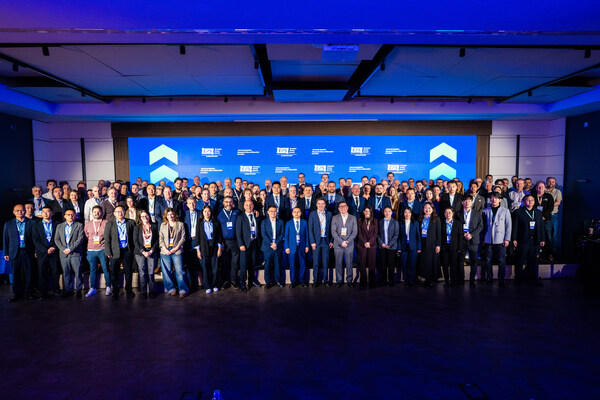
ROME, March 11, 2026 /PRNewswire/ — Haier Biomedical recently convened its European Partner Summit in Rome under the theme “Advancing Together – Sharing the Future of Biomedical Innovation,” which brought together 37 regional partners and industry leaders from 23 European countries to outline its long-term commitment to Europe and unveil a broadened laboratory solutions portfolio, marking a strategic upgrade of its brand portfolio. New strategy shifts toward scenario-based, application-driven solutions, while sharing its long-term plan to deepen localization in Europe and deliver more comprehensive, tailored services and support across the region.
Haier Biomedical, Intelligent Protection Of Life Science

Haier Biomedical Hosts European Partner Summit in Rome and Advances “In Europe, for Europe” Strategy
At the summit, Enrique Wang, Global Market Director of Haier Biomedical, reaffirmed the Company’s global vision to achieve over 50% of global revenue from international markets by 2027 and over 50% revenue contribution beyond refrigeration by 2028. He emphasized that Europe remains a strategic priority within the company’s globalization roadmap, which underscores the “In Europe, for Europe” localization principle of delivering products, services, and support tailored for regional regulatory standards, customer expectations, and application needs.
Outlining the 2026 European strategy, Semir Selimovic, director of North, Central & Eastern Europe of Haier Biomedical Europe, highlighted continued investment in local sales, service, and product expertise to strengthen responsiveness and execution across key markets. Europe has become one of Haier Biomedical’s fastest-growing international regions, and this is supported by expanding local teams and a steadily broadening product portfolio.
Expanding from freezers to full solutions
Among the newly introduced products, the Plasma Apheresis System XJ-III drew particular attention. The system has obtained EU MDR certification, which marks a significant milestone in meeting Europe’s stringent regulatory requirements and strengthens Haier Biomedical’s position in blood and plasma technology. Across Europe, Haier Biomedical’s CO₂ incubators, centrifuges, biosafety cabinets, and cold storage lines continue to gain market share, supported by energy-efficient technologies and compliance with regional certification standards. The product evolution presented in Rome demonstrates a move toward unlocking a full portfolio capable of supporting laboratories, hospitals, and life science institutions with end-to-end solutions.
Automation and intelligent blood management as growth engines
Daniele Pericolini, European Automation Solution Specialist of Haier Biomedical, outlined the Company’s strategy to drive future growth through laboratory automation and intelligent blood management systems. Haier Biomedical’s automated biobank solutions integrate RFID-enabled ultra-low temperature storage, modular automation platforms, and liquid nitrogen systems to enhance sample traceability and operational efficiency. By addressing challenges such as sample integrity, temperature tracking, and high-density storage, the Company has positioned itself within Europe’s growing demand for advanced biobanking infrastructure.
Additionally, the U-Blood intelligent blood management system represents a shift from traditional cold storage to real-time connected blood supply chain management. Designed to reduce wastage, improve traceability, and support round-the-clock transfusion workflows, the solution aligns with Europe’s increasing focus on safety, digitization, and zero-waste healthcare initiatives.
European customer recognition and brand alignment
The summit also featured success stories from four European partners representing Germany, Slovakia, France, and Denmark, which highlighted strong local validation of Haier Biomedical’s solutions. In France, long-term partner showcased the jointly developed biosafety cabinet adapted to French standards, with over 230 units deployed across over 100 customers. In Denmark, Haier Biomedical partner shared its ultra-low temperature freezer success through public tenders and ongoing expansion into additional product categories. In Slovenia, large-scale pharmaceutical installations reinforced the Company’s capabilities in managing complex, multi-unit projects. Partners from Central Europe also emphasized reliability, regulatory compliance, and after-sales support as key differentiators.
Strong international growth performance in 2025
Haier Biomedical’s expanding European footprint is supported by a solid financial performance. In 2025, the Company reported revenue exceeding RMB 2.3 billion, with international revenue reaching RMB 840 million, which accounts for over 36% of total revenue and reflects continued global expansion.
Europe recorded double-digit growth, which contributed to a large portion of overall international revenue growth. The Company’s AI-driven and automation-related solutions contributed approximately 15% of total revenue in 2025, which signalled accelerating technology-driven transformation. These results reflect a broader shift from hardware exports toward localized solution delivery supported by regional teams and certifications across over 18 countries.
As the European Partner Summit concluded, Haier Biomedical reaffirmed its commitment to strengthening localized operations, expanding automation and life science solutions, and advancing collaborative growth with partners. Through a combination of global innovation capabilities and local execution in Europe, the Company aims to further consolidate its position as a trusted life science solutions provider in 2026 and beyond.
For more information, please visit https://www.haiermedical.com/.

NEWYou can now listen to Fox News articles!
The United Arab Emirates (UAE) has been targeted by Iranian missiles at airports, tourist hot spots, the U.S. consulate and other hubs, posing serious threats to travelers.
Now, British Airways has announced it will be suspending its services to Abu Dhabi until the end of the year while canceling other destinations for the rest of the month.
“Due to the continuing uncertainty of the situation in the Middle East and airspace instability, we’ve had to temporarily reduce our flying schedule in the region,” the airline announced in a statement on X.
AMERICAN TRAPPED IN DUBAI DESCRIBES HOTEL FRIGHT AND ‘SHOCK WAVES’ AS IRAN LAUNCHES AIRSTRIKES
All flights to and from Amman, Bahrain, Doha, Dubai and Tel Aviv have been canceled until later this month, the airline said.
“We’re keeping the situation under constant review and are in touch with our customers to offer them a range of options,” the announcement continued.
The Zayed International Airport states on Abu Dhabi’s website that “passengers are advised not to travel to the airport unless they hold a confirmed ticket and have been explicitly advised by their airline to do so.”
It also says, “Access to the airport will be restricted to confirmed travelers only.”
On Saturday, a Dubai Airports spokesperson announced a “partial resumption of operations with some flights operating out of Dubai International (DXB) and Dubai World Central – Al Maktoum International (DWC).”

Airports in the UAE are restricting access to travelers only. (Altaf Qadri/AP Photo)
“Travelers are urged to not travel to the DXB or DWC unless they have been contacted by their airline that their flight is confirmed, as schedules continue to change,” the announcement says.
CLICK HERE FOR MORE LIFESTYLE STORIES
The latest announcement continued, “Dubai Airports continues to closely monitor the situation in coordination with relevant authorities, and our focus remains on maintaining the highest standards of operational safety, security and well-being of passengers and staff.”

On Abu Dhabi’s website, the Zayed International Airport (pictured) states that “passengers are advised not to travel to the airport unless they hold a confirmed ticket and have been explicitly advised by their airline to do so.” (Nicolas Economou/NurPhoto via Getty Images)
Lufthansa Airlines has suspended flights to and from Dubai and Abu Dhabi until March 15 and Dammam until March 15, according to its site.
Virgin Atlantic announced that its “Dubai service is suspended for the remainder of the winter season.”
CLICK HERE TO DOWNLOAD THE FOX NEWS APP
“Dubai is a seasonal route for Virgin Atlantic and was due to conclude on 28 March; however, the recent escalation in the Middle East has brought forward the end of our operation for this season,” Virgin Atlantic’s website states.

The State Department has facilitated the safe return of many thousands of American citizens from the Middle East since Feb. 28. (Ryan Lim/AFP via Getty Images)
Flights to and from Dubai are suspended until March 28.
As of Saturday, Emirates has resumed operations, according to its X account.
TEST YOURSELF WITH OUR LATEST LIFESTYLE QUIZ
A State Department spokesperson told Fox News Digital earlier that the department had facilitated the safe return of over 20,000 American citizens from the Middle East since Feb. 28.
CLICK HERE TO SIGN UP FOR OUR LIFESTYLE NEWSLETTER
That number was updated Tuesday. As of Tuesday, 40,000 American citizens have safely returned to the U.S. from the Middle East since Feb. 28, the department said.
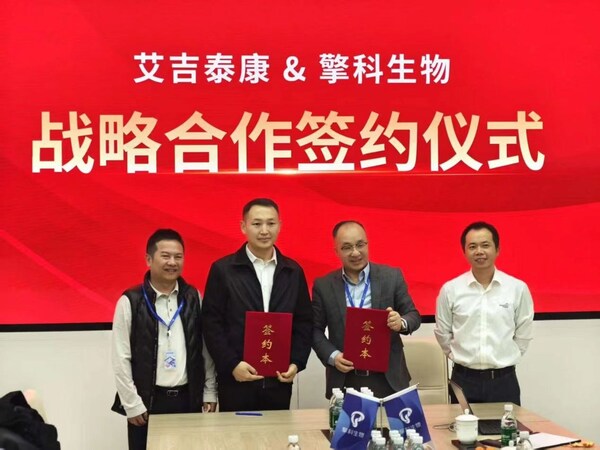
BEIJING, March 10, 2026 /PRNewswire/ — Beijing Tsingke Biotech Co., Ltd. (“Tsingke Biotech“) and iGeneTech Bioscience Co., Ltd. (“iGeneTech”) have announced a strategic partnership aimed at advancing the field of synthetic biology. This collaboration brings together the strengths of both companies to drive innovation, streamline product development, and expand market reach.

The partnership was formalized at a signing ceremony held at Tsingke Biotech’s Beijing headquarter, where both companies expressed their shared commitment to revolutionizing synthetic biology in response to the growing needs of the market.
Harnessing Expertise to Transform the Industry
Synthetic biology is rapidly emerging as a transformative field with wide-reaching applications, including precision medicine, bio-breeding, and gene editing. At the core of these advancements are high-throughput and column-based synthesis, which Tsingke Biotech and iGeneTech aim to further develop.
Tsingke Biotech, a leader in gene synthesis, has developed a fully integrated industrial chain that spans raw materials, equipment, process design, AI, and digital technologies. Known for its scalability, standardization, and stability, the company’s cutting-edge technology includes column synthesis and an intelligent factory-driven production system that supports from small-scale laboratory production (2nmol) to large-scale industrial synthesis (12mmol). Their gene synthesis services include:
On the other hand, iGeneTech contributes its proprietary Ignite 3.0 high-throughput synthesis platform. With its ability to process oligo pools ranging from 4k to 650k in size and achieve synthesis lengths up to 200nt with error rates as low as 0.2%, this platform addresses key challenges around throughput, speed, and cost.
A Shared Vision for Growth
“We are excited to partner with iGeneTech, whose expertise in gene capture and next-generation sequencing (NGS) technology enhances our strengths in gene synthesis,” said Mr. Shijin Ma, CEO of Tsingke Biotech. “This partnership will speed up the translation of technological innovations into real-world applications, helping drive the industry forward.”
Mr. Wanshi Cai, CEO of iGeneTech, added, “Tsingke Biotech’s integrated industrial chain and leadership in gene synthesis will be crucial in supporting our continued growth. Together, we will push the boundaries of synthetic biology and its potential across various industries.”
Both companies are committed to developing an integrated system that spans the entire spectrum from “synthesis” to “application,” focusing on innovation, sustainability, and precision to meet the needs of a rapidly evolving market.
About Tsingke Biotech
Tsingke Biotech is a leading innovator in synthetic biology, with a mission to build “the world’s great gene factory.” Combining proprietary reagents, consumables, and synthesis equipment with AI-driven molecular manufacturing technologies, Tsingke Biotech provides efficient and high-quality gene synthesis services. Its work supports industries ranging from biopharma to agriculture, food, and environmental sciences.
About iGeneTech
iGeneTech specializes in gene capture technologies and holds intellectual property in NGS probe hybridization, multiplex PCR, and high-throughput DNA synthesis. The company’s high-quality oligo pool synthesis capabilities enable the creation of precise and uniform sgRNA libraries for gene-editing applications, including genome-wide and target-gene sgRNA libraries, and off-target detection.
Contact: market@tsingke.com.cn
Source: Beijing Tsingke Biotech Co., Ltd.

 |
SYDNEY, March 10, 2026 /PRNewswire/ — Clarity Pharmaceuticals (ASX: CU6) (“Clarity” or “Company”), a clinical-stage radiopharmaceutical company with a mission to develop next-generation products that improve treatment outcomes for patients with cancer, is pleased to announce that the Phase III AMPLIFY trial (NCT06970847)[1] has now consented in excess of the planned number of participants following strong demand for study participation at sites in the United States (US) and Australia. Consenting of new patients has stopped at all sites pending completion of remaining screening assessments and confirmation of final enrolment numbers.
AMPLIFY (64Cu-SAR-bisPSMA Positron Emission Tomography: A Phase 3 Study of Participants with Biochemical Recurrence of Prostate Cancer) is a non-randomised, single-arm, open-label, multi-centre, diagnostic clinical trial of 64Cu-SAR-bisPSMA positron emission tomography (PET) in participants with rising or detectable prostate-specific antigen (PSA) after initial definitive treatment at clinical sites across the US and Australia.
The aim of this registrational study is to investigate the diagnostic ability of 64Cu-SAR-bisPSMA PET/computed tomography (CT) to detect recurrence of prostate cancer in men with PSA levels above 0.2 ng/mL. Evaluation will be across two imaging timepoints: Day 1 (1-4 hours post-administration, same-day imaging) and Day 2 (approximately 24 hours post administration, next-day imaging).
AMPLIFY commenced in May 2025, seeking to enrol approximately 220 participants, and the first trial participant was imaged in the same month at XCancer with Dr Luke Nordquist (Omaha, NE). The data from this study will complement the Phase I/II COBRA[2] and Phase II Co-PSMA[3] trials. Both studies have demonstrated enhanced imaging capabilities of 64Cu-SAR-bisPSMA over standard-of-care (SOC) prostate-specific membrane antigen (PSMA) PET imaging in patients with biochemical recurrence (BCR) of prostate cancer. As a pivotal trial, the final study results from AMPLIFY are intended to provide evidence to support an application to the US Food and Drug Administration (FDA) for approval of 64Cu-SAR-bisPSMA as a new diagnostic imaging agent in BCR of prostate cancer.
64Cu-SAR-bisPSMA is also currently being evaluated in another registrational Phase III trial, CLARIFY (NCT06056830)[4], which is expected to close recruitment in CY2026. Building on the Phase I PROPELLER[5] study, the objective of CLARIFY is to assess the diagnostic performance of 64Cu-SAR-bisPSMA PET across same-day and next-day imaging in detecting prostate cancer within the pelvic lymph nodes in patients who are scheduled to undergo radical prostatectomy and pelvic lymph node dissection. The CLARIFY results are intended to support an FDA approval application for 64Cu-SAR-bisPSMA in prostate cancer patients who are candidates for definitive therapy.
Dr Alan Taylor, Executive Chairperson of Clarity Pharmaceuticals, commented, “We are about to enter the realm of a select few Australian companies who have developed a drug at the benchtop of Australian science and completed an international Phase III clinical trial with that drug, taking us one step closer to commercialisation. Our team is excited to have reached this initial recruitment milestone in the AMPLIFY trial in just 9 months since we imaged our first participant in the study. This is no small feat, given we achieved this phenomenal pace of recruitment despite three SOC products already in the market, commercialised by four different companies.
“True to our commitment to the highest standards of clinical research, we recruited participants at numerous different sites across the US and Australia to ensure the trial reflected the broad patient population, real-world clinical settings and various PET cameras in which this product is intended to be used. This strategy required careful planning to allow for all participating sites to contribute to the recruitment, based on allocation of participant numbers to be enrolled per site, resulting in what we believe will be a robust and well-balanced dataset and supporting the integrity and quality of the AMPLIFY study.
“Despite the variations in the sites’ activation times, the speed of enrolment in this trial not only highlights the unmet need in the BCR space but also indicates the strong demand for 64Cu-SAR-bisPSMA from clinicians and patients seeking more effective and accurate prostate cancer detection diagnostics. With persistent outreach from participating sites to enrol more patients, clinicians and patients would rather use an unapproved product, undertaking additional demands of a clinical trial, than rely on the findings of the current SOC PSMA PET.
“To date, we have imaged approximately 600 patients with prostate cancer with 64Cu-SAR-bisPSMA, and just in the last year we scanned over 350 of them. The growing demand for better imaging is driven by so many men around the world with prostate cancer who seek accurate and timely identification of disease location and recurrence. We are committed to answering these needs of patients, clinicians and imaging facilities with a next-generation diagnostic imaging agent specifically designed to deliver significant benefits in efficacy, clinical management, quality of life and operational flexibility across the prostate cancer care pathway.
“The results on 64Cu-SAR-bisPSMA generated to date, from our initial discovery and pre-clinical work, to the recently announced Co-PSMA and the COBRA trials, constitute an extensive body of evidence against SOC, demonstrating that maximal clinical benefit of PSMA PET can be derived through the combination of the proprietary SAR-bisPSMA agent and optimised imaging timepoints facilitated by the half-life of copper-64. Achieving a two to three times improvement in lesion detection over SOC in BCR is an incredible achievement. We believe we can grow the blockbuster PSMA PET market even further with a product that has shown impressive efficacy in clinical trials coupled with many logistical and supply chain benefits. Our team will be working closely with our vendors and participating sites to advance the final data package and with regulatory authorities to get this product to patients in need as soon as possible.
“We also look forward to closing recruitment in the CLARIFY trial this year and progressing our theranostic Phase I/IIa SECuRE trial towards completion. Together with three Fast Track Designations we have for SAR-bisPSMA and positive interactions with the US FDA to date, these milestones place us closer than ever to commercialisation of this exciting agent through the entirety of the prostate cancer journey, from first detection to late-stage metastatic disease.”
About SAR-bisPSMA
SAR-bisPSMA derives its name from the word “bis”, which reflects a novel approach of connecting two PSMA-targeting agents to Clarity’s proprietary sarcophagine (SAR) technology that securely holds copper isotopes inside a cage-like structure, called a chelator. Unlike other commercially available chelators, the SAR technology prevents copper leakage into the body. SAR-bisPSMA is a Targeted Copper Theranostic (TCT) that can be used with isotopes of copper-64 (Cu-64 or 64Cu) for imaging and copper-67 (Cu-67 or 67Cu) for therapy.
Disclaimer
64Cu-SAR-bisPSMA and 67Cu-SAR-bisPSMA are unregistered products. Their safety and efficacy have not been assessed by health authorities such as the US FDA or the Therapeutic Goods Administration (TGA). There is no guarantee that these products will become commercially available.
About Prostate Cancer
Prostate cancer is the second most common cancer diagnosed in men globally and the fifth leading cause of cancer death in men worldwide[6]. Prostate cancer is the second-leading cause of cancer death in American men. The American Cancer Institute estimates there will be about 333,830 new cases of prostate cancer in the US in 2026 and around 36,320 deaths from the disease[7].
For more information, please contact:
References
This announcement has been authorised for release by the Executive Chairperson.


Chad Wolf, America First Policy Institute homeland security chair and former Acting DHS Secretary, joins ‘Squawk Box’ to discuss the impact of the partial government shutdown on TSA staffing, how staffing shortages is causing long lines at delays at some U.S. airports, and more.
06:21
Tue, Mar 10 20268:27 AM EDT
Australian landlords are grappling with major changes to negative gearing laws that would limit the ability to reduce their annual tax through loss-making investment properties.
While details of what changes to existing negative gearing laws are still being considered, the potential for changes to rental losses being tax deductible is on the cards.
The federal Treasury has admitted to modelling possible changes to negative gearing, which could include a cap placed on the number of properties a landlord can negative gear to just two.
Know the news with the 7NEWS app: Download today
It comes after the Grattan Institute made a submission to the government late last year recommending reforming negative gearing due to the distortion in the property market as the independent public policy think tank looks for ways to bring more housing supply into the market.
The potential for changes to the already contentious negative gearing laws comes as the government looks for ways to bring more equity into the nation’s housing market.
Negative gearing was introduced 25 years ago to stimulate the investment market nationally.
But as the government looks for measures to balance the federal budget, the tax break could be on the chopping block.
As it stands, landlords can offset losses from property ownership against other forms of income, which could provide significant savings on an annual tax bill.
While making a loss on an investment property doesn’t sound ideal, some investors use this strategy for tax purposes, knowing that they can offset their loss against other income, such as their salary.
But some argue that the national debate on housing affordability has become distracted by investor-focused tax settings.
Making changes won’t result in new homes being built, which the nation desperately needs to meet the current housing shortfall of 1.2 million homes over the next five years.
Property Investment Professionals of Australia chair Cate Bakos said governments need to acknowledge their role in the nation’s housing affordability crisis.

Between land tax, stamp duty and council rates, property investors carry a disproportionate level of tax when contrasted against sharemarket investors. The public conversation needs to shift from investor blame to structural reform, she said.
“Property investors are widely viewed as scapegoats for additional taxes, and the unintended consequences of such targeted taxation will be damaging to the property market as a whole,” she said.
Read more: Fighting fire with fire: Why grants fail first home buyers
Meanwhile, accounting body CPA Australia notes that negative gearing is often debated only in terms of residential property, but the broader principle of deducting losses is a long-standing feature of Australia’s tax system and requires careful consideration before any redesign.
The accounting body’s tax lead Jenny Wong is concerned that tweaking negative gearing in isolation could risk pushing further pressure into the rental market or distort investment decisions.
She said many Australians use a mix of assets to build long-term financial security, including investments held outside superannuation. They deserve a fair go, and their hard-earned savings should not be undermined by fragmented or short-term tax changes.
Read more: Why retirees are refusing to trade the family home for apartments
“Any reform should prioritise stability, integrity and transitional fairness, and avoid settings that unintentionally advantage those with access to sophisticated structures,” Ms Wong said.
Treasurer Jim Chalmers will consider changes to tax measures, with an announcement expected as he hands down the budget in May.
He has not spoken publicly about his plans at this stage, only saying that Treasury is looking into changes to negative gearing, among other policies.

Blogchicks is your lifestyle news, entertainment, travel, music, health & fashion website. We provide you with the latest breaking news and videos, something for everyone.
Contact us: info@blogchicks.com.au
© Blog Chicks 2024