Thursday, June 11, 2026
Google search engine
Home Blog Page 9

Airlines, hotels warn against Trump admin threat to international flights to ‘sanctuary cities’

0

Passengers at the international arrival gate of JFK Airport in New York on June 16, 2025.

Charly Triballeau | Afp | Getty Images

Groups representing the largest U.S. airlines and hotel chains slammed the Trump administration’s potential halt of customs and immigration processing at “sanctuary city” airports, warning such a move could have “devastating” consequences on the industry.

Homeland Security Secretary Markwayne Mullin said in an interview on Fox News’ “Hannity” on Tuesday night that if “radical left Democrats” aren’t allowing the government to “enforce federal laws … we shouldn’t be processing international flights into their cities either.”

The secretary’s comments came just ahead of the FIFA World Cup next month that is expected to bring millions of visitors to host cities in the U.S., Canada and Mexico, drawing alarm from the travel industry.

Mullin said the Trump administration is “drawing up plans” but isn’t putting anything into place yet. The timing of the idea being floated raises questions about whether the administration is using its leverage to try to persuade cities whose immigration policies it disagrees with to be less lenient with undocumented immigrants.

The feud over immigration could cripple international flights into the U.S. The Justice Department last August published a list of states and cities it said are impeding U.S. immigration policies, which include major international air hubs New York; Newark, New Jersey; Boston; Chicago; San Francisco; Los Angeles; Seattle; and Philadelphia.

“Reducing [Customs and Border Protection] staffing at major airports would have a devastating effect on the airline and tourism industries, causing a significant operational disruption to carriers, travelers and the flow of international cargo,” said Airlines for America, a trade association whose members include American Airlines, United Airlines and Delta Air Lines.

The U.S. Travel Association, whose members include airlines and major hotel chains like Hilton and Marriott, said Mullin confirmed in a meeting with the group that the administration is considering withdrawing CPB officers. The group also said it would have “devastating consequences for the travel industry and communities that depend on international visitation.”

Read more CNBC airline news

Choose CNBC as your preferred source on Google and never miss a moment from the most trusted name in business news.

Source

Construction workers clearing old bombs unexpectedly find ‘important’ ancient sanctuary

0

NEWYou can now listen to Fox News articles!

Construction crews working on a highway in Italy unexpectedly uncovered the remains of an ancient sanctuary — sparking an archaeological investigation.

The discovery was announced by the Italian Superintendency of Archaeology, Fine Arts and Landscape in a May 19 press release.

The sanctuary was found in Ponso, a town some 45 miles southwest of Venice.

ARCHAEOLOGISTS UNEARTH STRANGE HEAD DEPICTING ROMAN GOD BENEATH CATHOLIC BASILICA

Construction workers from Veneto Strade S.p.A. were building a new road from Borgo Veneto to Carceri when they uncovered the site, which dates back to the fifth century B.C.

The workers were carrying out wartime ordnance clearance operations when the first artifacts were discovered.

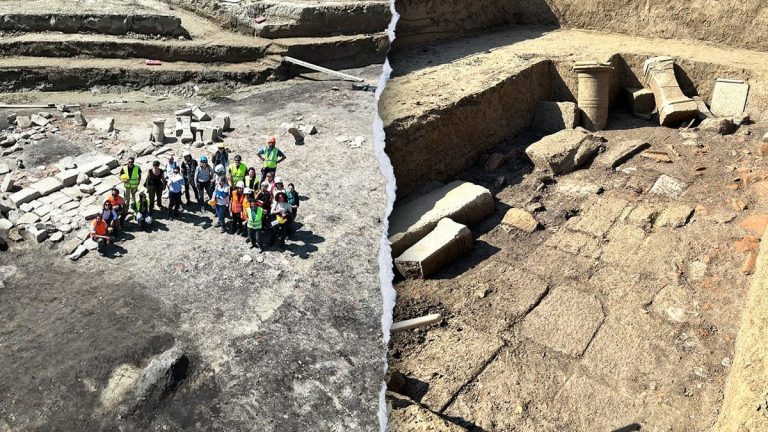
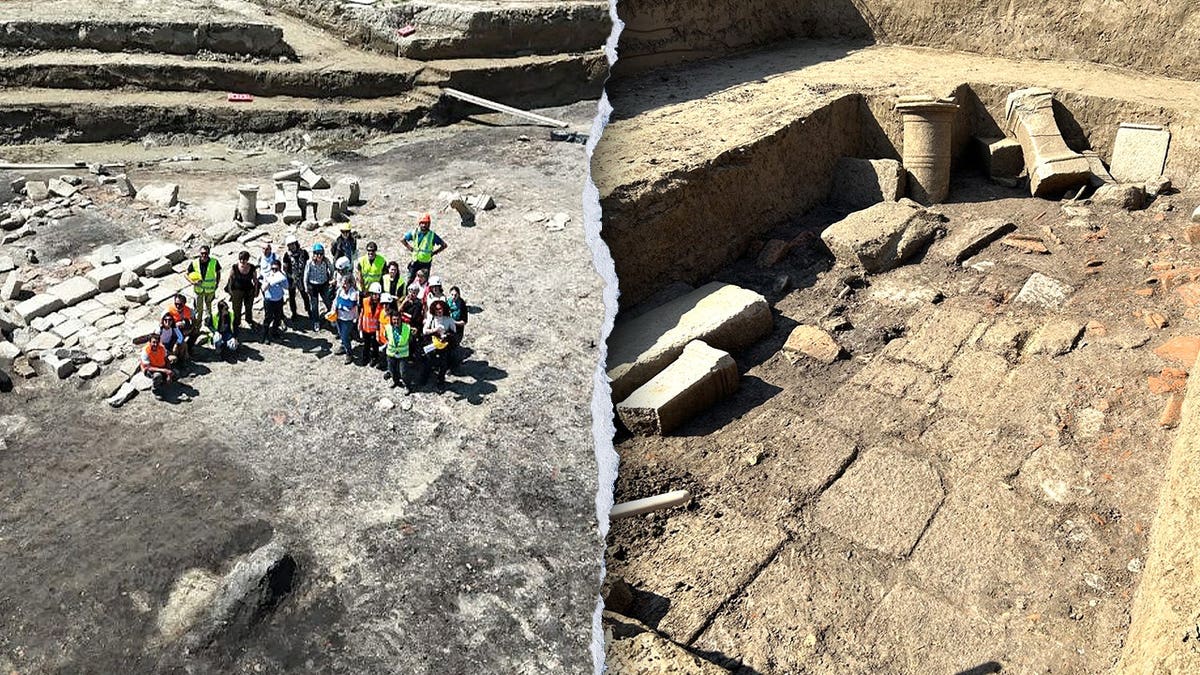
Split image of archaeologists on site, ancient temple remains

Archaeologists in northern Italy are investigating the remains of an ancient sanctuary uncovered during highway construction work near Venice. (Soprintendenza Archeologia, Belle Arti e Paesaggio per le province di Padova, Treviso e Belluno)

Eventually, archaeologists uncovered large rectangular foundation structures believed to be temples, including one that appears to have been surrounded by a row of columns.

Though some inscriptions were in Latin, many more were written in Venetic script — an ancient language used by the Veneti people of northeastern Italy before Roman rule.

CLICK HERE TO SIGN UP FOR OUR LIFESTYLE NEWSLETTER

Many of the inscribed stones “appear to have been reused in a paved flooring structure whose function is still uncertain, while some remain in their original position,” officials said in a translated statement.

“The paving appears to have been constructed during the 1st century A.D., according to evidence currently under study,” the release noted.

“As excavations continued, new large rectangular foundation structures identifiable as temples emerged.”

“As excavations continued, new large rectangular foundation structures identifiable as temples emerged, one of which displays characteristics of a peripteral temple, surrounded by a row of columns on all sides.”

Photos from the site show ancient Venetic inscriptions, along with partially buried column fragments and stone blocks believed to be part of the temple complex.

CLICK HERE FOR MORE LIFESTYLE STORIES

Some inscriptions have a “votive character,” meaning they likely served a religious purpose.

Archaeologists believe a branch of the Adige River flooded the area at some point in antiquity.

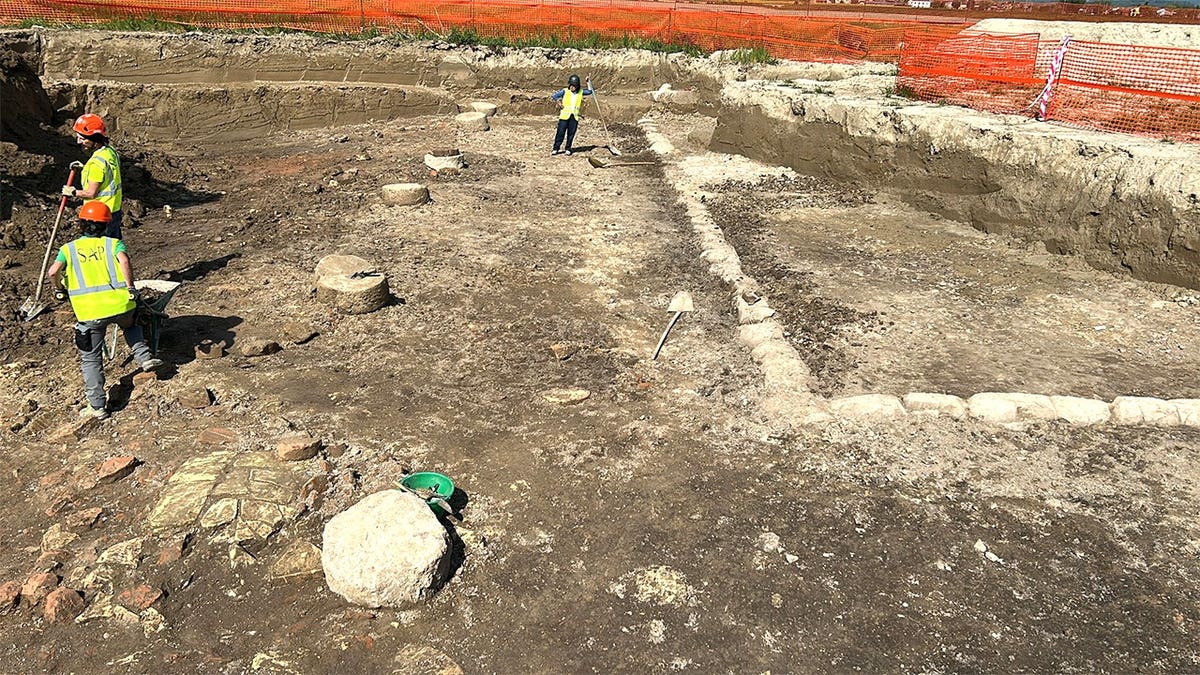
Wide shot of excavation area and ancient stones

The sanctuary complex discovered near Venice may provide new insight into religious practices in ancient northeastern Italy. (Soprintendenza Archeologia, Belle Arti e Paesaggio per le province di Padova, Treviso e Belluno)

Officials said early findings suggest “continuity of use and transformation over time, rather than abandonment.”

“The site appears to have retained an important function during Roman times as well, although expressed through different forms and cultural frameworks than in the earlier phase,” the statement added.

CLICK HERE TO DOWNLOAD THE FOX NEWS APP

Researchers are actively investigating the area.

The discovery adds to a growing list of recent archaeological finds across Italy.

Close-up of ancient Venetic inscriptions on stone

Officials said some inscriptions found at the site appear to have had a votive or religious purpose in antiquity. (Soprintendenza Archeologia, Belle Arti e Paesaggio per le province di Padova, Treviso e Belluno)

Last year, archaeologists in Trento found a massive Iron Age necropolis, or “city of the dead,” with burials dating back nearly 3,000 years.

TEST YOURSELF WITH OUR LATEST LIFESTYLE QUIZ

Earlier in 2026, archaeologists uncovered an ancient Roman city near the historic Appian Way, a UNESCO World Heritage site.

Source

More State of Origin glory for NSW in historic clean sweep over Queensland

0

NSW have secured a historic women’s State of Origin clean sweep over Queensland after falling agonisingly short last year.

The 12-4 win on the Gold Coast on Thursday night was far from pretty but it was a sweet victory for captain Isabelle Kelly and her team.

Queensland inflicted pain on NSW in the old interstate series when the competition between the teams was a one-off match affair, winning 16 games in a row from 1999 before a draw in 2015.

Know the news with the 7NEWS app: Download today Arrow

State of Origin for women was born in 2018 and the first three-match series was in 2024.

Last year the Maroons won the final match of the series to deny the Blues a 3-0 result but not this time, in front of 11,816 fans.

The Blues were powerful through the middle early courtesy of rampaging prop Ellie Johnston and elite lock Olivia Kernick, who ran for a stunning 211m and made 31 tackles in an extraordinary display. 

NSW dominated possession and territory early but the hosts dug deep.

Maroons winger Jasmine Peters made a try-saver to jar the ball loose from the grasp of opposite number Jayme Fressard as she went to put the ball down.

One of the hits of the opening half was a bone rattler by Queensland five-eighth Chantay Kiria-Ratu on NSW No.6 Jocelyn Kelleher that rocked the stadium.

The issue for the Maroons was the errors in their own half that kept inviting the Blues into it.

Something had to give and brilliant half Jesse Southwell orchestrated a backline move that sent Blues centre  Kelly in for the opening try.

Peters scored after scintillating backline play by Kiria-Ratu and debutant fullback Destiny Mino-Sinapati to level it up.

Maroons halves Kiria-Ratu and Lauren Brown upped the ante in the second half but the Blues were up to the challenge.

After Southwell landed a penalty, Kelly’s offload to Fressard had the elusive winger cutting back on a diagonal run to get the Blues out to an eight-point lead

The Maroons were without captain Tamika Upton, star winger Julia Robinson and tough forward Makenzie Weale due to injury.

Gold Coast product Mino-Sinapati, who replaced Upton, had an outstanding Origin debut with her darting and weaving running style and ball playing.

NSW women join the three Blues men’s sides to have won series 3-0, achieved in 1986, 1996 and 2000. 

Source

DA NANG GLOBAL BUSINESS SUMMIT 2026 – SILVER GENERATION INNOVATION EDITION

0

POSITIONING DA NANG AS SOUTHEAST ASIA’S INTERNATIONAL HUB FOR THE SILVER ECONOMY & MEDICAL TOURISM

DA NANG, Vietnam, May 28, 2026 /PRNewswire/ — The 3rd Da Nang Global Business Summit 2026, themed “Silver Generation Innovation”, concluded successfully on May 15 at Pullman Danang Beach Resort, bringing together more than 120 delegates, including government leaders, healthcare experts, international investors, technology companies, real estate developers, financial institutions, and healthcare operators from Vietnam and around the world.

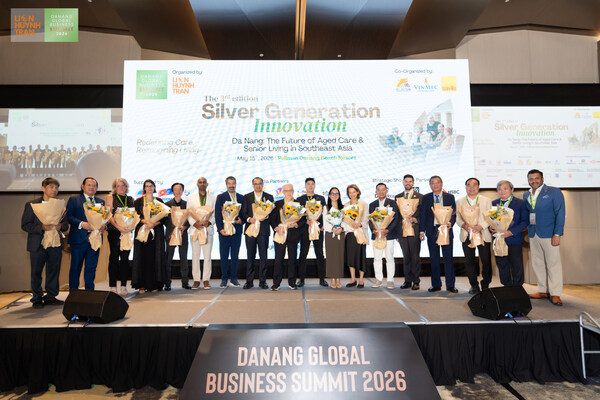
Danang Global Business Summit 2026 - Silver Generation Innovation Edition
Danang Global Business Summit 2026 – Silver Generation Innovation Edition

The event was organized by Lion Huynh Tran Company Limited in collaboration with domestic and international enterprises and strategic partners, with support from organizations including Vinmec Da Nang International Hospital, Savills Vietnam, AmCham Central Vietnam, and numerous global organizations in healthcare, investment, and urban development.

The summit was held amid the rapidly accelerating population aging trend across the Asia-Pacific region. According to international studies, the “Silver Economy” — the economic ecosystem serving senior communities — is emerging as one of the fastest-growing sectors globally, creating significant opportunities for cities with high living standards, advanced infrastructure, and strong healthcare ecosystems.

With its natural advantages, livable environment, growing healthcare capacity, and sustainable development vision, Da Nang is increasingly recognized as a promising destination for retirement living, medical tourism, and international wellness services in Southeast Asia.

MORNING SESSION

STRATEGIC VISION & DEVELOPMENT MODELS

Vision from the Da Nang City Government

In her opening remarks, Ms. Nguyen Thi Hoai An – Deputy Director of the Da Nang Department of Culture, Sports and Tourism – affirmed that Da Nang is strategically positioning itself as a leading regional hub for resort tourism, healthcare, and wellness.

According to Ms. Hoai An, during the first four months of 2026, the city welcomed nearly six million visitors, reflecting Da Nang’s growing appeal through its harmonious combination of natural beauty, modern infrastructure, safe living environment, and friendly local culture.

She emphasized that the “Silver Economy” is not merely an emerging economic trend, but also an opportunity to redefine quality of life for the future. The city is progressively developing a wellness and medical tourism ecosystem through recovery retreats, preventive healthcare, traditional therapies, and proactive healthcare models.

Ms. Hoai An stated that Da Nang aspires to become a city where people and visitors come not only “to travel,” but also “to live healthier, live longer, and live happier.”

Perspective from the International Business Community

Mr. Chris Vanloon, Chairman of AmCham Central Vietnam, remarked that Vietnam possesses strong advantages for developing the retirement living and medical tourism industry, although its potential remains underutilized compared to regional competitors such as Thailand and Malaysia.

He highlighted the rapid advancement of Vietnam’s healthcare system over the past five years, particularly in Da Nang, with the presence of high-quality medical institutions such as Vinmec Da Nang International Hospital, Da Nang Heart Hospital, and Hoan My Hospital.

According to him, Da Nang’s strongest competitive advantage lies in its balance of beaches, mountains, mild climate, safe living conditions, and affordable cost of living, all highly attractive to the international retirement community.

However, he also noted that Vietnam still needs to address several critical barriers, including:

  • Long-term visa policies for retirees
  • Foreign ownership regulations for real estate
  • Investment incentives for elderly care ecosystems
  • International promotion of Vietnam’s healthcare capabilities

Mr. Chris Vanloon shared that international searches and interest related to retirement living in Da Nang have been rising significantly across global platforms, signaling strong potential for the city to become a leading destination for the global silver generation.

Expert Perspective  

Keynote 1: Da Nang’s Vision for a Healthy & Age-Friendly City

Dr. Dilshaad Ali, Founder & CEO of Axel Health Group, delivered a global perspective on longevity and healthcare trends for aging populations.

He shared his personal experience of undergoing a major 10-hour surgery in Ho Chi Minh City with international-standard care, affirming the rapidly improving medical expertise of Vietnam’s healthcare sector.

According to him, successful retirement destinations such as Costa Rica, Mexico, Greece, Thailand, and Malaysia share several common characteristics:

  • Comfortable living environments
  • Strong healthcare systems
  • Retiree-friendly visa policies
  • Affordable living costs
  • Strong community connectivity

He emphasized that the future of healthcare will shift from centralized hospital-based treatment toward decentralized, digitalized, and personalized care models. The ultimate goal, he noted, is no longer simply “treating illness,” but preserving health, independence, and quality of life for as long as possible.

Keynote 2: Global Trends in Aged Care, Senior Living & Longevity

Mr. Yusuke Hirai, Representative of Kitahara Medical Strategies International in Hanoi, shared insights drawn from Japan’s experience as one of the world’s fastest-aging societies.

He introduced the Kitahara healthcare model, which integrates preventive care, emergency medicine, rehabilitation, and home-based care to help seniors maintain independent living for as long as possible.

According to Mr. Hirai, the gap between average life expectancy and “healthy life expectancy” in Japan remains approximately ten years, meaning many elderly individuals spend the later stages of life living with dependency or chronic illness.

He stressed that the objective of future societies should not simply be extending lifespan, but extending the years in which people can live healthy, meaningful, and independent lives.

He also advised Vietnam against directly replicating Japan’s older nursing home models, recommending instead the development of a care ecosystem grounded in scientific data, technology, and human-centered values aligned with local culture.

Keynote 3: Simple Steps to Building Vietnam’s Medical Tourism Sector: Enhancing Patient Experience & Optimizing Marketing.

Mr. David T. Boucher, Senior Brand Ambassador and Former CEO of Bumrungrad International Hospital Phuket, stated that the global medical tourism market is projected to exceed USD 230 billion by 2033.

According to him, Vietnam has tremendous potential to strengthen its position within this market thanks to:

  • Competitive healthcare costs
  • Rapidly improving medical expertise
  • Expanding tourism infrastructure
  • High-quality healthcare workforce

However, to attract international patients, Vietnam must focus on six critical factors:

  • Transparency in international patient data
  • International certifications such as JCI
  • Stronger networks connecting international and overseas Vietnamese doctors
  • Five-star hospitality-driven healthcare experiences
  • Improved logistics and telemedicine infrastructure
  • Development of medical travel insurance systems

He concluded that the most essential factor in global medical tourism is ultimately “trust.”

SPECIALIZED PANEL DISCUSSIONS

Panel 1: Policies, Bottlenecks & Investment Climate for Vietnam’s Senior Living Sector

The discussion focused on unlocking international capital flows and addressing legal barriers to developing Vietnam’s elderly care ecosystem.

Mr. Matthew Powell – Director, Savills Vietnam

Mr. Matthew Powell stated that international investment capital for healthcare and senior living real estate remains highly abundant, particularly from Japan, Australia, and Singapore. However, Vietnam’s key challenges lie in the shortage of experienced operators and the lack of a sufficiently clear legal framework to support long-term investment confidence.

He emphasized that healthcare real estate is no longer a traditional property model, but rather a convergence of healthcare, hospitality, and community operations.

Mr. Oscar Njuguna – Director, Membership Board, Vietnam International Financial Center

Mr. Oscar Njuguna shared that Da Nang is developing special financial mechanisms aimed at attracting international investment funds focused on healthcare and the silver economy.

According to him, the Vietnam International Financial Center (VIFC) will serve as a bridge connecting REITs, international healthcare investors, and Da Nang’s development ecosystem through:

  • Tax incentives
  • Investment support policies
  • Fast-track visa procedures
  • Regulatory sandbox mechanisms

Dr. Vo Thu Tung – Deputy Director of the Da Nang Department of Health

Dr. Vo Thu Tung stated that Da Nang’s healthcare sector is rapidly transitioning from a “disease treatment” model toward a comprehensive lifecycle healthcare approach.

The city is currently:

  • Implementing universal electronic health records
  • Expanding home-based care models
  • Developing daycare services for seniors
  • Collaborating with the tourism sector to create specialized medical tourism products

He revealed that Da Nang aims to launch at least five integrated medical tourism packages for international visitors in the near future.

Ms. Nguyen Thi Hong Tham – Director of Da Nang Tourism Promotion Center

Ms. Nguyen Thi Hong Tham highlighted Da Nang’s luxury accommodation ecosystem, with more than 160 five-star hotels and an expanding international airport infrastructure, creating favorable conditions for the development of premium retirement living and wellness tourism.

She also shared that the city is actively working with relevant authorities to propose long-term visa policies for the international retirement community.

Mr. Nguyen Van Quoc – Director, Da Nang IOC

From a smart city perspective, Mr. Nguyen Van Quoc explained that Da Nang is implementing sandbox mechanisms allowing businesses to pilot AgeTech, AI, and IoT healthcare solutions even before comprehensive legal frameworks are finalized.

He believes this will become a key foundation for positioning Da Nang as a future innovation hub for elderly care technology.

Panel 2: Senior Living & Elderly Care Models in Vietnam – What Solutions Are Most Suitable?

This panel discussion focused on developing care models that align with Vietnamese culture and the practical demands of an aging society.

Mr. Le Quoc Huan – Deputy CEO, Wecare247

Mr. Le Quoc Huan stated that Vietnam is aging at an exceptionally rapid pace, while preparation time remains limited. According to him, the country’s most urgent priority today is not infrastructure development, but rather the training and professionalization of caregivers.

He proposed a suitable development roadmap for Vietnam:

  • Home care
  • Daycare
  • Long-term care

Among these, home care would be the most practical and realistic starting point.

Dr. Quach Huu Trung – Director, Vinmec Da Nang International Hospital

Dr. Quach Huu Trung emphasized that the healthcare system serves as the “anchor of trust,” influencing seniors’ decisions on where to live and retire.

He highlighted five critical issues that elderly care systems must address:

  • Falls and injury prevention
  • Stroke and cardiovascular diseases
  • Chronic illnesses
  • Dementia
  • Rehabilitation

He also identified several major barriers currently facing the sector, including:

  • Cultural stigma
  • Workforce shortages
  • Insurance limitations
  • Lack of standardized operational models

Dr. Ngo Duc Hai – Founder, Chairman & CEO of Thien Nhan Medical System

Dr. Ngo Duc Hai noted that many Vietnamese families still feel hesitant about placing parents in long-term nursing homes. Therefore, daycare and homecare models are likely to be more culturally appropriate during the current stage of development.

He emphasized the role of technology in building trust among families through:

  • Electronic medical record sharing
  • Safety monitoring cameras and sensors
  • Remote health monitoring
  • International-standard healthcare data systems

Mr. Chris Vanloon – Chairman, AmCham Central Vietnam

Mr. Chris Vanloon stated that the ideal model for Da Nang’s international retirement market would integrate:

  • Real estate
  • Hospitality
  • Healthcare and rehabilitation services

According to him, if Vietnam successfully addresses long-term visa policies and foreign property ownership regulations, Da Nang could strongly compete with the region’s leading retirement destinations.

Mr. Yusuke Hirai – Chief Representative Office in Hanoi City of Kitahara Medical Strategies International

Closing the panel discussion, Mr. Yusuke Hirai emphasized that Vietnam should develop elderly care models grounded in scientific data while maintaining a strong human-centered approach.

According to him, the future of elderly care is not about requiring patients to continuously visit hospitals, but rather about creating a comprehensive care ecosystem integrated directly into their everyday communities and living environments.

AFTERNOON SESSION

INNOVATION & BUILDING A GLOBAL ECOSYSTEM

The afternoon sessions focused on innovative solutions in longevity, digital healthcare, wellness real estate, and international operational standards for aging communities. Discussions provided multidisciplinary perspectives from experts in healthcare, technology, architecture, and operations, all aimed at building an integrated healthy living ecosystem for the Silver Generation.

Panel 1: Longevity – Preventive Healthcare & the Future of Aging

This session explored the global transition from simply “extending lifespan” toward optimizing “healthspan” — the number of years people can live healthy, independent, and fulfilling lives.

Dr. Mason Cobb – Chairman, Golden Sunrise Senior Life

Dr. Mason Cobb shared insights into the rise of “Medicine 3.0” — a next-generation healthcare model focused on prediction, prevention, and personalized treatment rather than intervention only after disease develops.

He highlighted the growing role of biohacking, personal health data, advanced diagnostics, and lifestyle optimization in extending healthy longevity. According to him, the future of healthcare will revolve around proactive care, where individuals understand their bodies early enough to prevent age-related chronic diseases before they emerge.

Mr. Nathan Gehlert – Psychology Lecturer, Fulbright University Vietnam

Professor Nathan Gehlert shared perspectives on behavioral psychology and mental well-being during aging. He stressed that regardless of how advanced technology becomes, it can never replace social connection, a sense of community belonging, and emotional health.

He particularly emphasized that:

  • Chronic stress and loneliness are among the fastest accelerators of aging
  • Medical knowledge alone is insufficient to change health behavior
  • Healthy communities require environments where seniors can maintain purpose, social engagement, and a sense of personal value

Dr. Tang Thi Bich Thuy – Specialist in Traditional Medicine, Head of Advanced Treatment Department, Traditional Medicine Hospital

Dr. Tang Thi Bich Thuy presented an Eastern medicine perspective on longevity and the balance of body, mind, and spirit.

She compared the human body to a “symphony orchestra,” where sustainable wellbeing can only be achieved when yin-yang balance, emotions, nutrition, and lifestyle are harmoniously aligned.

According to her, Vietnam possesses unique advantages in medical tourism and wellness development through:

  • Traditional medicine
  • Acupuncture
  • Natural herbal remedies
  • Eastern-inspired rehabilitation therapies

These strengths could become Vietnam’s distinctive competitive advantage in the global healthcare and wellness industry.

Mr. Nguyen Hoai Nam – Founder & Chairman, MedArmor Vietnam

Mr. Nguyen Hoai Nam introduced the concept of the “biological silent phase” — the period before diseases become clinically apparent.

According to him, the future of longevity will depend on the ability to:

  • Analyze molecular data
  • Monitor the microbiome
  • Predict disease risks
  • Intervene early in lifestyle behaviors

He emphasized that the ultimate goal is not simply living longer, but maintaining a higher quality of life throughout the aging process.

Panel 2: Technology – Digital Healthcare, Remote Care & AI for Healthy Aging

This discussion focused on the role of technology in building smarter, more personalized, and more accessible healthcare ecosystems for seniors.

Mr. Francis Nguyen – Founder & Investor, OneMedic

Mr. Francis Nguyen emphasized that healthcare data is the foundational infrastructure for the future of global healthcare.

He stated that Vietnam should rapidly:

  • Standardize healthcare data systems under international FHIR standards
  • Develop cross-border data-sharing mechanisms
  • Apply anonymized data encryption technologies to protect privacy while leveraging the power of global AI systems

According to him, when data is properly connected, AI can support:

  • Disease risk prediction
  • Personalized treatment
  • Optimization of care processes
  • Reduced pressure on traditional healthcare systems

Mr. Truong Minh Chuong – Founder & CEO, Smart Health Solutions

Mr. Truong Minh Chuong shared perspectives on designing healthcare technology specifically for seniors.

He emphasized that many current applications remain unsuitable for older adults because they are overly complex or create operational stress.

According to him, effective AgeTech solutions should include:

  • Minimalist interfaces
  • Large, easy-to-read icons
  • Fixed interaction layouts
  • Voice support features
  • A strong sense of safety and comfort for users

The goal of technology, he noted, is not to force seniors to learn technology, but to make technology adapt naturally to seniors.

Dr. Quach Huu Trung – Director of Vinmec International & Phuoc Tran – Chief Revenue Officer of DataHouse

Dr. Quach Huu Trung emphasized that healthcare digital transformation is not solely about technology, but about redesigning operational systems around patient-centered care.

He stated that healthcare data may be decentralized, but patient care must remain integrated, seamless, and continuous throughout the treatment journey.

Sharing a similar perspective, Mr. Phuoc Tran stressed that data security and privacy are prerequisites for building trust among elderly users.

According to him, digital healthcare ecosystems can only develop sustainably when users feel fully confident that their personal health data is completely protected.

Session 3: Real Estate, Infrastructure & Urban Planning – Building Age-Friendly Communities

This session explored the role of urban planning, architecture, and community models in creating environments suitable for aging societies.

Mr. Jacky Ong – Founder & Chairman, CHG Global Organization

Mr. Jacky Ong stated that the greatest barrier to the senior living market in Asia is not financial, but cultural.

According to him, many Asian families still feel uncomfortable with traditional nursing homes because of perceptions of isolation and separation from family. Therefore, Vietnam should move toward models such as:

  • Wellness communities
  • Intergenerational living spaces
  • Wellness real estate

These models focus on building multi-generational communities where seniors remain connected to family, nature, and society rather than being completely isolated.

Mr. Le Quoc Huan – Deputy CEO, Wecare247

Mr. Huan continued to emphasize the importance of “human touch” in elderly care.

According to him:

  • Home care remains the most suitable starting point for Vietnam
  • Daycare serves as an effective transitional model
  • Long-term residential care will require more time for market acceptance

He particularly stressed that training and formalizing the caregiver workforce is the core foundation for building a sustainable elderly care ecosystem in the future.

Mr. Romain Duval – Founder & Managing Partner, France Vietnam Architecture

Mr. Romain Duval shared architectural and spatial design perspectives for elderly communities.

According to him, future senior living facilities should no longer feel like hospitals, but rather become:

  • Emotionally enriching living spaces
  • Community-centered environments
  • True wellness and resort destinations

He emphasized that human-centered architectural design can directly influence emotional well-being, quality of life, and recovery outcomes for older adults.

Session 4: Quality Standards – Building Credibility to Attract International Retirees & Investors

The final session focused on international operational standards aimed at strengthening trust and enhancing the competitiveness of Vietnam’s healthcare ecosystem.

Mr. Dilshaad Ali – Founder & CEO, Axel Health Group

Mr. Dilshaad Ali emphasized that today’s greatest challenge lies in transforming traditional hospital models into “hospitality healthcare” standards, where patients are cared for like long-term hospitality guests.

According to him, user experience will become the defining factor in international competitiveness, including:

  • Service quality
  • Accommodation standards
  • Emotional experience
  • Personalized services

Mrs. Emily Chanon – Director & Wellness Development Partner, Lumina Wellbeing

Ms. Emily Chanon stated that international retirees today are not only seeking healthcare services, but also a comprehensive lifestyle ecosystem.

According to her, communities designed for seniors should ensure:

  • Connection with nature
  • Social engagement
  • Mental wellbeing
  • Local cultural experiences
  • A sense of belonging

Ms. Olivia Wood – Founder & CEO, Lotus Vietnam Consulting Group

Ms. Olivia Wood shared experiences related to the “Continuity of Care” model — continuous and personalized care.

She explained that in Australia, displaying each resident’s photos, life stories, and personal memories outside their rooms not only helps caregivers better understand those under their care but also creates a sense of family, dignity, and respect for elderly residents.

Mr. David T. Boucher – Senior Brand Ambassador & Former CEO, Bumrungrad International Hospital, Phuket

Closing the discussion, Mr. David T. Boucher reiterated that the foundation of global medical tourism and international retirement ecosystems ultimately comes down to “trust.”

According to him, to build global trust, Vietnam must:

  • Ensure safe clinical quality standards
  • Achieve international certifications such as JCI
  • Maintain patient-centered leadership cultures
  • Continuously listen to and improve user experience

He concluded that if Da Nang successfully combines healthcare quality, hospitality standards, and its distinctive living environment, the city has every potential to become one of Asia’s most attractive retirement and healthcare destinations in the future.

CONCLUSION & FUTURE VISION

Da Nang Global Business Summit 2026 concluded with numerous strategic directions that lay the foundation for the development of Vietnam’s Silver Economy ecosystem.

The summit served not only as a platform for innovation in healthcare, technology, and real estate, but also as a catalyst for practical collaboration between local authorities, international investors, and professional organizations in shaping healthier, longer, and higher-quality living models for future generations.

With the support of international organizations, healthcare corporations, investment funds, and the global business community, Da Nang is steadily advancing toward becoming:

  • An international hub for wellness and healthcare
  • A premier destination for the global retirement community
  • A leading Southeast Asian innovation ecosystem for longevity and the Silver Economy

FOR PARTNERSHIPS & COLLABORATIONS, PLEASE CONTACT:

Ms. Huynh Thanh Thuy
Founder & CEO – Lion Huynh Tran Company Limited

Phone: +84 937 173 768
Email: thuy@lionhuynhtran.com 

Event Website: Da Nang Global Business Summit Official Website

Source

Casio to Release G-SHOCK Collaboration Watches Featuring XG

0

TOKYO, May 28, 2026 /PRNewswire/ — Casio Computer Co., Ltd. announced today the release of two new additions to the G-SHOCK line of shock-resistant watches. The GM-S5600XG and GMA-S110XG were created in collaboration with XG, a seven-member hip hop and R&B group active on the global stage.

XG
XG

Consisting of JURIN, CHISA, HINATA, HARVEY, JURIA, MAYA, and COCONA, XG are pioneering X-POP as a new musical genre and creating a style all their own. Their boundary-pushing spirit closely aligns with G-SHOCK, a unique brand known for its shock resistance and distinctive design — making XG a natural choice as the brand’s global ambassador in July 2025.

The GM-S5600XG and GMA-S110XG mark the first collaboration between G-SHOCK and XG. Each watch captures the worldview of XG through its own distinct design.

  • GM-S5600XG

Built on the 5600 line, which inherits the iconic form of the first-ever G-SHOCK, the new GM-S5600XG features glass finished in rainbow vapor deposition. The color of the glass appears differently depending on the viewing angle, creating a distinctive look that reflects the multifaceted XG worldview. The XG logo adorns the dial, band loop, and case back, touches worthy of this very special collaboration timepiece. The band and bezel are finished in chic black, making the watch refined and versatile enough for everyday wear.

  • GMA-S110XG

Built on the 110 line of watches known for their dimensional dial, the GMA-S110XG stands out with a vivid pink band and bezel. These components are crafted with Garal color molding techniques that mix resins of different colors, creating a one-of-a-kind marbled design that captures the energetic vibe of 1990s R&B and a pop, dynamic worldview. The dial is treated with a polarized finish for a beautiful look of colors that change with the tilt of the wrist. The XG logo adorns the dial, band loop, and case back, touches that complete this very special collaboration design.

  • Interview Video

https://youtu.be/SlgVuNl2LMY?si=4598rHGXfav1RA5F 

GM-S5600XG/GMA-S110XG

Source: Casio Computer Co., Ltd.

Source

Inside India newsletter: Iran war disruptions, Modi’s appeal to boost India’s hospitality sector

0

Hello, this is Priyanka Salve, writing to you from Singapore.

Welcome to the latest edition of Inside India — your one-stop destination for stories and developments from the world’s fastest-growing large economy.

The conflict in the Middle East has affected India’s economy, with Prime Minister Narendra Modi urging citizens to curb overseas travel, save fuel — and even pause buying gold. This bleak-sounding appeal is proving to be a boon for India’s domestic travel and tourism industry.

Read on!

Any thoughts on today’s newsletter? Share them with the team.

The big story

The conflict in the Middle East is causing India acute economic pain, with its currency weakening, the import bill rising, and mounting concerns over a slowdown in growth.

But there is a silver lining: the domestic tourism industry is showing signs of a boom.

Earlier this month, Indian Prime Minister Narendra Modi urged citizens to reduce overseas travel in an attempt to conserve India’s foreign exchange reserves, under strain from a rising import bill amid a surge in global energy prices.

The Indian rupee is among the worst-performing currencies in Asia, falling over 6% year to date against the greenback, LSEG data showed. This weakening of currency, combined with inflated jet fuel prices, has also led to one of the country’s major airlines, Air India, to cancel more than a quarter of its international flights between June and August.

All this coincides with the peak season for Indian tourists travelling abroad, experts told CNBC, adding that as schools remain shut for more than a month, it is easier for families to take longer holidays to escape the Indian summer heat.

Indian Hotels Company, the country’s largest hospitality group and parent of luxury chain Taj Hotels, told CNBC’s “Inside India” that Modi’s exhortation will “benefit the domestic tourism industry.”

Domestic travel boom

Indian travelers have already started choosing local destinations, industry leaders and sector experts told CNBC.

“Domestic travel has gained prominence, with 42% of travelers opting to explore their own countries. This trend, [is] notably observed in India, China, and the United States,” according to a report by global travel insurance major Allianz Partners earlier this month.

That trend might reflect a “preference for cost-effective travel options while enjoying familiar landscapes and supporting local tourism industries,” the report, based on a survey conducted by Ipsos, said.

Several hospitality operators in India confirmed the trend and are reporting sharp improvement in occupancies and room prices from May onwards.

A woman poses for photographs against the backdrop of landmark Hawa Mahal or “Palace of Winds”, at a rooftop cafe in Jaipur on May 2, 2026. (Photo by Manan VATSYAYANA / AFP via Getty Images)

Manan Vatsyayana | Afp | Getty Images

Rajeev Menon, president of APAC ex-China at Marriott International, told CNBC’s “Squawk Box Asia” that revenue per available room in May was “back to double-digit numbers,” and the “pace remains pretty strong,” going in the months ahead.

The hospitality chain’s revenue per available room had dropped in March, dashing expectations of double-digit growth, due to the conflict in the Middle East.

Given the challenges due to the Middle East conflict, “I think what is playing out is people have pivoted and shifted their plans to stay within Asia and [are] trying to avoid going too far away,” Menon said.

In 2025, more than 14 million Indians took leisure trips abroad, according to government data. A significant share of that will shift to local tourism as the disruptions from the war in Iran persist, experts said.

Over the past few weeks, travelers who might have otherwise opted for overseas summer holidays have been choosing to explore destinations within India, said Devendra Parulekar, founder of SaffronStays.

SaffronStays, a popular Indian premium holiday property rental platform, told CNBC that its bookings for May were up by nearly 40%, while forward bookings for June are almost 50% higher than a year earlier.

The firm is seeing increased demand for its luxury properties near the Himalayan foothills as travelers find it difficult to escape to Europe to beat the heat of the scorching Indian summer.

Indian Hotels Company is particularly eyeing opportunities arising from a shift in destination weddings from foreign locations to India.

A study by industry body, the Confederation of All India Traders estimates that weddings generated business worth 6.5 trillion rupees (nearly $68 billion) during the peak season from November to December 2025.

Wedding celebrations could become “a much bigger business,” with the shift to domestic locations, said Puneet Chhatwal, CEO at Indian Hotels Company.

That would amplify the demand for hotels, which is already outpacing supply, he said, adding that the Indian hotel chain expects room rates to “increase anywhere between eight to 12% at least.”

The World Travel and Tourism Council has been very bullish on the growing outbound travel from India and predicts that the opportunity could be as big as China over the next decade. But until the Iran war-led disruptions continue, the wanderlust of Indian travelers is unlikely to cross borders.

Need to know

Indian telecom major Bharti Airtel is doubling down on its Africa venture, UK’s BT
India’s second-largest telecom company, Bharti Airtel, is increasing its investments in Africa and U.K. businesses, joining a growing number of companies from the South Asian country that are looking to expand their global footprints.

India, U.S. discuss Middle East, trade as Rubio cites progress on Iran conflict
U.S. Secretary of State Marco Rubio held talks with Indian Foreign Minister S. Jaishankar on Saturday, as the two sides discussed the Middle East, trade, visas, maritime security, and energy supplies.

Yotta Data Services is predicting a $100 billion boom in Indian data centers
Sunil Gupta, co-founder and chief executive of Yotta Data Services, said India’s AI ecosystem is nearing an inflection point and expects the country to see a huge wave of data center investment totaling $100 billion in the coming years.

Coming up

May 28: India Industrial Output for April.

June 3: India HSBC composite PMI for May.

Choose CNBC as your preferred source on Google and never miss a moment from the most trusted name in business news.

Source

GIGABYTE Announces AORUS MASTER 16 Now Available, Built for AI-Powered Performance and Immersive Play

0

TAIPEI, May 28, 2026 /PRNewswire/ — GIGABYTE, the world’s leading computer brand, announced the availability of the AORUS MASTER 16 2026, a flagship AI gaming laptop that combines desktop-class performance, advanced cooling, and an exclusive AI agent in an ultra-thin 19mm portable design. Built as a mobile gaming platform to deliver immersive play and AI-powered workflows, it pairs a 16-inch OLED HDR 1000 display with a 240Hz refresh rate and up to 0.2ms response time to balance esports responsiveness with creator-grade color accuracy. It’s also recognized with the COMPUTEX 2026 Best Choice Award.

GIGABYTE Announces AORUS MASTER 16 Now Available, Built for AI-Powered Performance and Immersive Play

Engineered for demanding workloads, the AORUS MASTER 16 is configurable up to an AMD Ryzen™ 9 9955HX3D processor and up to an NVIDIA® GeForce RTX™ 5090 Laptop GPU, delivering close to desktop-level computing power. The model also supports MUX Switch to simplify integrated GPU or discrete GPU selection with fast mode. With advanced GPU AI capability of up to 1824 AI TOPS, it is built for next-gen AI-assisted creation and accelerated workflow. Leveraged with the flagship WINDFORCE INFINITY EX thermal solution, featuring a vapor chamber design and the integrated Frost Fan 2.0, supports up to 230W system power, helping maintain stable, low-noise performance under sustained loads.

At the center of the experience is GiMATE, GIGABYTE’s exclusive AI agent designed for more flexible and intelligent system control. It streamlines performance management and introduces tools for modern workflows. GiMATE Creator integrates generative image models into a manageable local workflow to reduce setup barriers, and GiMATE Coder supports natural-language code generation, correction, and optimization with Visual Studio Code auto-completion to accelerate iteration and debugging.

AORUS MASTER 16 features a 16:10 2.5K 240Hz OLED display with 100% DCI-P3 and a 1,000,000:1 contrast ratio for vivid, creator-accurate visuals. It is backed by certifications including Pantone® Validated, TÜV Rheinland Certified, VESA ClearMR 10000, VESA DisplayHDR 1000, and Dolby Vision®. For audio, Dolby Atmos® and four dual-force speakers with Smart Amplifier deliver a more cinematic experience, while signature touches like AORUS 5-degree Black and RGB lighting add a refined, premium finish for everyday use.

For more information, please visit the official product page. Final configurations and sales timing may vary by region and local retail or e-tail channels.

Source

New South Wales come back from 20 points down to beat Queensland after Kalyn Ponga send-off

0

Queensland star Kalyn Ponga has become the seventh player in State of Origin history to be sent off in a flashpoint moment that flipped the game on its head and paved the way for New South Wales to record a famous comeback victory.

The Maroons were in control with a 6-20 lead lead in the 57th minute of Wednesday night’s series opener when a brawl broke out after Ponga flattened Tolu Koula with a shoulder charge.

WATCH THE VIDEO ABOVE: Kalyn Ponga sent off after shoulder charge on Tolu Koula

Know the news with the 7NEWS app: Download today Arrow

Koula was stopped in his tracks less than 20 metres from the tryline after making a line-break down the left side and lay flat on his back following the hit as Blues players descended on Ponga to remonstrate.

When the players were broken up, referee Ashley Klein gave Ponga his marching orders.

That’s despite replays showing the contact was mostly head on head. Ponga’s shoulder only really made contact with Koula’s shoulder.

Kalyn Ponga was sent off for this hit on Tolu Koula.
Kalyn Ponga was sent off for this hit on Tolu Koula. Credit: Nine
The contact was mostly head on head, but he was still sent off.
The contact was mostly head on head, but he was still sent off. Credit: Nine

Andrew Johns and Cameron Smith agreed Ponga deserved to be sin-binned, but were aghast at the decision to send him off altogether.

“Really? Really? No way that’s a send-off!” Smith said.

“The Ponga decision — everyone knows I bleed blue, but that was outrageous,” NSW legend Johns said on Nine.

Players clashed after the shoulder charge.
Players clashed after the shoulder charge. Credit: Nine

The decision gave the Blues the one-man advantage they needed to kick-start a pulsating comeback.

After Ponga’s send-off, the Blues scored three tries, including the match-winner from James Tedesco with just over a minute left on the clock, to complete the greatest comeback in State of Origin history.

Tedesco, in his comeback game after being dropped for last year’s series, made what Phil Gould called a “miraculous catch” — which he almost fumbled — and willed himself over the line to level the scores at 20-20.

With the clock ticking down close to zero, you could cut the tension in the stadium with a knife as Nathan Cleary had a conversion from point-blank range to win the game.

The superstar halfback made no mistake, but not before a prolonged routine which included two approaches to the ball, only adding to the drama.

The Blues, who 0-20 to start the game, blew the previous best comeback of 12 points away in a rain-soaked thriller.

Koula was taken off for a head injury assessment, which he failed, meaning he was ruled out for the remainder of the game.

In Ponga’s absence, Hamiso Tabuai-Fidow was moved to fullback, while Kurt Capewell switched to centre.

The most recent Origin send-off was Joseph Suaalii in the series-opener of 2024.

Four of history’s seven send-offs have happened since 2023.

More to come …

Source

Treasure hunters find biggest Viking coin hoard in country’s history: ‘Without parallel’

0

NEWYou can now listen to Fox News articles!

Two hobbyists recently uncovered one of the largest Viking coin hoards ever found — fittingly, in a Nordic country.

The hoard was found in a field near Rena, about 18 miles north of Elverum in southeastern Norway, according to an announcement from the University of Oslo’s Museum of Cultural History (KHM).

The treasure hunters, Rune Sætre and Vegard Sørlie, suspected they had uncovered a hoard when they found 19 silver coins on April 10.

ARCHAEOLOGIST BELIEVES HE FOUND LEGENDARY VIKING RULER’S LOST GRAVE IN REMOTE SPOT: ‘THIS IS RARE’

They contacted local officials at Innlandet County Authority — and the site soon became the center of a major archaeological investigation.

The cache consists of 2,970 silver coins believed to have been buried around 1047. It marks the largest Viking Age coin hoard discovered in Norway since 1950 — and the biggest in the country’s history.

View of metal detectorists, hand holding coin

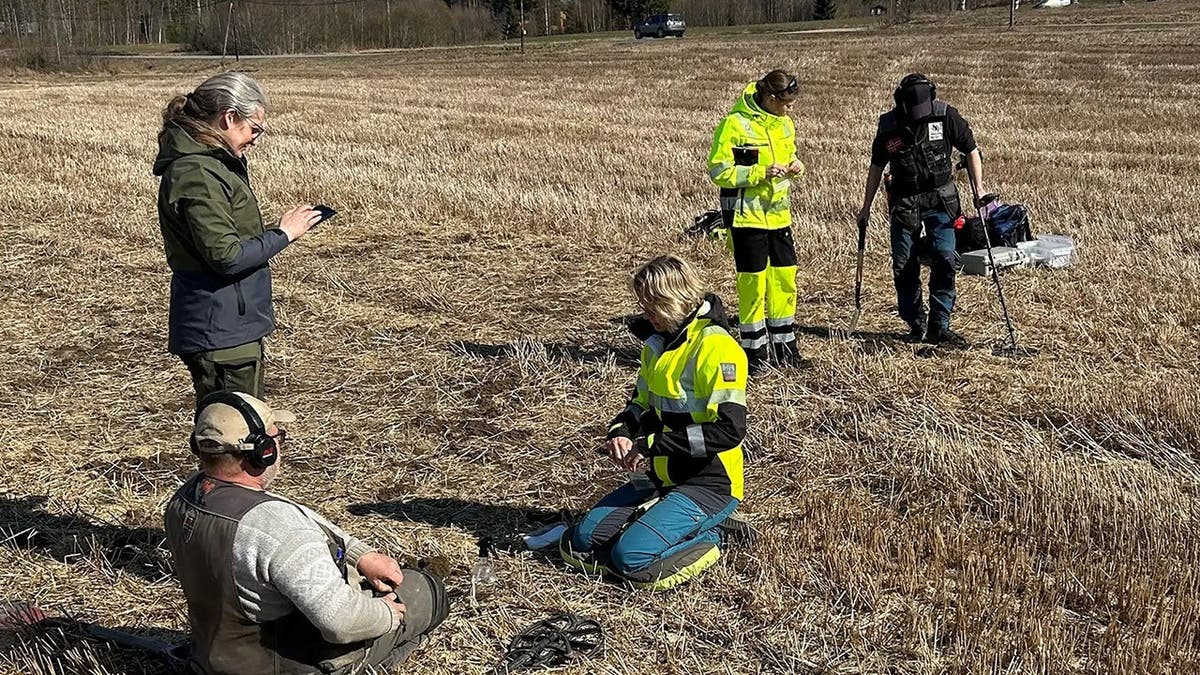
Archaeologists and historians are studying a massive Viking Age coin hoard discovered in southeastern Norway after two hobbyists alerted authorities to the find. (Anne Engesveen, Innlandet County Authority)

The coins were minted between the 980s and the 1040s and bear the names of rulers including Æthelred II, Otto III, Harald Hardrada and the legendary King Cnut.

Most of the coins were minted in England or Germany, which officials said reflects the strong foreign influence on Norway’s economy during the late Viking Age.

STRANGE VIKING GRAVE WITH ‘CHRISTIAN OVERTONES’ DISCOVERED BY PERPLEXED ARCHAEOLOGISTS: ‘VERY UNUSUAL’

“Foreign coinage dominates the circulation of money in Norway up until Harald Hardrada (1046–1066) established a national coinage,” KHM professor Svein Gullbekk said in a statement.

“The hoard was deposited right at the beginning of this development.”

Hands holding coins

The coin cache discovered near Rena is believed to have been buried around 1047 during a transformative period in Norway’s economic history. (May-Tove Smiseth, Innlandet County Authority)

KHM described the discovery as “a coin hoard without parallel in a Norwegian context.”

Hanna Geiran, director general of the Directorate for Cultural Heritage, said she could “hardly believe my ears when I heard about the find.”

ARCHAEOLOGISTS UNEARTH VIKING-ERA ‘EXECUTION PIT’ NEAR UNIVERSITY TOWN, EXPOSING BRUTAL ANCIENT VIOLENCE

She added, “This is both a national and an international event, and few things capture people’s imagination as much as the Viking Age in Norway.”

It remains unclear why the hoard was buried, though researchers believe it may have been tied to the region’s booming iron trade during the Viking Age.

“This is an exemplary case of how it should be done.”

Archaeologist Jostein Bergstøl of the Museum of Cultural History believes the massive coin cache may represent wealth accumulated through that trade.

CLICK HERE TO SIGN UP FOR OUR LIFESTYLE NEWSLETTER

“From the 900s until the late 1200s, there was enormous iron production in this area,” he said. “Ore was extracted from the bogs, and the processed iron was exported to Europe.”

Officials also praised the two detectorists for following proper procedures and helping secure the site.

Split image of coins in bags, metal detectorist working at site

The Viking Age hoard includes coins linked to rulers such as Harald Hardrada, King Cnut and Æthelred II, according to researchers. (Innlandet County Authority; Anne Engesveen, Innlandet County)

“This is an exemplary case of how it should be done,” said Innlandet County Authority archaeologist May-Tove Smiseth.

“Sætre and Sørlie immediately got in touch and have done everything by the book, in full accordance with the Directorate for Cultural Heritage’s guidelines,” she added. 

CLICK HERE TO DOWNLOAD THE FOX NEWS APP

“They have been highly cooperative and have actively contributed to securing and documenting the find in the best possible way.”

Researchers are analyzing and registering the coins, and KHM said the hoard “will be the subject of research for many years to come.”

Researchers standing at site

KHM described the discovery as “a coin hoard without parallel in a Norwegian context.” (Innlandet County Authority)

Fox News Digital reached out to KHM for additional comment.

CLICK HERE FOR MORE LIFESTYLE STORIES

The Norwegian coin cache adds to a growing list of major Viking-era discoveries over the past year.

In 2025, archaeologists in northern Germany uncovered a hoard of roughly 1,000-year-old Viking treasures after a metal detectorist alerted officials to the find.

Depiction of Viking leader Ivar the Boneless leading raiders invading England.

Archaeologists believe the Viking-era silver hoard may have been tied to Norway’s booming iron trade more than 1,000 years ago. (Hulton Archive/Getty Images)

TEST YOURSELF WITH OUR LATEST LIFESTYLE QUIZ

That year, Swedish officials also announced the discovery of a Viking grave with “Christian overtones” on the outskirts of Linköping.

Source

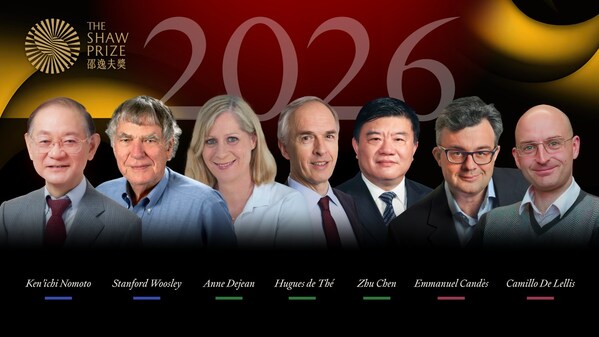
Announcement of The Shaw Laureates 2026

0

HONG KONG, May 27, 2026 /PRNewswire/ —

The Shaw Prize in Astronomy is awarded in equal shares to

Ken’ichi Nomoto
Emeritus Professor and Visiting Senior Scientist of the Kavli Institute for the Physics and Mathematics of the Universe, University of Tokyo, Japan and

Stanford Woosley
Professor of Astronomy and Astrophysics, University of California, Santa Cruz, USA

for their studies of stellar explosions and the origin of the elements.

The Shaw Prize in Life Science and Medicine is awarded in equal shares to

Anne Dejean
Professor Emerita, Institut Pasteur, France

Hugues de Thé
Professor and Chair of Cellular and Molecular Oncology, Collège de France and

Zhu Chen
Professor, Ruijin Hospital, School of Medicine, Shanghai Jiao Tong University, PRC

for the discovery of the molecular and cellular bases of acute promyelocytic leukemia and the pioneering of a synergistic targeted therapy that transformed the disease from one of the most deadly to one of the most curable cancers.

The Shaw Prize in Mathematical Sciences is awarded in equal shares to

Emmanuel Candès
The Barnum–Simons Chair in Mathematics and Statistics, Stanford University, USA and

Camillo De Lellis
IBM von Neumann Professor, School of Mathematics, Institute for Advanced Study, Princeton, USA

for their breakthrough contributions to the use of deep techniques from mathematical analysis to rigorously understand applied problems in information theory, signal processing and statistics on the one hand, and to the study of singularities in geometric measure theory and fluid dynamics on the other.

Wednesday, 27 May 2026. At today’s press conference in Hong Kong, The Shaw Prize Foundation announced the Shaw Laureates for 2026. Information was posted on the website www.shawprize.org at Hong Kong time 15:30 (GMT 07:30).

The Shaw Prize consists of four annual prizes — Astronomy, Life Science and Medicine, and Mathematical Sciences, awarded since 2004, together with the newly introduced Computer Science Prize, to be awarded from 2027. Each bearing a monetary award of US$1.2 million. This will be the twenty-third year that the Prize has been awarded and the date of presentation ceremony will be announced in due course.

Source