


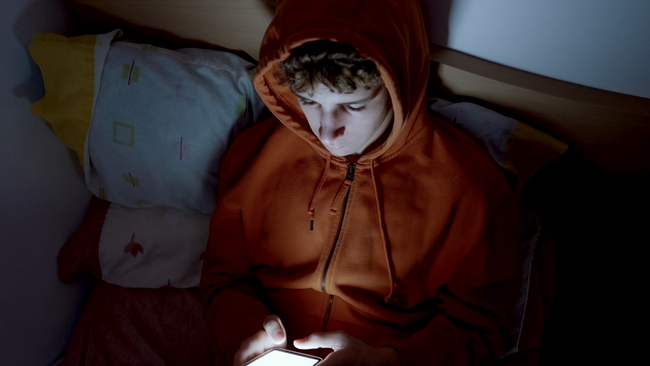
Young Australians are increasingly turning their backs on social media in favour of real-world connections, as mounting evidence reveals the toll that endless scrolling takes on mental health and meaningful relationships.
According to a 2023 survey by Headspace, more than half of young people want to disconnect from social media as addictive algorithms make the platforms feel less and less social.
The shift comes as experts warn of a clear link between social media usage and loneliness, with the 2019 Young Australian Loneliness Survey finding that exposure to exaggerated content on social media increased feelings of loneliness and social disconnect.
Know the news with the 7NEWS app: Download today
People are more connected than ever before — but in far less meaningful ways — thanks to technology, Sydney-based charity Ending Loneliness Together CEO and scientific chair Associate Professor Michelle Lim said.
“People are more connected with technology but it doesn’t mean that more is higher quality,” Lim said.
“What people also do is get into this zone of what we call displacement. They only use digital technology for their connection and then ignore or don’t invest in their face-to-face interactions.”
Young people aged 18 to 25 are disproportionately affected by loneliness, despite being raised in the digital age.
A 2019 study found one in three young people consider themselves socially isolated.

The 2026 World Happiness Report found those people who use social media excessively report much lower wellbeing than those who use it just intermittently.
The impacts extend beyond mental health, with loneliness increasing the risk of heart disease, poorer immunity, cognitive decline, and even Alzheimer’s disease.
“When we feel like we do not have those meaningful social connections, we’re less incentivised to take care of ourselves,” Lim said.

In response to the growing crisis, Nikol Moses and Isaac Joshi created Sydney-based company Ripple Social last year to help young people connect through in-person events.
“When your entire life is around a screen and through these surface-level relationships and connections, you just have this really big gaping hole where you just want meaningful in-person connections,” Moses said.
“Social media (is) quite easy to use, but not very meaningful. In-person stuff can be a lot more difficult to organise and actually physically go to the place, but a lot more meaningful.”
The pair say social media apps have changed in recent years, with algorithms designed to keep users endlessly scrolling rather than connecting with actual friends.

“If I scroll on my Facebook feed, I don’t think I’ll see posts related to anyone I actually know. It’ll just be random stuff,” Joshi said.
Ripple Social’s events have received overwhelmingly positive responses, with attendees forming core friend groups through the activities offered.
“You go, you have fun at the event, maybe you meet some people you like, there’ll be a lot of people there so hopefully just talk to the ones you like,” Moses said.
While not everyone believes social media is entirely detrimental, experts recommend being intentional with online connections and using platforms to transition to face-to-face interactions.
“We have to be smart and discerning ourselves as consumers of social media,” Lim said.
The solution, according to experts, lies in establishing an ecosystem of passive socialisation through shared interests such as sports clubs, hiking groups, or hobby meet-ups that blend digital interests into the world around us.
“Addressing loneliness is not simply just knowing more people but really healthier, higher quality interactions will make a difference,” Lim said.


