Tuesday, June 23, 2026
Google search engine
Home Blog Page 385

Millennial, Gen Z men take better care of their mental health than Gen X-ers, baby boomers — but are worse about annual physicals, survey finds

0

American men are concerned about staying healthy, but different generations go about it in different ways, according to a new survey. Cleveland Clinic found that 95% of men of any age in the U.S. consider their health a top priority, and 87% are worried about making sure their current habits and practices will help them maintain better health down the road. That’s good news, experts say. But Gen X could stand to take some cues from their younger counterparts, according to the survey’s findings, and Gen Z would do well to pick up some of the boomers’ preventative habits.

Here’s what to know.

Nearly 60% of millennial and Gen Z men say they are taking care of their mental health, according to Cleveland Clinic’s survey of more than 1,000 U.S. men. Men with mental health conditions still seek help at lower rates than women, but their use of psychological care has risen, according to the National Institute of Mental Health. “Seeing that the younger generation is talking about [mental health] more is really promising,” Dr. Peter Bajic, director of the Center for Men’s Health at Cleveland Clinic, tells Yahoo Life.

It’s particularly good news, given the “epidemic” of mental health issues that’s overwhelmed men and women alike in recent years, Dr. Joseph Alukal, a Columbia University urologist who heads up the university’s Men’s Health Program, tells Yahoo Life. “As a group, the stigma around mental health that existed previously for older men has thankfully been eroded a ton.” Alukal credits celebrities, including Michael Phelps, for setting a good example for younger men by speaking out about their mental health struggles. “I think it’s gone a long way to helping young people understand that these are a real set of health conditions like any other that you would get treatment for,” he adds.

About a third of younger men reported receiving annual physical exams, compared to 61% of boomers and Gen Xers. And millennial and Gen Z men were less than half as likely to get all the screenings and tests their health care providers recommended compared to older men (23% vs. 48%, respectively). Bajic does point out that younger men aren’t at risk for as many health problems that require constant care. “But I do think these younger generations are more likely to seek care for problems through online health platforms that, many times, offer easy fixes to problems without offering help for the underlying root of the problem.” He adds that having an established relationship with a health care provider can ensure that you’re being monitored for any changes and know how to address any nascent issues.

The American Heart Association, for example, recommends that all adults ages 20 and older get their blood pressure checked every two years and have their cholesterol levels checked every four to six years. “That’s an important piece of preventive health care,” Alukal says. “If I can identify blood pressure or cholesterol issues at that [younger] age, I can make interventions that make it far more likely that in his 50s or 60s or even 40s that he’s not dealing with heart disease.” But, he adds, that “requires that person putting himself in front of some sort of health care provider at least once a year.”

Even baby boomers — 5% of them, per the new survey — turn to social media for health advice or information. Not surprisingly, Gen Z is most likely to consult TikTok or Instagram, with 33% of men in the generation looking to social media for wellbeing tips. Just shy of a quarter of millennials do the same. Alukal isn’t convinced that’s altogether bad, with some caveats. “Last I checked, everybody is doing that, irrespective of age,” he says. “Sometimes it’s right, sometimes it’s wrong — we should teach [patients] to take what they find there with a grain of salt.”

Smoking remains the leading cause of preventable death in the U.S., and while 60% of baby boomers and Gen X-ers surveyed by Cleveland Clinic avoid using cigarettes or e-cigarettes, only 43% of millennials and Gen Z-ers say they don’t smoke or vape. “The younger generations have really wholeheartedly embraced vaping,” says Alukal, who wishes these men would take note of the lessons learned from decades of cigarette-related health problems. Older generations, on the other hand, are “really having a hard time leaving alcohol in the past,” he says, while full sobriety and occasional drinking have become popular among young people.

Experts are encouraged to see that young men are embracing mental health care, and would love to see older generations follow their lead. Alukal has been impressed by the fact that his younger male patients also tend to be more conscious of their fitness and diet, and are more proactive.

Older patients “could learn a degree of that self-sufficiency,” he says. But on the other hand, he’d like to see younger men learn to follow the rules the way their elders do. If older men are told to get a colonoscopy every three years, for example, they do it, according to Alukal (although, notably, the survey found that 31% of Gen X-ers and boomers who should be getting screened for colorectal cancer haven’t been). “The younger group needs to look at the older group and say, ‘I should do the same.’”

Source

Passengers often ignore in-flight safety videos. But this ‘honest’ one has 8.4 million views

0

“Greetings from the cockpit. This is your captain speaking.”

It’s a phrase frequent flyers know well.  

Only this isn’t a pilot. And what follows isn’t the same ol’ in-flight safety talk.

Rather, it’s the opening salvo of a now viral YouTube video from travel journalist Doug Lansky, who delivers a near 7-minute “honest pre-flight safety demonstration … that airlines are afraid to show you.”  

The tongue-in-cheek video has racked up 8.4 million views, an impressive achievement for a fake version of a safety briefing that most travelers ignore.

Lansky said he was inspired by a discussion he had with a pilot he sat next to on a flight years ago.   

When the safety demonstration video began, “I noticed he wasn’t paying attention to it. And if you travel a lot, nobody really does,” said Lansky. “So I said ‘What would you say, if you could say anything?’ And he rattled off a bunch of stuff.”

Lansky said he then posed the same question to others in the aviation industry.

The video, he said, is “a composite of these different conversations I’ve had with pilots over the years — what would they say if they could do the safety test, and they weren’t bound by the legal team of the airline?”

Keeping it ‘real’

The premise of the video is that the aircraft’s entertainment system is down (“so we can’t show you the $2 million safety video that an ad agency did for us”), and thus the pilot is going to deliver a “real safety talk” to passengers.   

The video advises passengers to practice unbuckling their seatbelt (“I know you all know how to use it but that’s because you’re not losing your sh*t right now”). Lansky said that research shows that when people are panicking — say they’re upside down or in a smoke-filled cabin — they tend to press the seatbelt buckle, as if it had a button like a car seatbelt.     

“You really need to kind of visualize actually lifting the flap,” Lansky told CNBC Travel. “You need that muscle memory, and most of us have that more with a car than with an airplane.”

The video also stresses to passengers that they must leave their bags on the plane in the event of an emergency evacuation.

“In the event of something like an engine fire, we need you all off the plane in about 90 seconds,” it states. “My first officer and I will also be trying to get off this plane, and the last thing we want is to be cock-pit blocked by your roll-on.”

As to whether the crew will be working to maximize your time to move about the cabin — don’t bet on it, the video advised.

“We’ll probably keep the seatbelt sign on for nearly the entire flight because our flight crew doesn’t like to be bothered in the galley,” it states.  

Is this true? “Oh yes,” a U.S. flight attendant with more than two decades of experience told CNBC Travel.

“Especially during [food or drink] service,” she said. “Or when someone decides to come stand over you and chat while you’re eating. It’s funny — people act a lot differently on the airplane than they do in normal life.” She asked to remain anonymous because her employer advises against making public statements to media outlets.

To make the video, Lansky said he spoke with many in the aviation industry and conducted his own research, leaning on his 20 years of experience as a travel journalist.

Source: Doug Lansky

And those life jackets under your seat? “Forget about it,” advises the video. “They’re less likely to save your life than those little airline pillows.”

But here’s where our fake pilot may go a step too far, said a first officer for a major U.S. airline who asked to remain anonymous because he also is not authorized to speak to media.

He said the video is “certainly written by someone who knows the ins and outs of airline flying,” but that he doesn’t agree with dismissing life jackets.

As for the accuracy of the video’s advice, most of it is true, the first captain said.  

“But you would obviously never really hear it from a flight crew,” he added.  

Researching in-flight injuries

Lansky said he came across some astounding figures while researching the statistics cited in the video.

For example, passengers tend to worry about crashes and severe turbulence, but statistically they are much more likely to be injured by their own luggage, he said.

“Over the years, more people have been hurt, by far, from their own duty-free bottles falling out of the overhead compartment and whacking them on the head … after they’ve landed, than any kind of turbulence,” he said.

“That is awesome!” a flight attendant told CNBC Travel, after viewing Lansky’s now viral video.

Enviromantic | E+ | Getty Images

The drink cart is another improbable source of injury, Lansky said, adding that flight attendants told him they regularly hit passengers whose body parts encroach on the aisle.  

He said he asked flight attendants how many times they bump passengers elbows, knees and feet on long-haul flights.

The most common answer? About 20, he said.

“That was asking about 20 or 30 different flight attendants,” he said. “They don’t break knees or elbows or wrists each time, but they bump into that many people per flight.”

Views come ‘in waves’

The video wasn’t an instant success, said Lansky, who posted it about four years ago.

“It kind of went in waves,” he said. “When I first put it online, it had like 200 views for a couple months, and then somebody found it, and it went bananas.”

Doug Lansky is a journalist, author and speaker about travel and sustainable tourism.

Source: Doug Lansky

Lansky said he’s a huge fan of “The Daily Show,” “Late Night with Seth Meyers” and other evening political shows because “they cut thru the BS and keep things entertaining, intelligent and real.” Shows like those shape the travel industry commentary he provides on his YouTube channel “ReThinking Tourism,” he said.

The viral video brought attention to Lansky’s career, which now focuses on tourism consulting and conference speaking but, he said, its success has hit closer to home for him. As a verifiable YouTuber, with a viral video, he won newfound respect from his daughter, he said.  

“My teenage daughter was giving me a hard time for trying to do something on YouTube,” he said. But when the video reached 2 million views, “her chin hit the floor.”

“That was the best thing that came out of it.”

Source

SwitchBot Expands the Environment Meter Product Portfolio with Advanced Meter Pro & Meter Pro (CO2 Monitor)

0

TOKYO, Sept. 4, 2024 /PRNewswire/ — SwitchBot, a rising brand in smart home retrofitting and automation, is thrilled to announce the expansion of its popular environmental meter product portfolio with two innovative products designed to provide smarter and more precise environment monitoring, SwitchBot Meter Pro & Meter Pro (CO2 Monitor).

SwitchBot Meter Pro & Meter Pro (CO2 Monitor)

This new collection can display indoor and outdoor temperature & humidity, time & date, and comfort level, alongside weather forecasts when used with a SwitchBot Hub. Additionally, SwitchBot Meter Pro (CO2 Monitor) can now precisely monitor the CO₂ status of the house.

Multi-functional Smart Environment Meter for Indoors and Outdoors

Equipped with Swiss-made sensors, SwitchBot Meter Pro & Meter Pro (CO2 Monitor) detect indoor temperature and humidity data every 4 seconds with accuracy within ±0.2°C and ±2%RH, ensuring accurate and rapid feedback. Meanwhile, based on the indoor temperature and humidity data, the devices can also display the comfort level according to prompts set by users themselves.

Moreover, with SwitchBot Outdoor Meter, users can easily access outdoor temperature and humidity data, eliminating the need to step outside. Nonetheless, used with SwitchBot Hubs, the new devices can access online data to display local temperature, humidity, and weather forecasts for up to 12 hours. This feature significantly enhances users’ ability to plan their daily activities and outdoor ventures with greater accuracy.

Monitor Air Quality in a Smarter Way

Highlighting this launch, SwitchBot Meter Pro (CO2 Monitor) features advanced Non-Dispersive Infrared (NDIR) technology to monitor CO₂ levels with precision. It can update CO₂ levels as frequently as every second (every 30 minutes in battery mode and every minute in charging mode by default) with an accuracy of ±50ppm within a range of 400-9000ppm, ensuring timely and accurate air quality feedback.

3 Alert Methods for Real-Time Environment Awareness

To keep users informed of any significant environmental changes caused by the changes in temperature, humidity, or CO₂ levels, both devices offer three types of alerts:

  • Sound Alerts: Emit up to 100dB alarm sound with adjustable volume settings in low, medium, and high, which can be muted through the physical button or app;
  • Visual Alerts: Alert through number flashing and three different colors on the screen to guide daily activities;
  • Online Alerts: Send app notifications or emails while users are away (SwitchBot Hub required);

Seamless Smart Home Integration for Enhanced User Experience

Designed to integrate seamlessly into the SwitchBot Ecosystem, these devices can trigger automated actions when environmental data exceeds the preset limits, such as activating the SwitchBot Circulator Fan or Evaporative Humidifier, while used with a SwitchBot Hub.

Both devices also support voice control via Alexa, Google Assistant, Siri Shortcuts, IFTTT, and SmartThings. Users can easily monitor and manage settings through the SwitchBot app, including adjusting the content displayed on the screen. Also, SwitchBot Meter Pro is Matter-compatible, enabling easy integration with various smart home systems when used with SwitchBot Hub 2 or Hub Mini Matter Enabled.

Exceptional Longevity and Data Management

SwitchBot Meter Pro functions for up to 12 months on two AA batteries, while Meter Pro (CO2 Monitor) features two power modes: Type-C charging and a 12-month battery mode*.

For data storage, the Meter Pro supports 68 days of local storage and up to 2 years of free cloud storage (SwitchBot Hub required) and the Meter Pro (CO2 Monitor) supports 40 days of local storage and up to 2 years of free cloud storage (SwitchBot Hub required). Meanwhile, users can effortlessly export data from the SwitchBot app for accurate record-keeping.

*When CO₂ detection occurs every 30 minutes.

Pricing and Availability

SwitchBot Meter Pro & Meter Pro (CO2 Monitor) will be available on the SwitchBot Official Website Store and Amazon Stores in September, starting from $29.99 / £34.99 / €34.99, and $69.99 / £59.99 / €69.99.

For more information, visit SwitchBot’s official website or follow on Twitter, Instagram, and Facebook.

Source

Airplane engines are in short supply. The business of fixing older ones is booming

0

TULSA, Okla. — Parts and labor shortages. Delayed deliveries of new airplanes from Boeing and Airbus. An engine recall. Premature repairs. It’s all piling up, and aircraft engine shops around the world are overflowing. 

As travelers boarded planes in record numbers this summer, airline executives waited anxiously for repairs and overhauls of their engines.

The repair and overhaul of engines has swelled from a $31 billion business before the pandemic to $58 billion this year, according to Alton Aviation Consultancy. It’s a cash cow for engine makers like GE Aerospace and the hundreds of smaller specialists that service GE engines, and others made by Pratt & Whitney and Rolls-Royce.

American Airlines‘ solution is to do more of the work itself.

“We just have one customer and that’s American Airlines doing our work,” American’s chief operating officer, David Seymour, said. “We can control our own destiny in that area.”

American Airlines workers perform maintenance on CFM-56 engine in Tulsa, Oklahoma

Erin Black | CNBC

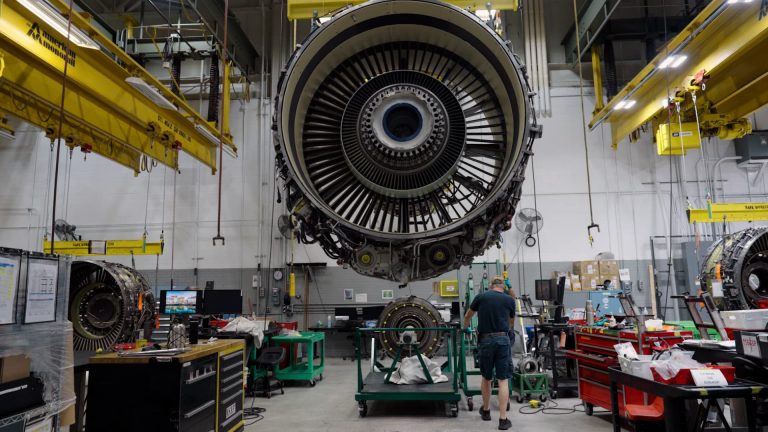
At its bustling engine shop at the airline’s 3.3 million-square-foot maintenance facility at Tulsa International Airport, the largest such space in the world, American is on track to increase its overhauls roughly 60% from 2023 to more than 16 engines a month this year. That’s up from five a month in 2022. It’s added some 200 jobs there, as well more equipment like cranes to hang the 2-ton engines during overhauls.

The work focuses on CFM56 engines, made by a joint venture of GE and France’s Safran. They power American’s older Boeing 737 workhorse jetliners and many Airbus A320s. Those narrow-body airplanes make up the majority of American’s mainline fleet of more than 960 aircraft, according to an annual company securities filing.

“I can get these engines overhauled and through the shop in less than 60 days versus [outside] shops nowadays [are] 120 to 150 days, in some cases north of 200 days,” COO Seymour said.

Bottlenecks abound

American Airlines workers overhaul an engine at a hangar in Tulsa, Okla.

Leslie Josephs/CNBC

Much of the bottleneck in engine repairs stems from the industry’s rocky emergence from the pandemic, when companies shed thousands of skilled workers. Airlines that delayed maintenance during the travel slump then raced to get airplanes into shape to fly when demand snapped back, but faced worker and experience shortages and shortfalls of key items from engine components to aircraft seats.

Meanwhile, Airbus and Boeing are behind on deliveries of new, more fuel-efficient airplanes, forcing carriers, including American, to hold on to older jetliners longer than they planned.

Airbus this summer reduced its aircraft delivery forecast and announced cost cuts as it grapples with supply chain issues and late-arriving landing gear and engines.

“I would also call it the surprise factor for 2024,” Airbus CFO Thomas Toepfer said on a July 30 earnings call.

In addition to supply chain issues, Boeing aircraft have been delayed as the company navigates a safety crisis after a door panel blew out from one of its 737 Max planes midair at the start of the year.

With many engines needing overhauls about every 7,000 flights, keeping older airplanes longer means more routine maintenance and revamps, adding to demand when they’re due to come into the shop. Those weekslong overhauls are exhaustive: They can cost $5 million apiece and can go for double that for wide-body airplanes, according to Kevin Michaels, a managing director at AeroDynamic Advisory.

At American’s shop in Tulsa, workers remove hundreds of parts, replacing life-limited components and cleaning and inspecting others, which includes spraying them down with a a fluorescent penetrant so defects can be seen under a black light.

An American Airlines worker sprays florescent penetrant on engine components to check for defects at a hangar in Tulsa, Oklahoma.

Leslie Josephs/CNBC

But key parts are hard to find and they must be flawless. Plus, they’re costly. The dozens of engine compressor blades can go for $30,000 a pop.

On top of that, some newer engines — which run hotter, take in more air and burn less fuel than older types — are coming into engine shops earlier than expected, frustrating airline CEOs.

“There’s no business which can digest not using the key assets to generate revenue,” said AirBaltic CEO Martin Gauss.

The Riga, Latvia-based carrier, an Airbus A220 customer, had to lease planes in recent years to make up for its grounded jets.

“Unfortunately, passengers are not happy when they can’t fly on new aircraft,” he said. “It is an issue which will be over one day. We thought it would be over by now. I would give it another two years and then we are through it.”

There’s another problem that’s clogging up engine shops: A Pratt & Whitney engine recall of some of its narrow-body engines. In light of the ongoing issues, some low-cost airlines, including JetBlue Airways and Spirit Airlines, are deferring new jet deliveries to try to save money.

“It’s kind of a wicked brew that’s had a significant impact on the engine supply chain,” said AeroDynamic Advisory’s Michaels.

Windfall for engine makers

American Airlines worker looks inside engine at maintenance shop in Tulsa, Oklahoma.

Erin Black | CNBC

The high demand for engine overhauls has been lucrative for engine suppliers, which make billions from maintaining engines they sell with new airplanes.

GE Aerospace brought in $11.7 billion from engine maintenance, repairs and overhaul in the first half of 2024, making up 65% of its revenue.

“When it comes to engines, it’s a razor-razor blade business,” said Michaels, describing how buying shavers in a drug store can mean repeat business for replacement blades for years. “So the money is made in the aftermarket on the engine business.”

Read more CNBC airline news

GE Aerospace, which became an independent company in April, said in July that it will invest $1 billion to upgrade its engine shops around the world over the next five years.

Got spares?

For many airlines, there aren’t many alternatives to costly engine overhauls with demand on the rise for replacement engines, especially if the carrier has one type of aircraft or a model that only has one supplier.

An airplane engine at American Airlines’ test cell in Tulsa, Oklahoma.

Leslie Josephs/CNBC

Rental rates for engines that match up with both old and new planes have skyrocketed. For example, a CFM56 engine used on the Boeing 737-800 was going for $96,000 a month up from $78,000 in 2017, according to aviation data firm IBA.

Both Pratt & Whitney and CFM engines that power the newer Airbus A320neo airplanes, meanwhile, have logged lease rates of $127,000 per month, up from $80,000 and $85,000, respectively, in 2017, IBA said.

Leasing firms like AerCap and Avolon have been snatching up spare engines because of the high demand.

It is still difficult to get into an engine shop, however.

Delta Air Lines, like American, overhauls, repairs and maintains its own engines. It also does work for other airlines, but CEO Ed Bastian says the shop is full.

“If you’re not on an existing contract, you’re not getting in,” he said in an interview in July. “It would be easier to get into a Taylor Swift concert.”

Source

Fliggy’s 2024 Summer Travel Report Shows Surge in Demand for Premium and Immersive Experiences

0

Highlighting a significant rise in both average bookings and customer spending year-on-year

HANGZHOU, China, Sept. 4, 2024 /PRNewswire/ — Fliggy, a leading online travel platform and wholly-owned subsidiary of Alibaba Group (NYSE: BABA and HKEX: 9988), has released its 2024 Summer Travel Report, which reveals a significant year-on-year growth in average booking volume and spending per consumer as the industry continues to show growth. This trend in the data, consistent with patterns observed during the Labor Day and Dragon Boat Festival holidays, also reflects travelers’ growing desire for immersive experiences. In addition, Fliggy has announced that its Summer Protection services have provided protection to nearly one million travelers this season.

Zhang Chen, Vice President of Fliggy, said, “Our latest report shows the trend of travelers opting for higher-quality activities and personalized travel products is becoming a reality and the new norm. At Fliggy, we remain attuned to market trends and committed to delivering enriching experiences for all our customers. Fliggy will continue to enhance our offerings, expand the travel product portfolio, and reinforce service protection measures to meet the evolving needs of travelers.”

Domestic travel: quality takes center stage

Fliggy’s data indicates a significant increase in demand for premium travel services. The average booking per consumer for four- and five-star hotels, package tours, and car rentals in the domestic market have all shown impressive year-on-year growth. Domestic package tour bookings have seen double-digit growth and bookings for directly-operated brand hotels have risen by approximately 30% following a strong rebound in bookings last summer.

Self-driving tours are increasingly popular, with domestic car rental bookings rising by 60% year-on-year. Families are renting cars to explore more far-flung destinations such as Altay in Xinjiang, the Lesser Khingan Mountains, or the Qinghai-Gansu Grand Loop. In Northern and Western China, popular destinations like Heihe, Alar and Bijie have seen car rental bookings increase by over 200% compared to last year.

The release of the Chinese video game Black Myth: Wukong has also driven tourism to its featured locations, such as the Yungang Grottoes and the Hanging Temple in Shanxi province. Fliggy’s data shows that ticket bookings for scenic spots in Shanxi have increased by over 60% year-on-year, while car rental bookings have risen by more than 130%.

Outbound travel: independent experiences dominate

Independent travel continues to lead the outbound travel market this summer, representing over 80% of total bookings. Consumers are seeking immersive local experiences, such as visiting historic sites and dining at Michelin-starred restaurants. The transaction volume for international cruises and car rentals has increased over 20 and 5 times year-on-year, respectively.

Long-distance destinations gain traction

As the longest holiday season, summer has seen a rise in long-distance travel. Fliggy’s data reveals that bookings for long-distance destinations such as France, Russia, Turkey, Egypt, and Serbia have all doubled year-on-year. Activities featuring rich local cultural elements ranging from Seine River cruises in Paris, ballet performances in St. Petersburg, and dune bashing in the Red Sea, rank high in terms of transaction volume.

Fliggy’s robust protection measures benefit millions

Starting July 1, Fliggy introduced six key measures to address common consumer concerns, such as flight cancellations, hotel price fluctuations, itinerary coordination for flights and hotels, and high-risk activities during travel. These measures aim to protect consumers from potential losses and provide reassurance around the travel decision-making process.

Nearly one million consumers have already benefited from Fliggy’s Summer Protection services, which provide eligible consumers with free cancellation options, price protection subsidies for hotel rate reductions, and RMB1 million (approximately USD137,000) worth of coverage for personal accident injuries and rescue services related to bookings of designated water sports activities.

About Fliggy

Fliggy is a wholly-owned subsidiary of Alibaba Group (NYSE: BABA), and is one of the leading online travel platforms in China. Fliggy places a strong emphasis on innovation in its products and services, catering to the increasingly personalized and diversified needs of consumers in both China and overseas markets.

Leveraging Fliggy’s advantage as part of the Alibaba ecosystem, merchants can benefit from the vast user base within the Group. Fliggy also collaborates with partners through a full-service management format, helping more merchants, especially small and medium-sized ones, easily and efficiently share opportunities enabled by digitalization.

Fliggy’s long-term strategy is to promote the digital transformation of the tourism industry, using an open platform and mechanisms to help the industry make better use of digital business infrastructure for their operations.

Source

Shiperoo Pioneers Tech-led Retail Returns and Fulfilment with AUD 30 Million Investment in Robotic Automated Facilities in Australia and New Zealand

0
  • Shiperoo, the latest tech-driven retail fulfilment and returns management provider, has announced AUD 30 million investment.
  • The investment will lead to strategically located urban distribution facilities across Australia and New Zealand, equipped with custom-designed, high-end robotic automation paired with Shiperoo’s proprietary software.
  • Shiperoo is geared to offer fast and efficient, automated fulfilment service for same-day shipping readiness, and provide end-to-end returns management for both physical and online retail sectors.
  • Shiperoo’s proprietary software is designed to manage the returns processing, including receipt, verification, quality check and real-time actionable restocking, reselling and recycling processes. It will also deliver powerful metrics and visibility on returns trends to help retailers recover significant lost revenue.
  • Shiperoo’s custom-designed automation system will enable high-density storage and powerful operational workflows allowing them to double their usable distribution space.

MELBOURNE, Australia, Sept. 4, 2024 /PRNewswire/ — Shiperoo, the innovative brainchild of supply chain tech entrepreneurs Nishan Wijemanne and Rizan Mawzoon, has announced a transformative AUD 30 million investment into high-end automation and strategic urban fulfilment locations across Australia and New Zealand.

Shiperoo Pioneers Tech-led Retail Returns and Fulfilment with AUD 30 Million Investment in Robotic Automated Facilities in Australia and New Zealand

This visionary venture is reshaping the retail returns and fulfilment landscape, fuelled by a tech-first approach and a commitment to same-day shipping readiness.

Shiperoo is setting the stage for an automated, seamless retail experience with its state-of-the-art facilities with custom-designed robotic automation systems allowing for high-density storage and fulfilment space.

The expansion plans include multiple locations across Australia and New Zealand, showcasing the company’s dedication to elevating fulfilment standards and boosting the circular economy.

Tackling a multi-billion-dollar challenge

The founders bring more than 30 years of industry experience and innovation, having previously revolutionised Australia’s supply chain by introducing Autonomous Mobile Robots to many retail operations. They now aim to transcend traditional third-party logistics, tackling head-on the multi-billion-dollar challenge of retail returns, an issue intensified by the e-commerce boom.

Expanding experience and footprint

The advisory board, consisting of John King (outgoing CEO of Myer), Glenn Keast (Former COO of Cotton On Group) and Paul Greenberg (Online Retail Entrepreneur and founder of NORA), brings a wealth of experience and a robust support system to the Shiperoo family.

Full visibility and analytics on returns

Shiperoo’s cutting-edge facilities will be designed with an all-encompassing tech stack consisting of robotics and the company’s proprietary software that will facilitate rapid, same-day shipment readiness. It will also manage end-to-end returns, providing retailers with a holistic returns service from receipt of the returns through to order validation, quality checks and instant decisions on resale, restock or recycle. All with have full visibility and analytics for retailers, who can use the data to monitor returns trends and improve their products and stock management.

Wijemanne and Mawzoon remain steadfast in their belief that Shiperoo’s robust model is not merely an answer to the pressing challenges of today’s retail landscape but is also laying the groundwork for sustainable growth. Shiperoo is set to make a formidable impact on reverse logistics and the circular economy by tackling returns with a comprehensive tech-led solution for retailers. In addition, it promises to offer automated multichannel fulfilment that is not only speedy but also strategically located close to urban hubs, revolutionising the industry’s approach to logistics and customer satisfaction.

Additional comments from Shiperoo:

Co-Founder Nishan Wijemanne:

“Shiperoo was born from the desire to turn the dream of efficient, cost-effective returns management into a reality.

“Our investment in Australia and New Zealand is just the beginning of our journey to become the cornerstone of tech-led retail returns and multichannel fulfilment powering efficiencies and cost-savings for both physical retailers and e-commerce retailers.”

Co-Founder Rizan Mawzoon: 

“Our proprietary AI-powered software and state-of-the-art automation are designed to revolutionise the fulfilment journey, offering unparalleled efficiency, visibility and data analysis to our retail customers.”

Non-Executive Board Member Paul Greenberg:

“The e-commerce landscape has been in dire need of a solution like Shiperoo. The cutting-edge approach is what sets them apart. 

“Shiperoo’s founders are esteemed solution providers, highly regarded by the retail and logistics community. I’m confident they’ll continue to innovate, particularly in sustainable logistics practices and the often-overlooked opportunity that is returns management.”

About Shiperoo

Shiperoo is a visionary tech-led company transforming the landscape of retail returns and multichannel fulfilment in Australia and New Zealand. Founded by industry experts Nishan Wijemanne and Rizan Mawzoon, Shiperoo leverages decades of supply chain innovation to provide same-day, ready-to-ship solutions and cutting-edge, end-to-end returns management for retailers. With a significant AUD 30 million investment in advanced automation and strategically located urban facilities, Shiperoo is poised to meet the rapid delivery demands of both e-commerce and physical retail sectors.

The company’s proprietary AI-powered software and state-of-the-art automation systems, provide retailers with unparalleled visibility, data analysis and transparency. Shiperoo’s commitment to the circular economy and sustainable logistics practices sets it apart as a leader in tackling the challenges of retail returns. Shiperoo is not just redefining 3PL services, but is also reimagining the future of logistics and fulfilment to be more efficient, responsive and environmentally conscious.

For more information on Shiperoo, visit shiperoo.com    

For media enquiries , contact: Rachita Naik, Chief Marketing Officer, Shiperoo
E:  rachita@shiperoo.com             M: +61 423 431 894

Shiperoo, the innovative brainchild of supply chain tech entrepreneurs Nishan Wijemanne and Rizan Mawzoon, has announced a transformative AUD 30 million investment into high-end automation and strategic urban fulfilment locations across Australia and New Zealand.

Source

Elle Macpherson says she refused chemotherapy after breast cancer diagnosis. Here’s what oncologists think.

0

After being diagnosed with breast cancer seven years ago, Elle Macpherson made a controversial choice: She refused chemotherapy, the model has revealed in her new memoir, Elle: Life, Lessons, and Learning to Trust Yourself. Macpherson did undergo a lumpectomy — surgery to remove the malignant breast tissue — but she then went against the advice of 32 doctors and instead followed “an intuitive, heart-led, holistic approach,” the 60-year-old told Australian Women’s Weekly. Macpherson says she’s now considered in remission.

Coming up with a cancer treatment plan is a highly personal process that requires weighing the risks and benefits of treatments. The decision to use alternative or “holistic” therapies worries doctors, but they point out that it’s complicated. On the one hand, these treatments are unproven, and choosing them instead of chemotherapy and other evidence-based therapies could put a patient’s life in jeopardy. On the other hand, they say, there are some people who won’t get much benefit from chemotherapy, and many at least feel better if they incorporate complementary medicine into their cancer treatment plan, alongside proven therapies.

It’s rare, but not unheard of — and may be becoming more common. Late Apple CEO Steve Jobs declined standard treatment for pancreatic cancer, choosing dietary supplements, acupuncture and other alternative treatments instead (a decision his biographer, Walter Isaacson, said Jobs later regretted). Actress and singer Suzanne Somers also decided against conventional treatment during her battle with breast cancer; she died from the disease in 2023.

Less than 1% of patients with any type of cancer refuse treatment altogether, according to one study. But somewhere between 3% and 19% refuse some or all chemotherapy, the research found. A 2012 study found that just over 1% of people with advanced (stage III or IV) breast cancer refuse treatment. “Some people feel very strongly that if there’s not a huge benefit, they’re not going to take treatment that’s going to make them feel bad,” including chemotherapy, Dr. Eric Winer, Yale Cancer Center director and president of Smilow Cancer Hospital, tells Yahoo Life. Aside from the side effects, others cite distrust in the treatment and medical system as their reasons for forgoing treatment.

That’s a really thorny question, oncologists say. “I get nervous that people will read [about decisions like Macpherson’s] and assume it applies to their scenario,” Dr. Lynn Dengel, a University of Virginia surgical oncologist, tells Yahoo Life. “Having breast cancer is like having a car: One person has a Mack Truck, and another has a MINI Cooper” — meaning there are many different types and stages of cancers in general, and breast cancers specifically. The appropriate treatment plan is as individual as the person and the cancer, Dengel says.

Broadly speaking, the data is clear: People who choose alternative therapies as their first-line treatments are nearly five times more likely to die within five years than those who undergo standard treatment (often including chemotherapy) immediately, according to a large 2017 study of people with breast, lung and colorectal cancers.

Still, there are some exceptions. “Breast cancer is a disease that can recur many, many years later” — as Somers’s did, two decades later — “but chemotherapy only prevents the early recurrences,” says Winer. Moreover, some types are more likely to come back than others, so doctors and patients need to weigh the risks and benefits together, he explains.

While doctors discourage using alternative treatments such as acupuncture, nutrition and massage in place of standard-of-care chemotherapy, that doesn’t mean they’re against using these therapies in addition to whatever medical treatment your provider recommends. These are called complementary treatments.

However, natural oils, foods and other treatments commonly referred to as “holistic” have never been proven effective at combating, much less curing, cancer. (You can read about some of these false claims here.) But many holistic treatments can help to reduce symptoms of cancer or side effects of treatments, including chemotherapy. “I very often have patients using complementary medicine along with standard therapy, and they often have great results with that,” Dengel says. “It’s a very positive thing when we incorporate non-Western medicine into a treatment plan, but it’s rare that we see patients declining standard care.”

It’s not uncommon for people to use complementary medicine alongside standard medical treatments such as chemotherapy. One study found that a third of cancer patients used at least one form of complementary medicine, with herbal supplements being the most common. The problem, experts say, is that 29% of these patients, according to the study, don’t tell their doctors. That’s potentially dangerous, because a patient could be unwittingly taking a supplement that doesn’t mix well with their other treatments or has side effects they don’t know about.

If you want to try complementary medicines, that’s OK, say experts — but keep your doctor in the loop, even if that means you have to find one who won’t be judgmental. “When a patient says, ‘I might not want to do [standard treatment],’ as a doctor, you should not turn that person away, but continue to have a conversation and make sure they understand everything” rather than “get on a high horse,” says Winer.

Dengel agrees. “Recognize that many of us [doctors] are open-minded and believe complementary medicine has a lot of benefits,” she says. “If someone is not going to follow the standard of care, I’m still happy to maintain a relationship with patients and help them make the best decision at each time point” along their cancer journey.

Source

Infinix Teams Up with Museum of Modern Art Curator and AI Video Mentor to Launch Mobile Vlog Awards 2024

0

Join the TikTok Challenge for a Chance to Win $10,000 USD and Exciting Prizes!

HONG KONG, Sept. 3, 2024 /PRNewswire/ — Infinix, a trendy tech brand crafted for young consumers, has officially kicked off the second year of the Mobile Vlog Awards (MVA) 2024 on TikTok, a vlog competition designed to empower young creators worldwide. With the slogan “Capture Your Own Story” and the theme “Your Story, Your Style,” participants are invited to share their unique vlog creations by engaging with the hashtag #InfinixMVA and utilizing the specially developed TikTok filter. This year, Infinix is collaborating with industry experts from various fields, including a Museum of Modern Art curator, an AI video mentor, and a GoPro award-winning filmmaker, who will inspire participants to enhance their content. With enticing prizes like a $10,000 USD TikTok boost and exclusive opportunities for in-depth discussions with these leaders, MVA 2024 is more than just a competition – it’s a movement redefining the art of vlogging and pushing creative boundaries.

Capture Your Own Story

Celebrating The New Canvas for a Global Youth Ethnography

At its core, the MVA created by Infinix is a platform that elevates vlogging from a social media trend into an art form. Powered by the Infinix ZERO Series, the MVA aims to inspire global youth to explore the artistic potential of vertical filmmaking, encouraging them to step out of their comfort zones and create unique content from indoors to outdoors. This initiative is focused on fostering creativity, encouraging cultural exchange, and showcasing the authentic, vibrant lives of young people across the world. By offering a platform for vlogs, which are born from the creativity of young users, Infinix is laying the foundation for a global youth ethnography – an expansive, integrated collection of stories that reflect the diverse realities of our times.

Continuing the slogan from the previous year, “Capture Your Own Story,” this year’s MVA theme is “Your Story, Your Style.” This signifies Infinix’s aim to create a simple, easily replicable approach that allows for personal style expression, encouraging young people to explore their dream destinations, and capture exciting stories from their unique perspectives.

“The inaugural launch of the MVA concluded last year in partnership with the prestigious Venice Film Festival, attracting over 44,000 creative submissions from across the globe. This year, we’ve broadened our horizons by collaborating with academic authorities and seasoned vloggers who are at the forefront of technology and creative expression. Our goal is to select high-quality works through diverse perspectives and pioneering standards, bringing these exceptional creations to a wider audience and influencing future creators. At Infinix, we view vlogging as more than just a social media trend; it’s a powerful medium for self-expression and cultural dialogue. We aspire to inspire young creators to explore the world around them, pushing the boundaries of what can be achieved with a smartphone,” said Lake Hu, Vice General Manager and Chief Marketing Officer of Infinix.

In anticipation of MVA 2024, Infinix has unveiled the pro-level vlog smartphone, the ZERO 40 Series, featuring cutting-edge 4K front and rear ProStable video capabilities, 50MP ultra-wide lenses, seamless GoPro integration, and advanced AI-powered tools like AI Vlog. These innovative features are crafted to inspire greater creativity and freedom of expression in vlogging, empowering participants to push the limits of mobile videography and elevate their storytelling to new heights.

“A product that simplifies the processes of shooting, creating, and editing effectively can lower the barriers to content creation. The Infinix ZERO 40 Series is specifically designed for vlog shooting, featuring 4K high-definition resolution and ProStable video stabilization, allowing everyday users to create professional-grade vlogs. The seamless GoPro integration and AI-assisted vlog editing tools not only reduce the creative threshold but also expand the possibilities for creators,” said Weiqi Nie, Product Director at Infinix.

The panel of judges
The panel of judges

A Symphony of Perspectives: Meet the Master Minds Behind MVA 2024

This year’s MVA features an eclectic panel of judges, each bringing a unique perspective that seamlessly bridges the realms of art, trends, and technology. Among them is Moritz Neumüller, a renowned global curator of contemporary art and cultural diversity, who has strong ties to the Museum of Modern Art, where he worked under esteemed photography curator Peter Galassi. By fostering a dialogue between art and science, Moritz has showcased his ability to blend disciplines and uncover deeper connections – a skill that will be invaluable as he guides MVA participants in unlocking the artistic potential of their vlogs.

He expressed his enthusiasm, stating, “In this vlog competition, I’m particularly interested in works that challenge the norm and offer fresh perspectives. I’m less focused on conventional content; instead, I seek vlogs that push the boundaries of the medium and highlight overlooked realities. The ability to craft a story that is both aesthetically coherent and creatively original is what will truly set participants apart.”

Joshua Guvi, a content creator with hundreds of thousands of devoted fans, is celebrated for his cinematic-quality vlogs. He gained prominence through his highly successful travel films, which have set new standards in vlogging with their breathtaking visuals and compelling storytelling. In an era dominated by AI tools, he has positioned himself at the forefront of this evolution, advocating for the integration of AI into video creation as an ambassador for platforms like Artlist. His innovative approach encourages creators to transcend traditional boundaries, using emerging technology to broaden their creative horizons.

Joining the judging panel are leaders from diverse fields, providing a comprehensive evaluation of entries from the perspectives of technology, humanities, and innovation. Saurabh Shukla, a GoPro award winner, is renowned for capturing the raw essence of street and travel scenes; Joan Nadal, a UNESCO member, specializes in STEM education and sustainable design, merging technology with creativity; and Lake Hu, the Vice GM and CMO of Infinix, is a dedicated mentor focused on empowering youth in technology, driving innovation, and fostering cultural dialogue through mobile platforms.

Join the MVA Revolution: Enter for a Chance to Win $10,000 in Prizes!

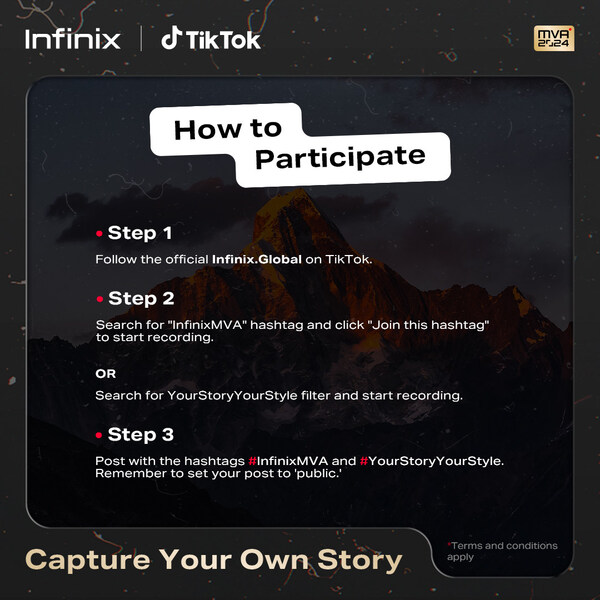
Participating in MVA is designed to be simple and accessible for everyone. To join, all you need to do is follow the official Infinix TikTok account specific to your region. From there, search for the hashtag #InfinixMVA and click “Join this hashtag” to start recording your vlog, or explore your creativity using the “Your Story, Your Style” filter developed especially for this competition. Once your video is ready, post it with the hashtags #InfinixMVA and #YourStoryYourStyle, ensuring that your post is set to “Public.”

Join the MVA 2024
Join the MVA 2024

The rewards for this year’s MVA are as exciting as the competition itself. The Grand Prize “Best Vlogging Award” winner will receive a $10,000 USD TikTok boost. Additionally, there are five major awards, each recognizing two winners in categories like Best Creative Award, Best Storytelling Award, Best Film Editing Award, Most Popular Award, and an Honorable Judges’ Mention. Winners in these categories will also be awarded an Infinix ZERO flagship smartphone, a Creator toolkit, and the title of “Infinix Vlog Ambassador.” This is your chance to showcase your creativity and storytelling skills on a global stage!

The MVA 2024 is officially underway and will run until November 30th, when the winners will be announced. Following this announcement, an exclusive Infinix Youth Dialogue Session will take place, providing selected participants with the opportunity to engage directly with esteemed judges. This interactive session will enable them to share their creative inspirations and gain valuable insights from the judges’ experiences.

Raise your phone, open TikTok, and start creating with confidence! Every story is a vital part of the global narrative – let yours be heard. For more information, please visit www.infinixmobility.com.

About Infinix

Founded in 2013, Infinix is a trendy tech brand crafted for young consumers. With a presence in over 70 countries and regions, Infinix delivers cutting-edge technology, stylish design, and outstanding performance. Our product lineup includes smartphones, TWS earbuds, smartwatches, laptops, and smart TVs. In 2023, Infinix was recognized in Kantar and Google’s top 50 Chinese Global Brand Builders Report and ranked sixth in Fast Company’s World’s Most Innovative Companies of 2024 in the Asia-Pacific sector. For more information, please visit: http://www.infinixmobility.com/

Source

‘Golden era’ for Hong Kong retail is over as Chinese tourists continue to tighten their purse strings

0

Tourists from mainland cities enter a Louis Vuitton store at Tsim Sha Tsui on June 5, 2024 in Hong Kong. 

China News Service | China News Service | Getty Images

Hong Kong’s retail sector has languished since the pandemic and analysts say it could be years before it bounces back.

The city’s retail sales have plunged 7.3% in the first seven months of the year compared with 2023, according to government data published Friday. That’s despite a massive 52.2% rebound in visitor arrivals during the period.

The city was once lauded as a shopping paradise, particularly for mainland Chinese tourists, often seen exiting luxury stores with multiple bags in hand. Mainland China accounted for nearly 90% of the 22.16 billion Hong Kong dollars ($2.84 billion) spent by same-day visitors and 67% of the HK$119.1 billion spent by overnight visitors in 2023.

But analysts said the golden days will not return “for a long, long time” as mainland Chinese tighten their purse strings under the cloud of economic uncertainty.

“The reduced spending of middle class Chinese tourists in Hong Kong can be attributed to the economic slowdown — started by the property downturn, shift in consumption patterns, increased focus on savings due to challenging employment prospects and changing travel preferences,” said Christine Li, head of research for Asia-Pacific at Knight Frank.

In 2023, overnight tourists from the mainland spent 6,495 Hong Kong dollars ($833) per capita, rising 8.4% from 2019 levels. But same-day mainland Chinese visitor spending fell 37% to just HK$1,383 in 2023.

“Post-Covid, mainland Chinese consumers are prioritizing experiences over material goods, driven by a desire to reconnect, make up for lost time, and live in the moment,” Li said. “This shift in values has led to weaker sales in high-end luxury sales, particularly noticeable in Chinese consumer spending.”

Concerns about the economic situation on the mainland has trickled down into how money is spent elsewhere. Analysts pointed to the popularity of “zero-dollar” tours where travelers pay in advance for transportation, accommodation and meals. Tourists with limited budgets may not spend much beyond the prepaid expenses covered in these packages.

“They take pictures for their online accounts, but they don’t spend money. They’re not spending the same amount of money in shops or restaurants like they used to,” Simon Smith, Savills’ regional head of research and consultancy for Asia Pacific, told CNBC. “The golden era for Hong Kong’s retail market is over. That’s the reality.”

Data from the Hong Kong Tourism Board showed the city welcomed 34 million tourists last year, including 26.8 million from the mainland. This is a significant decline from 55.91 million overseas arrivals in 2019, with 43.77 million from mainland China.

Smith noted even Hong Kong residents are increasingly shopping in neighboring Shenzhen, just 14 minutes away via high speed rail.

“It’s a third of the price in Shenzhen. You get great food, good service and modern shopping malls,” Smith said, adding that many young professionals — often the biggest shoppers — have emigrated out of Hong Kong.

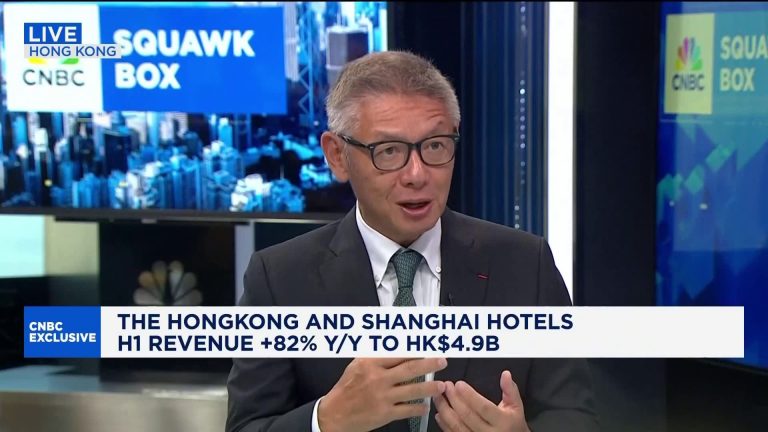
Hong Kong is still weak, says luxury hotel operator HongKong and Shanghai Hotels

Even wealthy Chinese have cut back on luxury spending when visiting Hong Kong, Knight Frank’s Li pointed out.

“The decline in luxury spending by mainland Chinese tourists has had a deep impact on Hong Kong’s retail industry. Hong Kong’s retail sector, which was heavily reliant on high-end purchases such as watches, handbags, and jewelry from mainland Chinese tourists, has faced significant challenges,” she said.

“Hong Kong, unfortunately, is going through some challenging adjustments, and tourists and locals now have a very different mindset,” Nick Bradstreet, Savills’ head of Asia-Pacific retail told CNBC.

Bounce back?

Although analysts believe that much time is still needed before consumer confidence from the Chinese recovers, there is hope that Hong Kong’s retail industry could see a rebound — but focus needs to turn away from luxury spending.

“The focus is shifting from luxury items to creating engaging and memorable shopping experiences that resonate with a broader range of consumers,” Li said, elaborating that recovery is “feasible.”

Henry Chin,  head of Asia-Pacific research at CBRE, was more optimistic about the bounce back in the city’s retail industry, but warned that it will take “longer than what we have experienced throughout the past few cycles” due to the current cyclical downturn and structural challenges in China.

Source

NGSC24: Esports World Cup Foundation Signs MoU with China Media Group and VSPO

0

RIYADH, Saudi Arabia, Sept. 2, 2024 /PRNewswire/ — The Esports World Cup Foundation (EWCF), on August 25th had signed a Memorandum of Understanding (MoU) with China Media Group’s National Institute for Esports Development (NIED) and VSPO, the largest esports company in Asia, at the New Global Sport Conference (NGSC24).

The signing ceremony was attended by Mr. Faisal Bin Homran, Chief Product Officer of Esports World Cup Foundation; Mr. Xu Qiang, Director of the Youth Sports Program Center of China Media Group and Executive Vice President of NIED; and Dino Ying, Founder, Chairman and CEO of VSPO.

The three-way agreement, signed during the New Global Sport Conference at the Four Seasons Hotel in Riyadh, is a significant step forward for the industry and aims to leverage the resource advantages of each organization. It fosters collaboration within the sports culture industry, with a particular focus on esports and gaming.

The signing ceremony was attended by Mr. Faisal Bin Homran, Chief Product Officer of Esports World Cup Foundation; Mr. Xu Qiang, Director of the Youth Sports Program Center of China Media Group and Executive Vice President of NIED; and Dino Ying, Founder, Chairman and CEO of VSPO.

Under the terms of the MoU, all three organizations will collaborate on a wide range of initiatives within China. Key areas of cooperation include esports event broadcasting on CCTV, the application of cutting-edge technologies, market expansion, and the promotion of event content

Faisal Bin Homran said: “I welcome this collaboration between the Esports World Cup Foundation, China Media Group’s National Institute for Esports Development and VSPO. Together, with our combined platforms, expertise and resources, we are confident we can elevate the industry to new heights and continue to engage and inspire fans and audiences throughout China.”

Ying said: “It’s a huge honor to be a strategic partner with the Chinese Media Group and the Esports World Cup Foundation with the establishment of the CMG National Institute for Esports Development, which marks another key sign of Beijing’s support for esports development.”

The Esports World Cup Foundation (EWCF) is a non-profit organization dedicated to supporting the growth and development of esports and gaming. As the Esports World Cup hosting entity, EWCF is committed to staging and nurturing the event for many years to come by elevating its influence and impact at the local, regional, and international levels. China Media Group (CMG), established in 2018, stands as one of the largest media conglomerates globally. The mission of NIED, an affiliate of CMG, mainly consist of three aspects. The first is to organize relevant experts, scholars, and industry professionals to conduct research on the development of esports. The second is to study the dynamics and trends of esports to provide a basis for the formulation of relevant national policies. The third aspect is to help promote the development of the esports industry with competitions at the right times.

Founded in 2016, VSPO produces more than 7,000 matches every year that captivate an online fan base of over 800 million. With a global presence encompassing 14 office locations and eight top-tier esports arenas, VSPO offers a comprehensive suite of esports services, including tournament organization, marketing solutions, community development, and more.

About the Esports World Cup Foundation
The Esports World Cup Foundation (EWCF) is a non-profit organization dedicated to supporting the growth and development of esports and gaming. As the Esports World Cup hosting entity, EWCF is committed to staging and nurturing the event for many years to come by elevating its influence and impact at the local, regional, and international levels. EWCF also partners with various stakeholders to create initiatives to help further advance the global esports industry. This aligns perfectly with its mission to be a leading advocate for the entire esports community, from athletes, franchises, and publishers to talent, fans, and businesses.

About VSPO
Founded in 2016 and with operations covering Asia, Europe, and North America, VSPO is a global esports leader in tournament operations, commercialization, content matrix & integrated marketing, talent incubation and management, esports venue development and creator of esports content with global coverage. Dedicated to creating inspiring content and products for global esports enthusiasts, the company empowers the esports ecosystem and promotes esports as the sport and entertainment of the next generation.

Source