


A strain of the potentially deadly and highly contagious poliovirus recorded overseas has now been detected in Australia for the first time, health officials have revealed.
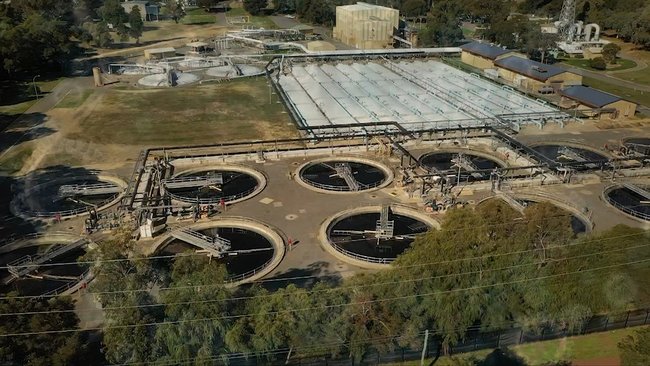
The detection of the vaccine-derived Type 2 poliovirus strain — similar to finds in Africa, Europe and Papua New Guinea in recent years — was made during screenings of Perth’s wastewater in mid-April.
WA’s chief health officer Dr Clare Huppatz said it is the first detection of its kind in Australia, and most likely originated from someone who had travelled overseas and was shedding the virus.
Know the news with the 7NEWS app: Download today
“We really wouldn’t know where this has come from,” she told reporters on Friday.
“The Subiaco Wastewater Treatment Plant includes the CBD which has got hotels that are frequented by international travellers as well as all the cafes, businesses, restaurants, (and) workplaces where a lot of people in Perth might go through.”

Huppatz said the single wastewater detection was “significant” but believes it does not present a serious threat given poliovirus vaccination coverage in WA children is at 92 per cent.
“We’ve been working with national experts who have assessed this as very low risk,” she said.
“It’s low risk to WA because of our strong vaccination program, our high levels of sanitation and our robust surveillance and that’s the clinical surveillance we do looking for poliovirus.
“There have been similar detections as this one in Europe and those countries have not had cases or outbreaks associated with them.”
What is vaccine-derived poliovirus?
WA’s Department of Health says: “Many overseas countries use the oral polio vaccine which contains a small amount of live, but weakened, virus. Rarely, the virus in the oral polio vaccine can evolve to create a vaccine-derived poliovirus strain, which can be transmitted among communities with low vaccination coverage.
“Australia uses inactivated polio vaccines which do not contain live virus and are given by injection.”
Most people infected with poliovirus experience mild symptoms or none at all.
But on rare occasions — less than one in every 100 — it can progress to paralysis, stopping people from moving and breathing properly and is potentially fatal.
Vaccination has been credited with eliminating the disease, with Australia declared free of it since 2000.
Australia’s last two polio epidemics were in 1956 and 1960, and there has been no known local transmission of the virus here since 1972.

Wastewater testing will be ramped up in Perth to make sure there is no outbreak.
“This is an illness that is monitored worldwide and has the World Health Organisation now with eyes on WA to make sure that this is an isolated case and not something that becomes anything of concern,” AMA WA President Kyle Hoth said.
“At the moment, there is no need to be alarmed.
“But if you haven’t yet had your polio vaccine or if you work in a high-risk industry like health and are due a booster, this is a good reminder of how important that is.”


